How to Choose the Right Uniform Fabric
A practical guide for companies, schools, event organisers, sports teams, restaurants and buyers who want uniforms that look suitable, feel comfortable and support the intended printing method.
The Direct Answer
The right uniform fabric depends on how the garment will be used, how often it will be worn, the working environment, the preferred appearance and the logo application. Cotton feels soft and familiar, polyester supports active use and quick drying, CVC offers a balanced corporate option, while microfiber is often chosen for sportswear and full-colour sublimation designs.
Prioritise Appearance
Look for fabrics that hold their shape, coordinate with company colours and remain comfortable throughout normal working hours.
Prioritise Breathability
Lightweight polyester or microfiber options may be more practical when the team moves frequently or works in warm conditions.
Prioritise Purpose
Match the material to the event duration, printing design, target budget and whether the shirts will be reused after the event.
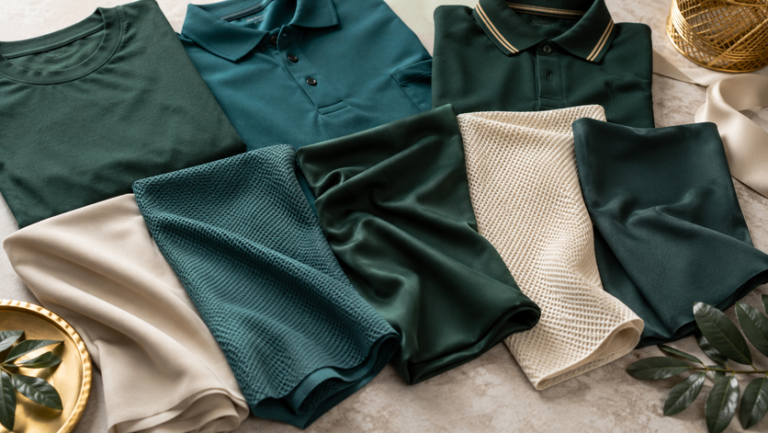
Quick Uniform Fabric Comparison
Use this table as a starting point before comparing actual garment samples, colours, cuts and stock availability.
| Fabric Type | Typical Strength | Common Uniform Use | Branding Consideration |
|---|---|---|---|
| Cotton | Soft hand feel and familiar everyday comfort | Company T-shirts, casual teams, campaigns and indoor activities | Often suitable for DTF and silkscreen, depending on the garment |
| Polyester | Quick drying and practical for active environments | Events, outdoor crews, sports teams and operational staff | Printing suitability depends on fabric finish and construction |
| CVC Blend | Balanced comfort, shape and professional appearance | Corporate polo shirts, retail teams and customer-facing staff | Commonly paired with embroidery, DTF or silkscreen |
| Microfiber | Lightweight feel and suitable performance characteristics | Sports jerseys, outdoor events and full custom teamwear | Frequently selected for sublimation designs |
| Honeycomb Knit | Textured polo appearance with a structured presentation | Office, sales, service and corporate teams | Logo size and stitch density matter for embroidery |
| Interlock or Jersey Knit | Smooth surface with different weights and drape options | T-shirts, teamwear, event apparel and casual uniforms | Confirm the print method against the exact fabric composition |
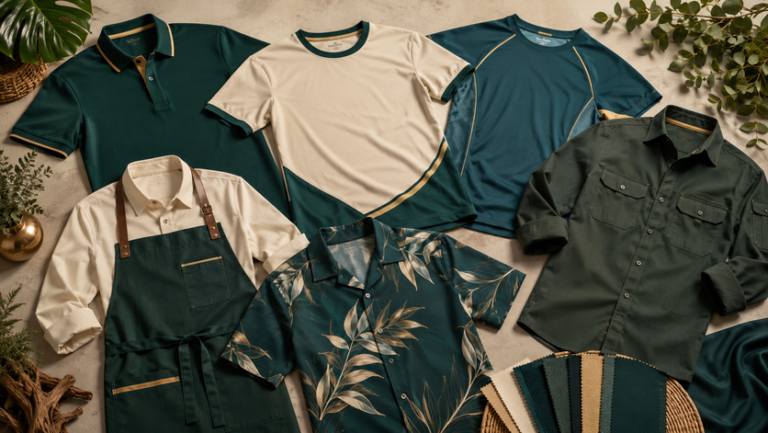
Choose Fabric Based on the Uniform Type
Different garment categories create different expectations. The same material may work well for one team but feel unsuitable for another.
Professional and Presentable
CVC, honeycomb and other structured polo fabrics are often considered when buyers want a neat collar, a presentable shape and a suitable base for chest logos.
Comfort and Versatility
Cotton, blended jersey and lightweight polyester options can support staff use, campaigns, onboarding packs, casual Fridays and promotional programmes.
Movement and Custom Design
Microfiber and polyester fabrics are commonly explored for active teams, especially when buyers want lightweight garments or full-piece artwork.
Practical Daily Use
Consider airflow, coverage, visibility, washing frequency and whether the garment must be layered with safety equipment or protective clothing.
Comfort with a Clean Look
Front-of-house teams may prioritise presentation, while kitchen and service crews may focus more heavily on movement, maintenance and repeat washing.
Easy Size Planning
Select a fabric and cutting that can serve a broad size range, then confirm the size chart before collecting final quantities from participants.
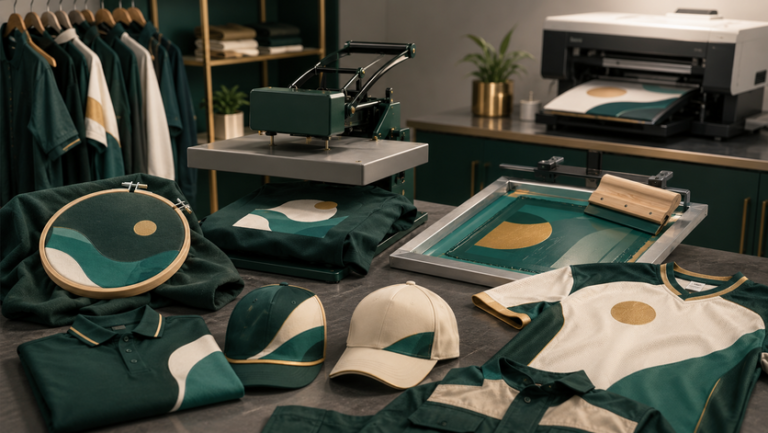
Match the Fabric to the Branding Method
Fabric and logo application should be planned together. Choosing the shirt first and discussing the print method later can create avoidable design limitations.
For a Textured, Premium Finish
Embroidery is frequently used on polo shirts, caps and selected workwear. The fabric should support the stitch area without excessive distortion.
- Keep very small text to a minimum.
- Confirm the logo size and placement.
- Check whether backing is suitable for the garment.
For Detailed, Multi-Colour Artwork
DTF can support detailed logos and colourful graphics on many garment types, but the final suitability depends on the shirt surface and heat application.
- Use a clear, production-ready artwork file.
- Confirm print dimensions before approval.
- Avoid unnecessary oversized solid print areas.
For Consistent Group Orders
Silkscreen is commonly considered for repeated colours and larger quantities. The number of print colours and positions should be confirmed early.
- Separate each print colour clearly.
- Confirm front, back and sleeve positions.
- Review the artwork size on every garment size.
For Full Custom Jersey Designs
Sublimation is associated with compatible polyester-based fabrics and allows the design to be planned across a larger area of the garment.
- Choose the jersey fabric before final artwork approval.
- Allow for seams and panel construction.
- Review names, numbers and sponsor logos carefully.
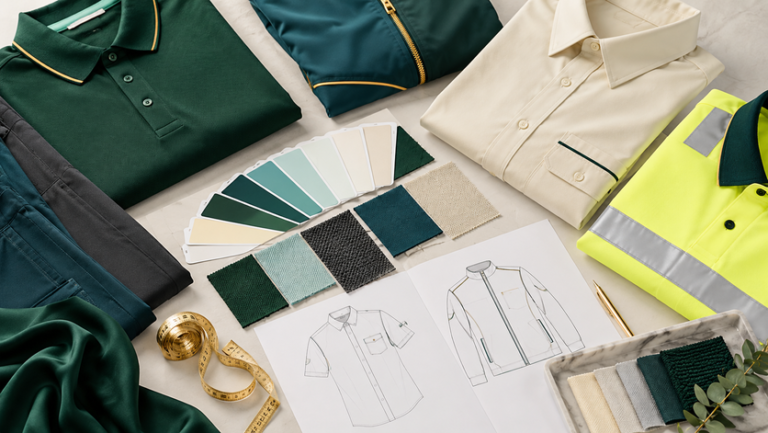
Material, Colour and Design Guide
1. Consider Sabah's Warm Working Conditions
Teams working outdoors, moving between locations or standing for long periods may prefer lighter and more breathable garments. Indoor teams may place more emphasis on structure, layering and a polished corporate appearance.
2. Compare Fabric Weight and Texture
A heavier garment can feel more substantial, while a lighter garment may feel more comfortable for active use. Texture also affects appearance, logo presentation and how the uniform coordinates with trousers, aprons, jackets or safety wear.
3. Review Colour in the Actual Fabric
Screen colours are only a guide. Dark green, navy, royal blue, maroon and grey can vary between products and fabric batches. Compare physical colour references when brand consistency is important.
Strong Corporate Look
Navy, black and dark green can create a professional appearance and pair well with contrasting embroidery or print colours.
Bright and Approachable
White, light grey and pastel shades can feel clean and friendly, but buyers should consider transparency, staining and the intended work environment.
Operational Awareness
Bright colours may help teams stand out during events or outdoor activities, but they should not replace certified safety garments where these are required.
4. Keep the Design Practical
- Do not place important wording too close to seams, pockets or zips.
- Do not rely on very fine details for small embroidery applications.
- Do not choose a logo colour without checking contrast against the shirt.
- Do not ignore how the design appears on smaller and larger sizes.
- Do not mix fabric types without checking colour consistency.
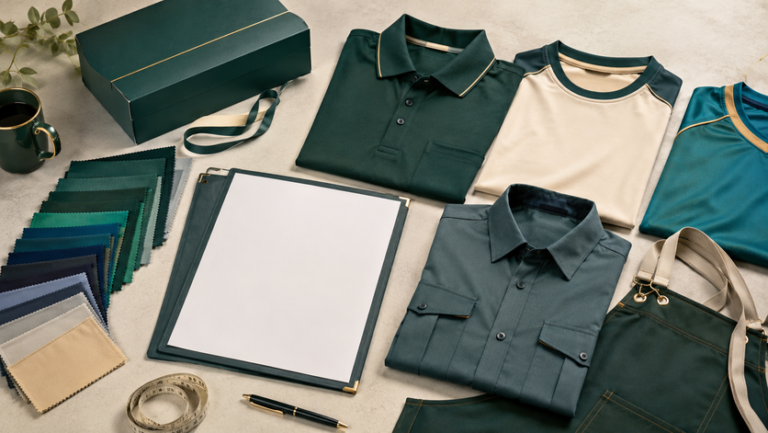
A Better Fabric Selection Process
Describe the Uniform's Daily Use
Explain the work setting, working hours, activity level, indoor or outdoor use and how often the uniform will be worn.
Share the Garment and Quantity
State whether you need T-shirts, polo shirts, jerseys, work shirts, aprons or a mixed order, together with the estimated quantity and size range.
Confirm Branding Requirements
Provide the logo file, number of print positions, preferred method and any names, departments, numbers or sponsor logos that change between garments.
Compare Suitable Options
Review fabric composition, texture, colour, size chart, cutting and sample references instead of selecting by price or garment weight alone.
Approve the Final Mock-Up
Check spelling, logo colours, dimensions, placements, garment colour and the final quantity breakdown before production is confirmed.
Buyer Scenarios
Choose a Structured Polo
A company may compare CVC or textured polo options for a neat appearance, then apply a compact embroidered logo on the chest.
Choose Lightweight Apparel
An organiser may prioritise airflow, visibility and easy movement, then select a suitable printing method for names, sponsor logos and event information.
Choose a Jersey Fabric
A club may select microfiber for full custom sublimation artwork with player names, numbers, team colours and sponsor placements.
Use Coordinated Options
Management may use a polo shirt for customer-facing staff and a different practical garment for operational teams while keeping the same brand colours.
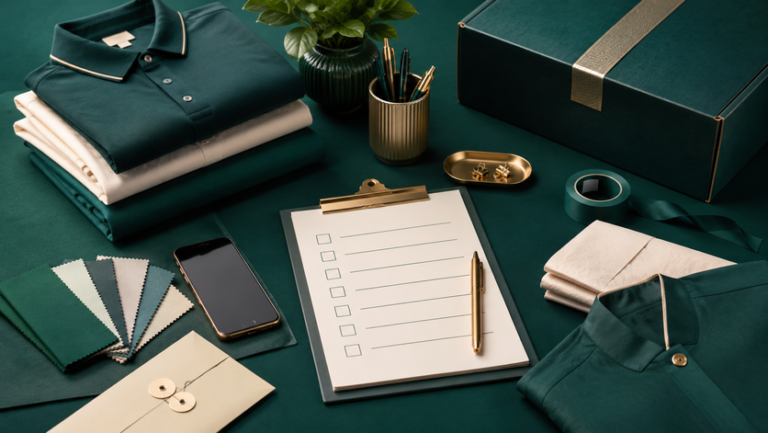
Uniform Fabric Order Checklist
- Purpose and working environment are clearly described.
- Garment type and estimated quantity are confirmed.
- Fabric composition, texture and weight are reviewed.
- Actual colour reference is checked where necessary.
- Size chart is shared with all wearers.
- Printing or embroidery method is matched to the garment.
- Logo file, dimensions and placement are approved.
- Names, numbers and department variations are checked.
- Final size breakdown is verified before production.
- Reorder information is recorded for future reference.
Frequently Asked Questions
Useful Uniform Sabah Resources
Need Help Choosing a Uniform Fabric?
Share your garment type, quantity, logo, working environment and preferred style. Uniform Sabah can help you compare suitable options before you confirm the order.
WhatsApp Uniform Sabah Visit Uniform SabahOur Other Company Websites
Explore related uniform, apparel and printing services for other locations and markets.
JCP Malaysia
Corporate apparel, uniform supply and printing services in Malaysia.
Visit JCP MalaysiaSelangor Print
Custom apparel printing and related services for Selangor customers.
Visit Selangor PrintUniform Johor
Uniform and custom apparel support for customers throughout Johor.
Visit Uniform JohorUniform Penang
Uniform sourcing and custom branding support for Penang organisations.
Visit Uniform PenangKita Print
Online printing and apparel solutions for customers and agents.
Visit Kita PrintUniform Singapore
Uniform and custom apparel services developed for Singapore customers.
Visit Uniform SingaporeUniform Hub
Additional uniform sourcing and customisation support in Singapore.
Visit Uniform HubTanah Studio
Creative apparel and design services for the Australian market.
Visit Tanah Studio