Care Guide for Every Shirt Printing Method
Protect DTF, silkscreen, sublimation and embroidered uniforms with the correct washing, drying, ironing and storage process.
Direct answer
What Is the Safest General Care Process?
Turn the shirt inside out, use cool or lukewarm water, select a gentle cycle and wash with mild detergent. Avoid bleach, harsh stain removers and direct heat on the artwork. Air-drying in the shade is the safest option for most decorated garments.
The garment care label should always take priority because fabric requirements can differ even when the printing method is the same.
Turn Inside Out
Reduces rubbing between the printed surface and other garments.
Use Mild Detergent
Avoid bleach and strong chemicals that may affect colour or adhesive.
Air-Dry in Shade
Lower heat helps protect prints, fabric colour and garment shape.

Quick comparison
Care Rules by Decoration Method
| Method | Washing | Drying | Ironing and key warning |
|---|---|---|---|
| DTF printing | Inside out, gentle cycle, cool or lukewarm water | Air-dry in shade; avoid excessive tumble-dryer heat | Never iron directly on the transfer; avoid stretching the print when warm |
| Silkscreen printing | Inside out with mild detergent; avoid bleach | Air-dry where possible; use low dryer heat only when permitted | Iron from the reverse side and keep direct heat away from the ink |
| Sublimation | Gentle wash with similar colours and mild detergent | Air-dry in shade to protect fabric colour and shape | Follow the polyester garment label; avoid very high heat |
| Embroidery | Gentle cycle; fasten zips and separate rough garments | Reshape and air-dry; avoid pulling loose threads | Iron from the reverse with a protective cloth; do not crush raised stitches |
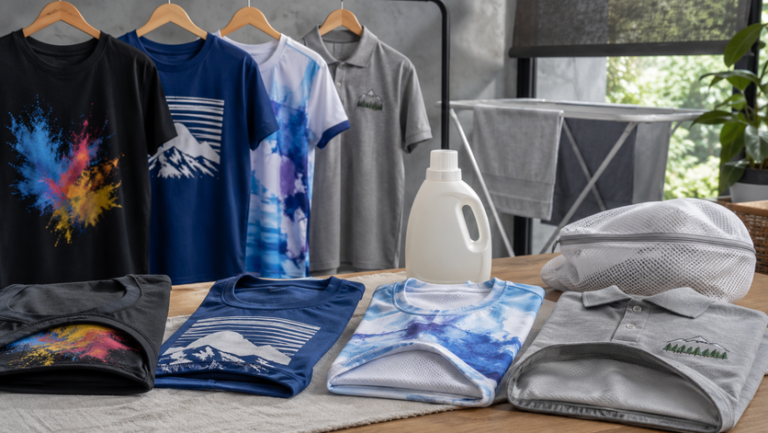
Method-by-method care
How to Care for Each Printing Method
Protect the Transfer Surface
DTF artwork sits on the garment surface, so heat, friction and stretching can affect its appearance over time.
- Wait until the garment is fully cool before folding.
- Turn the shirt inside out before washing.
- Use a gentle cycle and mild detergent.
- Air-dry in shade whenever possible.
- Do not iron directly on the print.
Reduce Cracking and Fading
Silkscreen ink is durable when properly cured, but repeated high heat and harsh washing can shorten its usable life.
- Wash inside out with similar colours.
- Avoid bleach and strong stain removers.
- Do not scrub the printed area directly.
- Use low heat only when machine drying is allowed.
- Iron from the reverse side.
Protect Fabric Colour and Shape
Sublimation colour becomes part of compatible polyester fabric, so there is no separate surface layer to peel.
- Wash gently with mild detergent.
- Separate light and dark garments.
- Avoid bleach and very hot water.
- Air-dry in shade to protect garment colour.
- Follow the polyester garment care label for ironing.
Prevent Snagging and Thread Damage
Embroidery is stitched into the garment, making it durable but vulnerable to hooks, rough surfaces and loose-thread pulling.
- Turn the garment inside out before washing.
- Fasten zips and separate rough items.
- Do not pull loose embroidery threads.
- Air-dry and reshape the garment.
- Use a cloth barrier when ironing from the reverse.
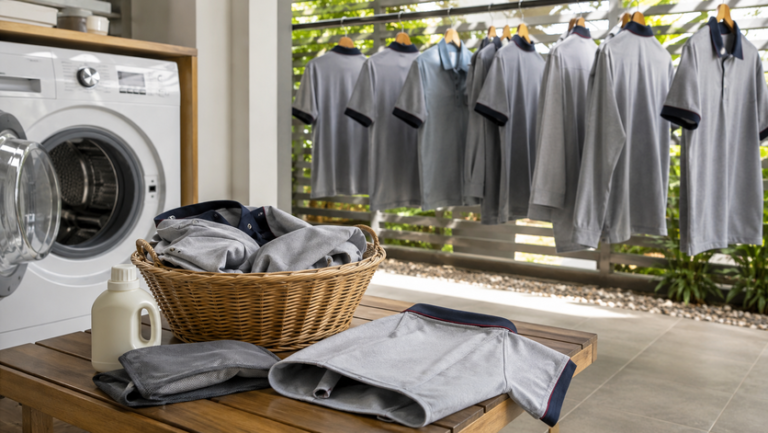
Washing and drying
The Correct Laundry Process
A careful laundry routine protects both the garment fabric and its decoration. Staff should receive simple written care instructions when uniforms are distributed.
Prepare the Garment
- Check the care label.
- Empty all pockets.
- Close zips and fasteners.
- Turn decorated garments inside out.
- Separate by colour and fabric weight.
Use a Gentle Setting
- Select cool or lukewarm water.
- Use mild detergent.
- Avoid chlorine bleach.
- Do not overload the washing machine.
- Avoid long, aggressive wash cycles.
Remove Promptly
- Do not leave wet shirts compressed for long periods.
- Gently reshape collars and seams.
- Avoid twisting the decorated area.
- Hang or lay flat according to the care label.
Choose Lower Heat
- Air-dry in a shaded, ventilated place.
- Avoid direct prolonged sunlight.
- Use low dryer heat only when permitted.
- Do not place a hot garment under heavy items.
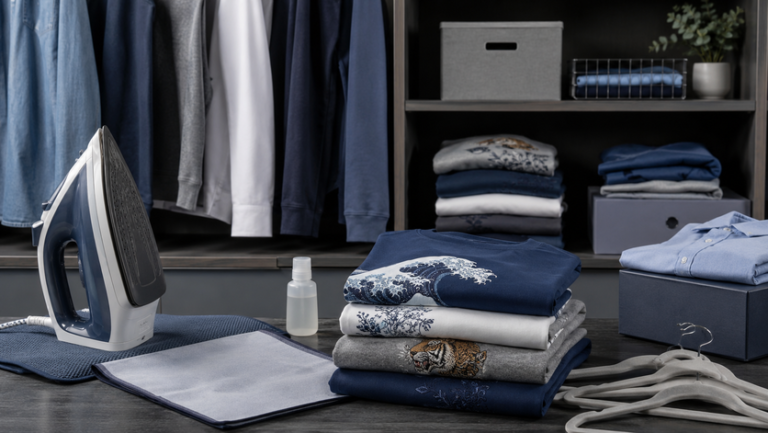
Ironing, stains and storage
Protect the Artwork After Washing
Direct Iron Contact
Direct heat may soften, mark or distort DTF and other surface prints.
Strong Stain Removers
Bleach and harsh chemicals may affect fabric colour, printing ink or thread.
Folding While Hot
Warm printed surfaces may stick together or develop pressure marks.
Safe Ironing Process
- Check whether the garment care label allows ironing.
- Turn the garment inside out.
- Use low heat for polyester and performance fabrics.
- Keep the iron away from direct contact with printed artwork.
- Use a clean protective cloth when ironing near embroidery.
- Allow the garment to cool fully before folding.
Safe Storage Habits
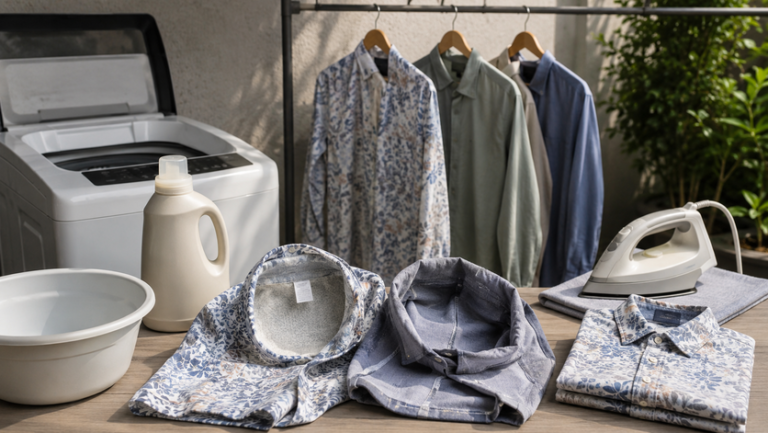
Care process
Six Steps for Longer-Lasting Printed Shirts
Read the Garment Care Label
Confirm the maximum wash temperature, drying method and ironing restrictions.
Turn the Shirt Inside Out
Protect the decorated surface from direct rubbing against other garments.
Wash Gently
Use mild detergent, cool or lukewarm water and a gentle cycle.
Air-Dry in Shade
Reduce heat exposure and allow the garment to dry without crushing the artwork.
Iron From the Reverse
Use low heat only when permitted and never place the iron directly on the design.
Store Only When Fully Dry
Let the shirt cool and dry completely before folding or placing it in a cupboard.
Common scenarios
Care Advice for Different Users
Provide Written Instructions
Add a simple care card to every staff uniform pack so employees follow the same process.
Wash Soon After Outdoor Use
Remove perspiration, dirt and food stains promptly without scrubbing the printed area.
Do Not Leave Damp in a Bag
Air out sublimated jerseys quickly after use and wash them with mild detergent.
Separate From Rough Items
Keep embroidery away from exposed zips, hooks and rough fasteners that may snag threads.
Care checklist
Printed and Embroidered Shirt Checklist
- The garment care label is checked before washing.
- The shirt is turned inside out.
- Similar colours and fabric weights are washed together.
- Cool or lukewarm water is used.
- Mild detergent is used.
- Bleach and harsh chemicals are avoided.
- The decorated area is not scrubbed directly.
- The garment is air-dried in shade where possible.
- The iron never touches the print directly.
- The garment is fully cool and dry before storage.
Common Care Mistakes
- Washing printed shirts in very hot water.
- Using bleach on coloured or decorated garments.
- Drying DTF and silkscreen shirts with excessive heat.
- Ironing directly over logos, names or numbers.
- Pulling loose embroidery threads.
- Leaving wet sports shirts inside a closed bag.
Frequently asked questions
Questions About Printed Shirt Care
Useful Uniform Sabah resources
Continue Planning Your Custom Shirts
Protect Your Custom Shirts
Ask Uniform Sabah for the correct care instructions for your selected garment, fabric and decoration method before distributing the shirts.
WhatsApp Uniform Sabah Visit Uniform SabahOur network
Our Other Company Websites
Explore related uniform, printing and apparel services through our regional and international websites.