How to Prevent Damp Smells in Work Shirts
Keep staff uniforms fresh during hot, humid and rainy conditions with better washing, drying, storage and fabric-selection habits.
Direct answer
What Causes Damp Smells in Work Shirts?
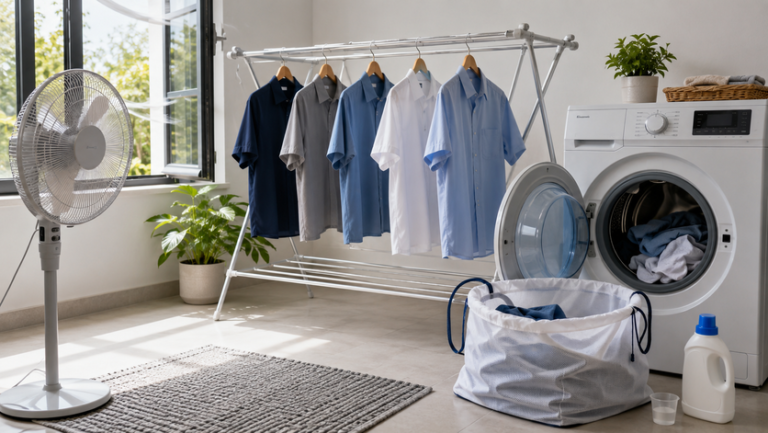
Damp smells usually develop when perspiration, rainwater or washing moisture remains trapped in the fabric for too long. Storing shirts before they are fully dry, leaving sweaty uniforms in a closed bag and overcrowding the drying area can make the problem worse.
Wash used work shirts promptly, dry them in a well-ventilated place and confirm that collars, underarms, seams and thicker decorated areas are completely dry before storage.
Air It Out Quickly
Remove the shirt from closed bags and allow moisture to escape before washing.
Improve Airflow
Leave enough space between garments so humid air does not remain trapped.
Early Folding
Folding a partly dry shirt can trap moisture inside seams and decorated areas.
Quick comparison
Common Causes and Practical Solutions
| Cause | Why the smell develops | Correct action | Prevention habit |
|---|---|---|---|
| Sweaty shirt left in a closed bag | Heat and moisture remain trapped | Remove and air out the shirt immediately | Use a breathable laundry bag or separate wet compartment |
| Shirt stored before fully dry | Moisture remains inside seams and fabric layers | Rewash when necessary and dry completely | Check collars, underarms and hems before folding |
| Overloaded washing machine | Detergent and water cannot circulate properly | Wash a smaller load | Leave enough room for garments to move |
| Too much detergent | Residue can remain in the fabric | Use the correct amount and rinse properly | Follow the detergent and machine instructions |
| Poor indoor drying airflow | Moisture evaporates too slowly | Use a fan, open window or dehumidified area | Space garments apart during drying |
| Repeated use without full washing | Perspiration and odour build up | Wash after each heavy-use shift | Issue enough uniform sets for proper rotation |

Shirt and fabric options
Choose Work Shirts That Dry More Easily
Fabric choice affects how quickly a uniform releases moisture. The best option depends on the job, level of activity, dress code and washing routine.
Quick-Dry Microfiber
Lightweight performance fabric is practical for delivery teams, warehouse workers, outdoor crews and staff who perspire heavily.
- Dries faster than heavy cotton
- Suitable for frequent washing
- Useful for hot and humid work areas
Performance Polo Shirt
A performance polo provides a more structured appearance while retaining moisture-management and faster-drying benefits.
- Suitable for sales and service teams
- Works for indoor and outdoor duties
- Check collar and placket drying time
Lightweight Easy-Care Shirt
Office teams can use lightweight corporate shirts when the fabric remains breathable and does not require slow, heavy drying.
- Choose manageable fabric weight
- Dry collars and cuffs thoroughly
- Use enough sets for rotation
Heavy Cotton and Thick Polos
Heavier fabric may feel durable but can take longer to dry during prolonged rainy periods or in poorly ventilated homes.
- Allow a longer drying period.
- Use strong airflow around collars and seams.
- Do not pack while the inner layers remain damp.
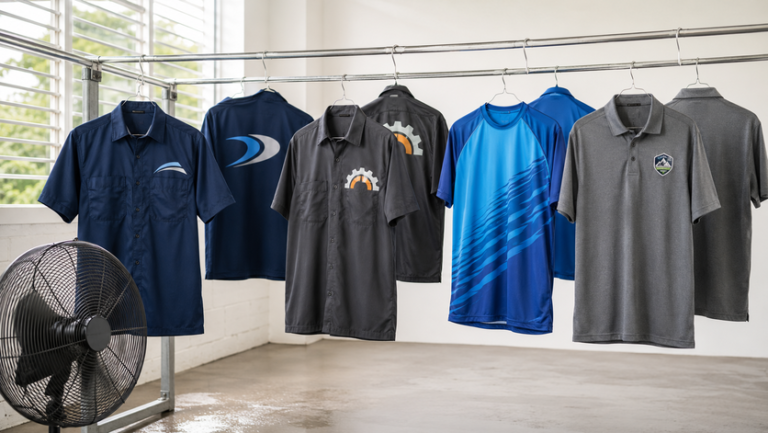
Brand Examples Available Through Uniform Sabah
Printing and decoration
Dry Decorated Areas Completely
Printed and embroidered sections may feel dry on the surface while moisture remains around thicker ink, transfer edges, backing or dense stitches.
Check Around the Transfer
Airflow should reach both sides of the shirt. Do not fold the garment while the fabric beneath a large transfer still feels cool or damp.
- Turn inside out before washing.
- Air-dry with space around the printed area.
- Avoid excessive dryer heat.
Protect the Ink Surface
Use gentle washing and complete air-drying to reduce trapped moisture without exposing the ink to unnecessary heat.
- Wash inside out.
- Do not stack shirts while damp.
- Keep direct high heat away from the print.
Focus on the Polyester Fabric
Sublimation has no raised surface layer, but the garment still needs complete drying around seams, collars and multilayer panels.
- Wash promptly after active use.
- Use a well-ventilated drying area.
- Do not leave damp jerseys inside bags.
Dry Dense Stitching and Backing
Embroidered logos may contain thicker stitched areas that require additional drying time.
- Check the reverse side of the embroidery.
- Reshape the garment during drying.
- Do not store while backing remains damp.

Laundry and storage guide
Improve Washing, Drying and Storage
Detergent Residue
Excess detergent or poor rinsing can leave residue that traps odour and soil.
Overcrowded Racks
Shirts placed too close together dry slowly in humid indoor conditions.
Closed Damp Cupboards
Poor ventilation can allow moisture and odour to return after washing.
Correct Washing Habits
- Wash heavily used shirts promptly.
- Use the correct amount of mild detergent.
- Do not overload the washing machine.
- Rinse the garments properly.
- Clean the washing machine and detergent drawer regularly.
- Follow the garment care label.
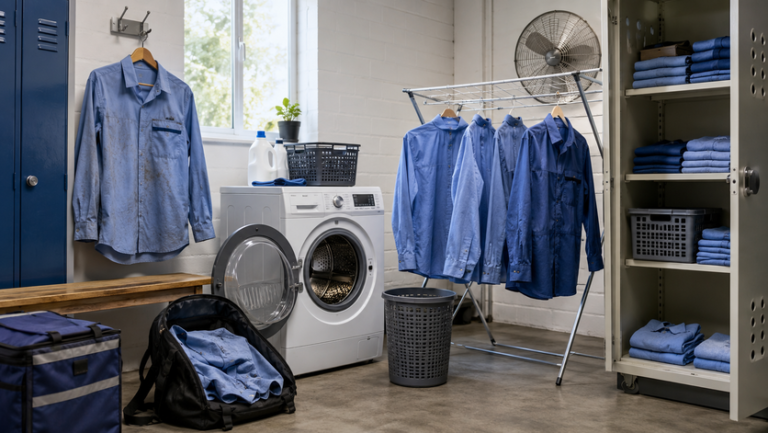
Better Indoor Drying Setup
Fresh-uniform process
Six Steps to Prevent Damp Odours
Remove the Shirt After Work
Do not leave a sweaty or rain-damp uniform inside a closed backpack, locker or vehicle.
Air It Before Laundry
Hang the used shirt temporarily when it cannot be washed immediately.
Wash With Enough Space
Avoid overloading the machine so water and detergent can circulate properly.
Dry With Moving Air
Space shirts apart and use ventilation, a fan or a suitable drying appliance.
Check Thick Areas
Confirm collars, cuffs, underarms, hems and decorated areas are completely dry.
Store in a Dry Place
Use a clean, ventilated cupboard and avoid packing garments too tightly.
Workplace scenarios
Odour Prevention for Different Teams
Air Out Shirts After Every Route
Riders should remove rain-damp and sweaty uniforms from delivery bags immediately.
Provide Enough Uniform Sets
Proper rotation prevents employees from reusing a shirt that has not fully dried.
Wash Food and Sweat Residue Promptly
Do not leave used shirts and aprons in closed containers overnight.
Separate Wet and Clean Clothing
Use separate bags so rain-damp shirts do not transfer moisture to unused uniforms.

Care checklist
Damp-Smell Prevention Checklist
- Used shirts are removed from closed bags quickly.
- Sweaty uniforms are washed promptly.
- The washing machine is not overloaded.
- The correct detergent amount is used.
- Garments are rinsed properly.
- Shirts are spaced apart during drying.
- Airflow reaches collars, seams and decorated areas.
- Every part of the shirt is fully dry before folding.
- Clean uniforms are stored in a dry cupboard.
- Staff receive enough uniform sets for rotation.
Common Odour-Causing Mistakes
- Leaving damp shirts inside backpacks or lockers.
- Using too much detergent.
- Drying many shirts too close together.
- Folding uniforms while seams remain damp.
- Rewearing shirts before proper washing.
- Storing uniforms in a humid, overcrowded cupboard.
Frequently asked questions
Questions About Damp Work Shirts
Useful Uniform Sabah resources
Continue Planning Your Work Uniforms
Choose Work Shirts That Dry Faster
Share your staff duties, working environment, fabric preference, shirt quantity, sizes and printing requirements with Uniform Sabah.
WhatsApp Uniform Sabah Visit Uniform SabahOur network
Our Other Company Websites
Explore related uniform, printing and apparel services through our regional and international websites.