Protective Gear for Different Jobs
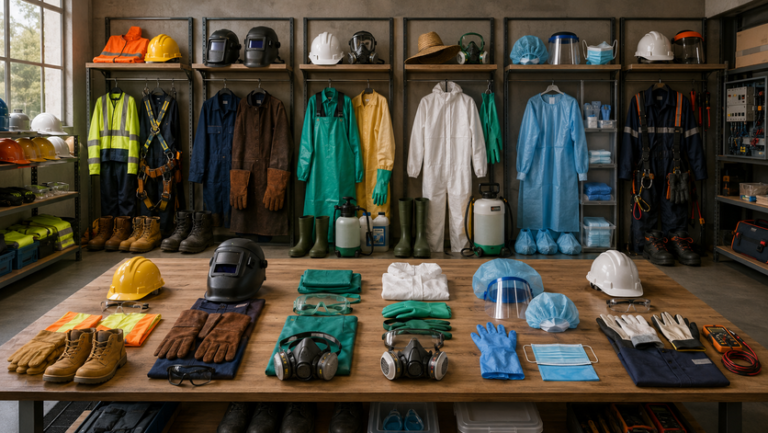
Understand which occupations commonly need helmets, eye protection, gloves, respirators, hearing protection, safety footwear and specialised protective clothing.
Direct answer
Which Jobs Need Protective Gear?
Any job with risks that cannot be fully controlled by safer processes, equipment, barriers or work procedures may require personal protective equipment, commonly called PPE.
Construction workers, welders, chemical handlers, healthcare staff, farmers, electricians, road crews, forestry workers, food-processing teams and emergency responders are common examples. However, the exact PPE depends on the hazard—not only the employee's job title.
Impact Protection
Hard hats, safety glasses, goggles and face shields may be needed around falling objects, flying particles, splashes or sparks.
Contact Protection
Gloves, aprons, coveralls and specialised clothing may protect against cuts, heat, chemicals, contamination or rough materials.
Exposure Protection
Hearing protection and correctly selected respirators may be required for hazardous noise, dust, fumes, gases or airborne contaminants.
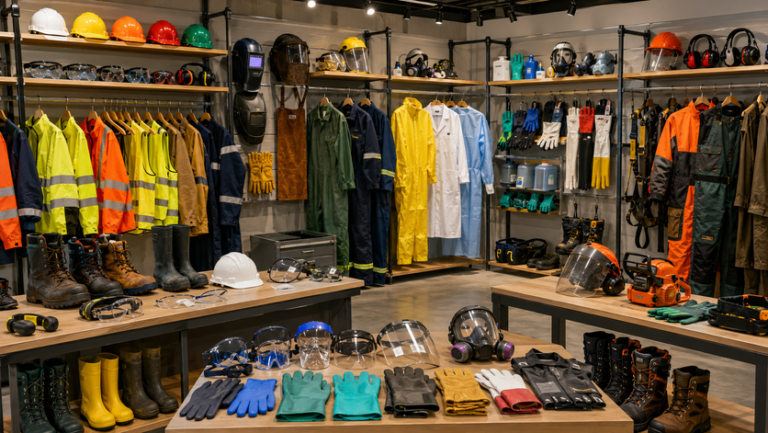
Quick comparison
Jobs and Common Protective Gear Examples
| Job or industry | Typical hazards | Possible protective gear | Important note |
|---|---|---|---|
| Construction workers | Falling objects, flying particles, noise, sharp materials and moving equipment | Hard hat, safety eyewear, gloves, hearing protection, safety footwear and high-visibility clothing | Select PPE for the specific site task and equipment. |
| Welders and fabricators | Arc radiation, sparks, hot metal, fumes and noise | Welding helmet, suitable eye protection, welding gloves, protective clothing, hearing protection and respiratory protection where required | Clothing and filters must match the welding process and hazard assessment. |
| Chemical handlers and cleaners | Splashes, skin contact, vapours, gases and contaminated surfaces | Chemical-resistant gloves, goggles, face shield, apron or suit, boots and selected respirator when required | Use the chemical label and safety data information when selecting PPE. |
| Healthcare and laboratory staff | Biological material, splashes, sharps and airborne exposure | Gloves, gowns, eye or face protection, protective footwear and suitable respiratory protection where indicated | PPE depends on the procedure and exposure route. |
| Farm and pesticide workers | Chemicals, dust, machinery, noise, sun, animals and sharp vegetation | Gloves, eye protection, boots, coveralls, hearing protection and task-specific respiratory protection | Pesticide PPE must follow the product label and workplace assessment. |
| Electricians and electrical workers | Electric shock, arc flash, burns and flying debris | Voltage-rated gloves, arc-rated clothing, face protection, helmet, eye protection and appropriate footwear | Specialised electrical PPE must match the voltage and incident-energy hazard. |
| Road, traffic and delivery crews | Vehicles, poor visibility, rain, noise and roadside work | High-visibility clothing, helmet where required, weather protection, gloves, eye protection and suitable footwear | Reflective branding alone may not meet regulated high-visibility requirements. |
| Forestry and landscaping workers | Cutting tools, branches, noise, flying debris and uneven ground | Helmet, eye and face protection, hearing protection, gloves, boots and task-specific leg protection | Chainsaw and powered-tool work requires specialised equipment and training. |
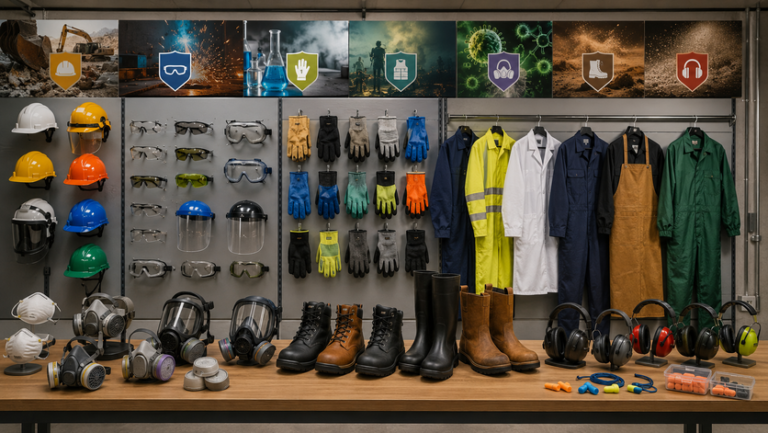
Protective gear categories
Match the Equipment to the Hazard
Protective gear should be selected as a complete system. Gloves, clothing, eye protection and respirators must work together without creating gaps or interfering with one another.
Hard Hats and Protective Helmets
Commonly considered where falling objects, overhead work, electrical hazards or impact risks are present.
- Construction and civil works
- Warehouses with overhead hazards
- Forestry and selected maintenance jobs
- Electrical work requiring an appropriate helmet class
Glasses, Goggles and Face Shields
Used to reduce exposure to flying particles, splashes, sparks, radiation and other eye or face hazards.
- Grinding, cutting and drilling
- Welding and fabrication
- Laboratory and chemical work
- Healthcare procedures with splash risk
Task-Specific Gloves
Glove material must match the hazard. A glove designed for cuts may not protect against a chemical, electrical or heat exposure.
- Material handling and fabrication
- Chemical cleaning and laboratory work
- Healthcare and food-processing tasks
- Electrical work using rated gloves
Coveralls, Aprons and Specialised Clothing
Body protection may be used against dirt, contamination, chemicals, heat, arc flash, sparks or biological exposure.
- Welding and hot-work clothing
- Chemical-resistant aprons or suits
- Healthcare gowns and laboratory coats
- Arc-rated electrical clothing
Respirators
Respirators must be selected for the specific airborne hazard and used within a proper respiratory-protection programme.
- Do not choose a respirator by appearance alone.
- Filters and cartridges must match the contaminant.
- Fit testing and user training may be required.
- Facial hair can interfere with some tight-fitting respirators.
Safety Footwear and Hearing Protection
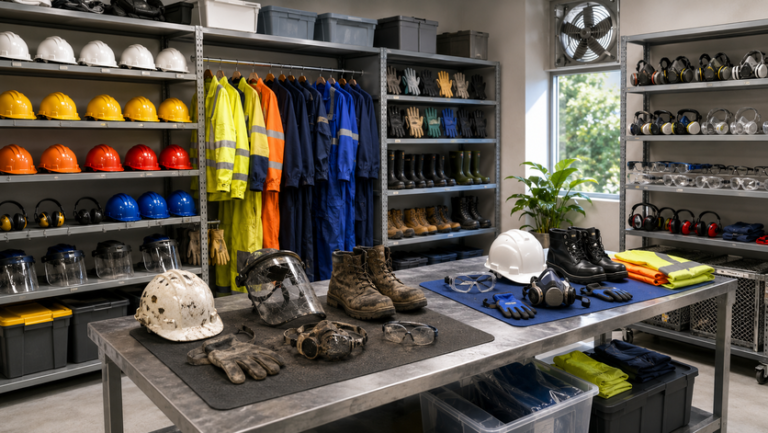
Boots, safety shoes, earplugs and earmuffs may be required where crush, puncture, slip, electrical or hazardous-noise risks are present.
- Construction and warehousing
- Manufacturing and workshops
- Forestry and landscaping
- Airports, machinery areas and noisy sites
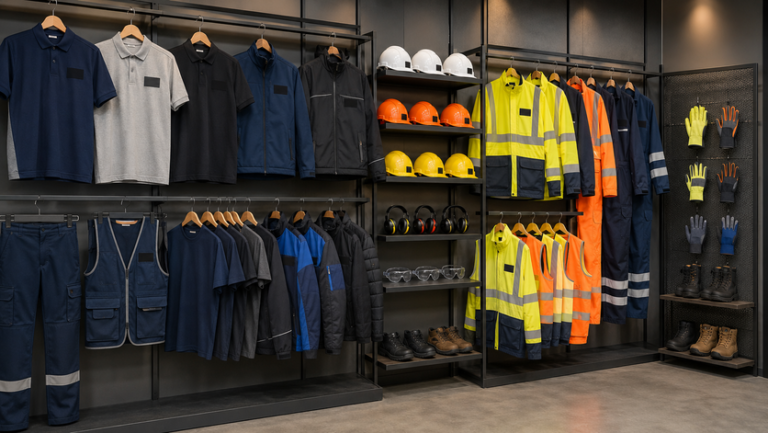
Uniform branding and PPE
Keep Company Branding Separate From Safety Claims
Uniform Sabah can help businesses create branded work shirts, polos, jackets, vests and selected coveralls. These garments can support staff identification, department control and a consistent company appearance.
However, a logo, reflective print or workwear-style design does not automatically make a garment certified protective equipment. Safety performance must be confirmed through the relevant product documents and workplace requirements.
Branded Base Uniform
Use printed or embroidered shirts beneath the required PPE where this does not interfere with protection.
- Company logo
- Employee or department name
- Job role or authorised-person wording
- Branch or contractor identification
Vests, Jackets and Coveralls
Ready-stock workwear can support general uniform needs, but certification and hazard protection must be verified separately.
- Oren Sport workwear and outerwear categories
- Performance shirts from Crossrunner or Ultifresh
- Corporate and workwear options from Enzo
- Other available brands based on stock and requirements
Visibility Without Blocking PPE
Place company branding so it does not cover reflective bands, inspection labels, closures or other critical safety features.
- Keep safety markings readable.
- Do not alter certified areas without approval.
- Test visibility with full equipment worn.
Clear Department Labelling
Simple wording can help identify supervisors, first-aid staff, contractors, traffic marshals or authorised operators.
- Use large, simple wording.
- Keep colours consistent.
- Avoid implying qualifications the wearer does not hold.
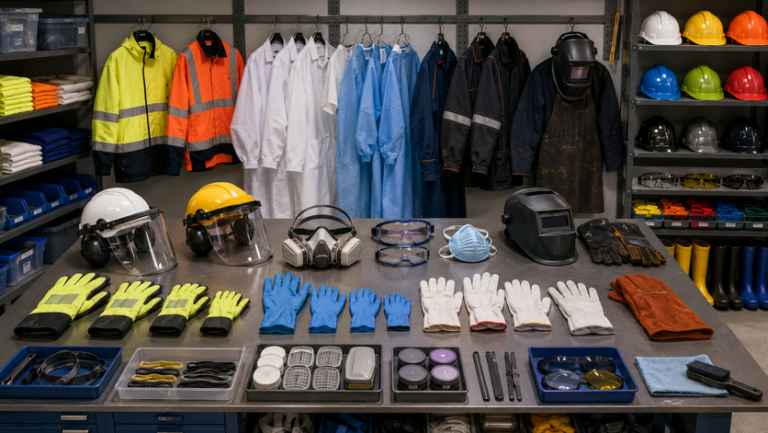
Fit, colour and maintenance
Protective Gear Must Fit and Work Together
Equipment That Is Too Loose
Loose gloves, clothing or straps may reduce protection or create a snagging hazard.
Items That Interfere
Goggles, respirators, helmets and hearing protection may fail to seal or sit correctly when incompatible.
Damaged or Expired PPE
Cracks, worn straps, contamination, expired filters and damaged reflective areas may reduce performance.
Essential Selection Checks
- The equipment is designed for the identified hazard.
- The size and fit suit the individual worker.
- Multiple PPE items can be worn together correctly.
- The worker can move, see, hear and communicate as required.
- Safety markings and inspection information remain readable.
- Cleaning, storage and replacement instructions are available.
- Workers understand the equipment's limitations.
Common Protective Gear Colours
PPE selection process
How Employers Should Plan Protective Gear
Identify the Work and Hazards
Review chemicals, tools, machinery, noise, heat, electricity, biological material, traffic, falling objects and other exposures.
Apply Stronger Controls First
Eliminate or reduce hazards through safer materials, guarding, ventilation, isolation and work procedures wherever possible.
Select PPE for the Remaining Risk
Choose equipment designed and approved for the specific hazard and work condition.
Check Fit and Compatibility
Make sure each worker receives the correct size and that all required items work together.
Train Workers
Explain when PPE is needed, how to wear it, its limitations, inspection steps and the correct removal process.
Inspect, Clean and Replace
Remove damaged or contaminated PPE from service and maintain replacement records.
Job scenarios
Protective Gear Examples by Workplace
Head, Eye, Foot and Visibility Protection
Workers may need hard hats, safety eyewear, suitable gloves, safety footwear, hearing protection and high-visibility clothing depending on the task.
Arc, Heat and Fume Protection
Welders may require welding helmets, protective clothing, gloves, hearing protection and selected respiratory protection.
Splash and Contact Protection
Workers may need compatible gloves, goggles, face shields, aprons, boots and respiratory protection based on the chemical information.
Label-Specified Chemical PPE
Applicators must follow the product label and workplace assessment for gloves, coveralls, eye protection, boots and respiratory protection.
Biological and Splash Protection
Gloves, gowns, eye or face protection and appropriate respiratory protection may be selected according to the procedure.
Shock and Arc-Flash Protection
Qualified workers may require voltage-rated gloves, arc-rated clothing, face protection and other specialised equipment.
Buyer checklist
Protective Gear Planning Checklist
- A workplace hazard assessment has been completed.
- Hazards are controlled through stronger measures wherever possible.
- PPE is selected for the actual hazard, not only the job title.
- Required approvals, standards and product documents are checked.
- Every worker receives the correct size and fit.
- Multiple PPE items are compatible.
- Workers receive practical training.
- Inspection and cleaning procedures are documented.
- Damaged or contaminated PPE is removed from use.
- Replacement dates and stock levels are monitored.
Common PPE Mistakes
- Buying protective gear before assessing the hazard.
- Using one type of glove for every chemical or task.
- Using a basic mask where a selected respirator is required.
- Choosing one standard size for every worker.
- Allowing branding to cover safety markings or reflective areas.
- Continuing to use damaged, contaminated or expired equipment.
Frequently asked questions
Questions About Workplace Protective Gear
Useful Uniform Sabah resources
Plan Branded Workwear Around Your PPE
Coordinate Uniforms With Workplace PPE
Share your staff roles, work environment, branded garment needs, quantities, sizes and logo requirements with Uniform Sabah. Safety equipment must be selected and approved separately for the actual workplace hazards.
WhatsApp Uniform Sabah Visit Uniform SabahOur network
Our Other Company Websites
Explore related uniform, printing and apparel services through our regional and international websites.