How to Store Damp Uniforms After Outdoor Work
Prevent musty smells, colour transfer and fabric damage after rain, perspiration, mud and humid outdoor working conditions.
Direct answer
Should Damp Uniforms Be Stored Immediately?
No. A damp uniform should not be folded, sealed in plastic or placed inside a closed locker. Remove it from the work bag, shake off loose dirt and hang it in a ventilated area until it can be washed or fully dried.
When transport is necessary, use a separate wet compartment or waterproof wet bag only for the journey. Open the bag immediately on arrival and do not leave the damp shirt sealed overnight.
Remove It From the Bag
Open the garment fully so trapped heat and moisture can escape.
Hang With Airflow
Use a wide hanger or drying rack and leave space around the garment.
Seal It Overnight
Closed plastic bags, car boots and lockers can trap moisture and odour.
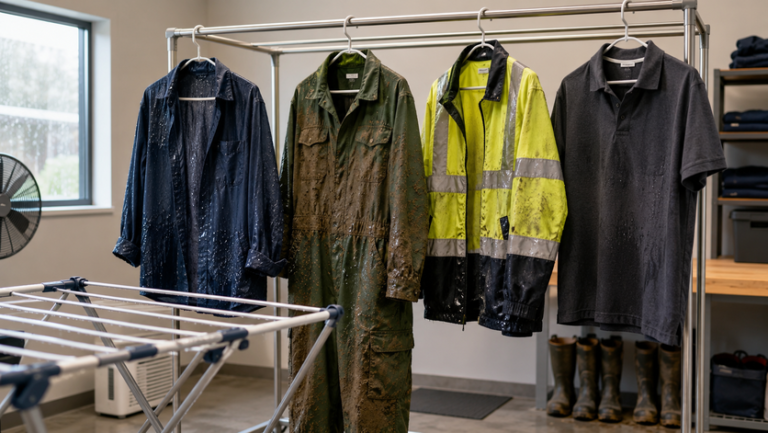
Quick comparison
Handle Damp Uniforms by Condition
| Uniform condition | Immediate action | Temporary holding | Before permanent storage |
|---|---|---|---|
| Light perspiration | Remove from the body and air it out | Hang separately in a ventilated area | Wash as required and dry completely |
| Rain-soaked shirt | Open the garment and remove items from pockets | Use a drying rack with strong airflow | Check thick seams and decorated areas for hidden moisture |
| Muddy farm or landscaping uniform | Remove loose soil outdoors without hard scrubbing | Keep separate from clean clothing | Wash according to the care label and dry fully |
| Reflective vest or jacket | Open zips and spread the garment | Hang where both sides receive airflow | Inspect reflective areas and closures before storage |
| Embroidered or thick polo shirt | Reshape the collar and placket | Allow extra drying time around stitching and backing | Confirm the reverse side of the embroidery is dry |
| Chemically contaminated uniform | Follow the workplace emergency or decontamination procedure | Use the designated container or area | Do not return it to normal storage until officially cleared |
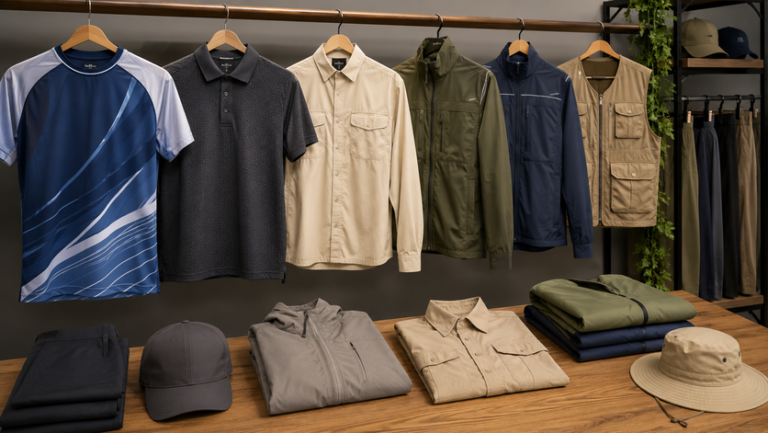
Uniform Sabah product examples
Products to Consider for Outdoor Teams
Uniform Sabah supplies multiple apparel brands and custom uniform options. The best product depends on whether the team needs faster drying, a structured corporate look, long sleeves or heavier fabric for selected duties.
Sublimation Microfiber Eyelet Uniform
Uniform Sabah offers a full-sublimation corporate uniform made with breathable microfiber eyelet fabric. It is a practical option for active outdoor teams, delivery staff, events and other work where perspiration or light rain is common.
- Lightweight performance fabric
- Full custom colour and design
- No raised print layer to peel
- Open and air-dry promptly after work
Oren Sport HC01 Honeycomb Polo
The HC01 uses a 60% cotton and 40% polyester CVC honeycomb fabric at approximately 220–230gsm. It suits supervisors, logistics teams, plantation offices and customer-facing outdoor staff who need a structured polo.
- Durable medium-heavy polo construction
- Suitable for embroidery and printing
- Good for mixed indoor and outdoor duties
- Allow extra drying time around the collar and placket
ArriveGuide AGL250 Long Sleeve
The AGL250 is a 250gsm combed-cotton long-sleeve shirt with ribbed cuffs and a structured heavyweight feel. It can suit conservation teams, workshops and outdoor duties that need more arm coverage.
- 100% combed cotton
- Long sleeves and ribbed cuffs
- Suitable for multiple decoration methods
- Needs a longer drying period than lightweight microfiber
Other Brands Available
Uniform Sabah also lists brands such as Gildan, Ultifresh, Crossrunner, Enzo, HYDT, Rightway, North Harbour, United Athle and others.
- Compare quick-dry shirts and polos.
- Check long-sleeve and outerwear options.
- Review fabric weight and construction.
- Confirm the current size and colour stock.
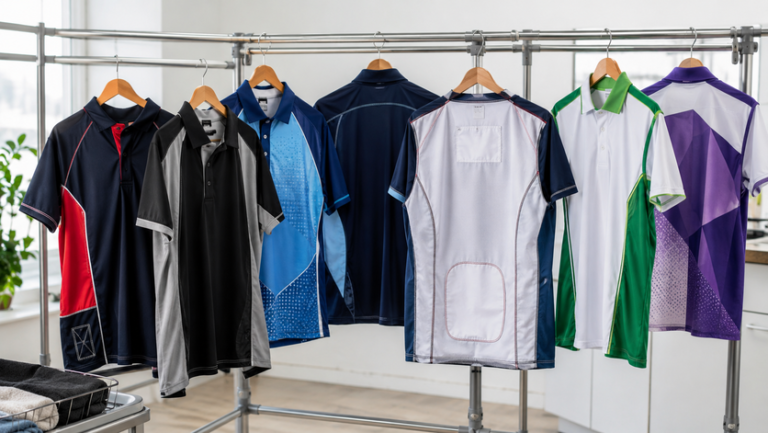
Printing and decoration care
Dry Decorated Uniforms Correctly
Printed and embroidered areas can hide moisture around backing, thick ink, transfers, collars and seams. Open the garment fully and make sure moving air reaches both sides.
Do Not Fold While Damp
A large DTF transfer can slow airflow through the covered area. Hang the shirt flat and keep the print from sticking to itself.
- Turn inside out before washing.
- Keep direct high heat away from the transfer.
- Do not stretch the print while warm or wet.
Reduce Heat and Surface Rubbing
Allow the fabric and inked area to dry naturally without stacking damp shirts on top of one another.
- Wash inside out with mild detergent.
- Use good airflow instead of excessive heat.
- Store only after the print is fully dry and cool.
Focus on Fabric and Seams
Sublimation colour becomes part of compatible polyester fabric. The main storage concern is hidden moisture in seams, collars and multilayer panels.
- Remove wet jerseys from closed bags quickly.
- Hang with the front and back separated.
- Check underarms and side panels before folding.
Check the Backing and Dense Stitches
Embroidery can retain moisture around dense stitching and backing, especially on thick polos, jackets and coveralls.
- Inspect the reverse side of the logo.
- Do not pull loose threads.
- Allow extra drying time before cupboard storage.
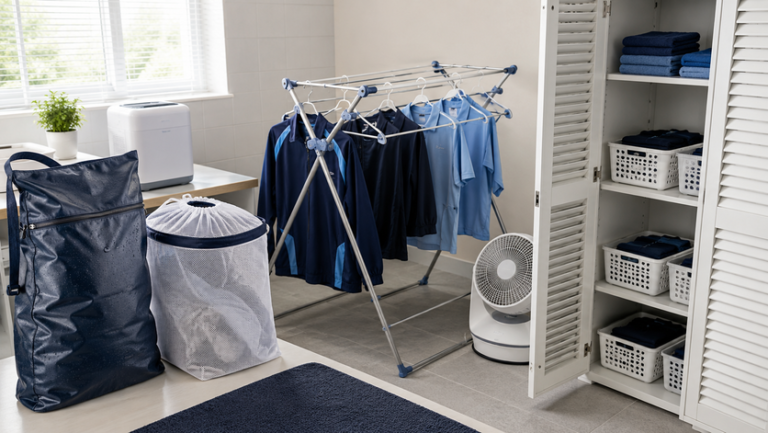
Storage products and setup
Useful Products for Damp-Uniform Handling
These general storage and drying accessories can support a workplace uniform-care system. They are not listed as Uniform Sabah apparel products.
Waterproof Wet Bag
Keeps a damp uniform separate during travel. Empty and open it immediately after arrival.
Ventilated Mesh Bag
Allows more airflow than a sealed plastic bag when the garment cannot be washed immediately.
Wide Plastic Hanger
Supports wet collars and shoulders without absorbing moisture like some wooden hangers.
Open Drying Rack
Keeps uniforms separated so air can reach the front, back, sleeves and seams.
Fan or Dehumidifier
Supports moisture removal during long rainy periods or in poorly ventilated rooms.
Ventilated Cupboard
Use only after garments are completely dry. Avoid overcrowding and damp walls.
Good Storage Conditions
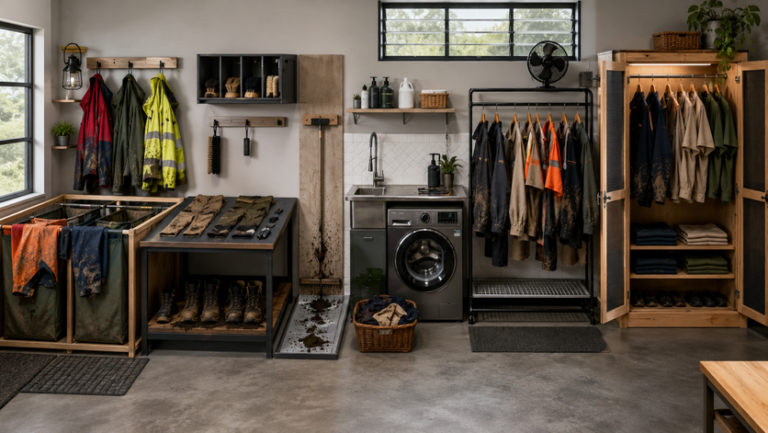
Storage process
Six Steps After Outdoor Work
Separate the Uniform
Keep rain-damp or sweaty clothing away from clean uniforms, food, documents and personal items.
Remove Loose Dirt
Empty pockets, open zips and gently shake off loose soil or leaves without rubbing mud deeper into the fabric.
Open and Air the Garment
Hang it on a wide hanger or drying rack where moving air can reach both sides.
Wash Promptly
Follow the care label and use the correct process for the fabric, print and type of workplace dirt.
Dry Every Thick Area
Check collars, cuffs, pockets, seams, embroidery backing and fabric beneath large printed areas.
Store Only When Fully Dry
Place the clean uniform in a dry, ventilated cupboard with enough space around it.
Outdoor work scenarios
Storage Advice for Different Teams
Use a Separate Wet Compartment
Keep the damp uniform away from food or parcels during travel, then remove it from the bag immediately after the route.
Remove Loose Soil First
Keep muddy uniforms away from clean garments and follow separate procedures when pesticides or chemicals are involved.
Separate General Workwear From PPE
Inspect reflective details, closures and protective items separately before washing or storage.
Prepare a Drying Area
Use labelled racks or hangers so wet crew shirts do not become mixed with clean backup uniforms.
Rotate Quick-Dry Uniforms
Issue enough sets for staff to change after rain or water-based activities while used garments are properly washed and dried.
Keep a Clean Spare Shirt
Store a dry replacement separately so damp outdoor clothing does not affect customer-facing duties.
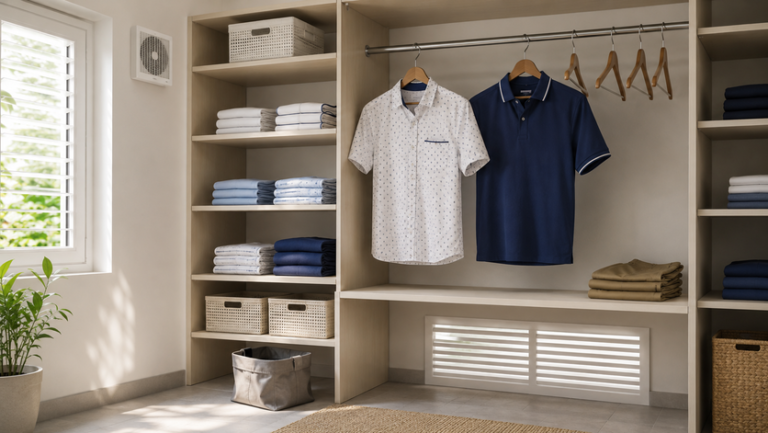
Storage checklist
Damp-Uniform Handling Checklist
- The damp uniform is removed from the bag immediately.
- Clean and used garments are kept separate.
- Pockets are emptied and zips are opened.
- Loose soil is removed before washing.
- The garment is hung with enough airflow.
- A waterproof wet bag is used only for short transport.
- Printed and embroidered areas are checked on both sides.
- The uniform is washed according to its care label.
- Every seam, collar and pocket is fully dry.
- Permanent storage is clean, dry and ventilated.
Common Storage Mistakes
- Leaving a wet shirt in a backpack overnight.
- Folding a polo while the collar remains damp.
- Mixing muddy uniforms with clean staff clothing.
- Using a moisture absorber instead of properly drying the shirt.
- Stacking damp printed shirts together.
- Taking contaminated workwear home without instructions.
Frequently asked questions
Questions About Damp Uniform Storage
Useful Uniform Sabah resources
Continue Planning Your Outdoor Uniforms
Choose Uniforms for Outdoor Work
Share your staff duties, rain exposure, preferred garment, fabric, quantities, sizes and branding requirements with Uniform Sabah.
WhatsApp Uniform Sabah Visit Uniform SabahOur network
Our Other Company Websites
Explore related uniform, printing and apparel services through our regional and international websites.