Which Printing Method Lasts the Longest?
Compare embroidery, sublimation, silkscreen and DTF based on fabric, washing habits, work conditions and the type of artwork required.
Direct answer
Which Method Is Usually the Most Durable?
There is no single winner for every garment. Sublimation is extremely durable on compatible polyester because the colour becomes part of the fabric. Embroidery is also highly durable on suitable polos, jackets and structured garments because the design is stitched with thread.
Silkscreen printing can last for many washes when the ink, curing and fabric are correctly matched. DTF can also perform well, but its transfer layer is more sensitive to excessive heat, stretching and rough washing than sublimation.
Sublimation
Colour is infused into compatible fabric, so there is no raised layer to peel.
Embroidery
Stitched logos can remain sharp for a long time when thread and fabric are suitable.
Silkscreen
Properly cured ink can be highly durable on compatible cotton and blended shirts.
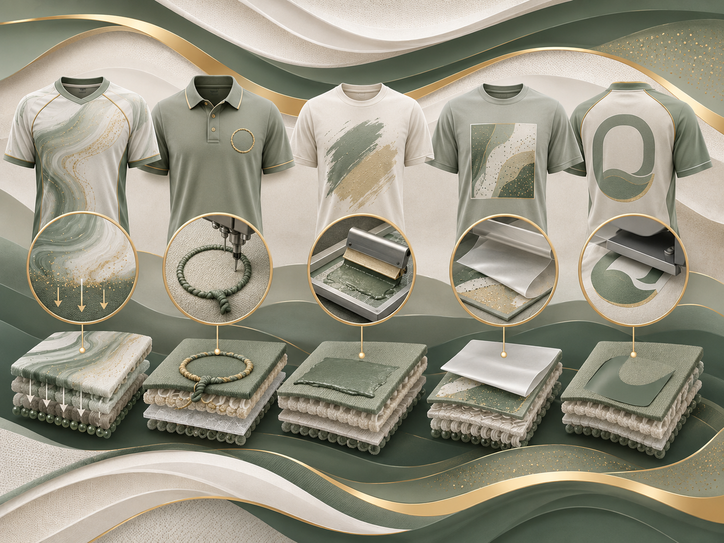
Quick comparison
Printing Method Durability Comparison
| Method | How it is applied | Durability strength | Main weakness | Best use |
|---|---|---|---|---|
| Sublimation | Colour is transferred into compatible polyester fibres | No surface layer to crack or peel | Requires suitable light-coloured polyester fabric | Sports jerseys, event uniforms and full-colour performance wear |
| Embroidery | Thread is stitched directly into the garment | Strong, premium and resistant to normal washing | Dense stitching can distort thin fabric or feel heavy | Polos, jackets, caps and corporate uniforms |
| Silkscreen | Ink is pushed through a screen and cured on the fabric | Long-lasting when properly produced and cared for | Can crack or fade if ink is unsuitable or exposed to high heat | Bulk T-shirts, events, uniforms and simple logos |
| DTF | A printed transfer is heat-pressed onto the garment | Good colour detail and practical durability | Heat, stretching and aggressive washing can weaken the transfer | Small orders, detailed logos, names and multicolour artwork |
| Heat-transfer vinyl | Cut vinyl is heat-applied to the garment surface | Useful for names, numbers and simple shapes | Edges may lift with repeated heat and stretching | Sports names, numbers and simple personalisation |
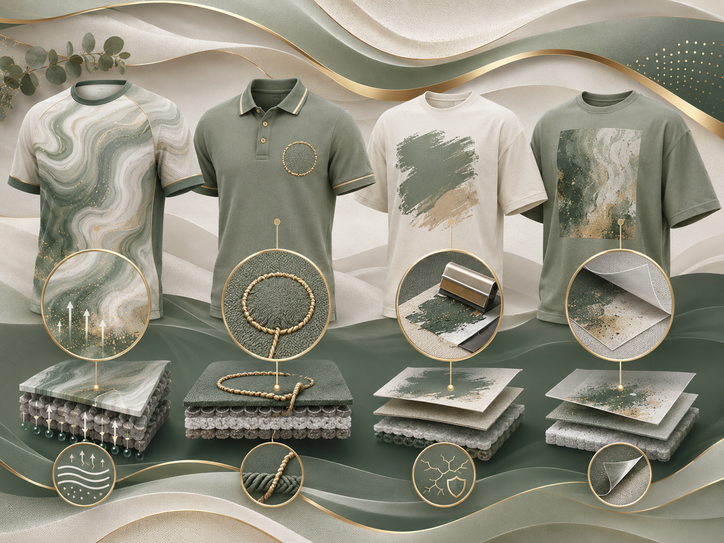
Method profiles
How Each Printing Method Ages
Sublimation Printing
Sublimation dye enters compatible polyester fibres instead of sitting on top of the garment. This means the design does not form a separate layer that can peel.
- Excellent for full-colour jerseys
- Suitable for names, numbers and patterns
- Lightweight and breathable finish
- Best on compatible polyester fabric
Embroidery
Embroidery uses thread to form the logo. It is highly durable on garments that can support the stitch density, such as polos, jackets and caps.
- Premium corporate appearance
- Strong for compact logos and names
- Suitable for repeated washing
- Avoid oversized dense embroidery on thin fabric
Silkscreen Printing
Silkscreen can produce a durable ink layer when the ink system, curing temperature and garment are properly matched.
- Good for simple bold artwork
- Suitable for larger quantities
- Works well on many cotton and blended shirts
- Care is needed to reduce cracking and fading
DTF Printing
DTF provides detailed colour on many compatible fabrics. The transfer can last well when pressed correctly and protected from high heat and rough handling.
- Suitable for colourful logos
- Useful for smaller quantities
- Works on many garment colours
- Wash inside out and avoid high-temperature drying
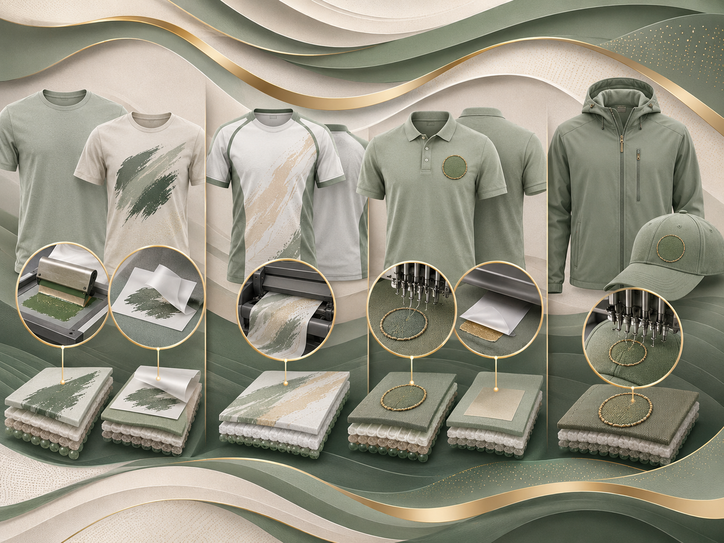
Fabric and artwork compatibility
Match the Method to the Shirt
Silkscreen or DTF
Cotton provides a familiar printable surface. Silkscreen suits repeated simple designs, while DTF is practical for detailed multicolour artwork.
Sublimation
Compatible polyester is the strongest match for sublimation, especially when the design covers large areas or includes many colours.
Embroidery or Compact DTF
Embroidery creates a premium finish on structured polos. Compact DTF can support more colourful artwork where the fabric is compatible.
Embroidery
Structured outerwear and caps often support small embroidered logos well, subject to the garment construction and stitch location.
Artwork Choices That Improve Durability
- Use compact logos instead of oversized solid decoration.
- Avoid placing transfers over high-stretch or high-friction areas.
- Keep fine embroidery details large enough to stitch clearly.
- Use high-contrast colours so normal fading is less noticeable.
- Place logos away from backpack straps and repeated rubbing points.
- Approve the print size on the actual garment model.
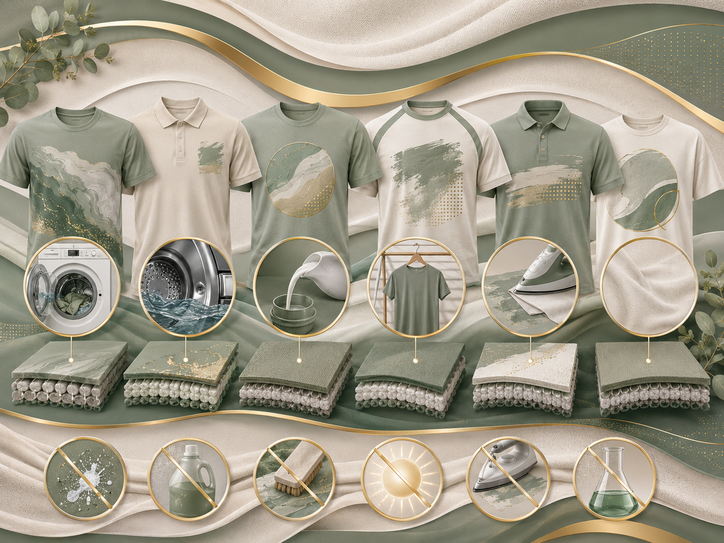
Care and lifespan guide
What Makes Printing Last Longer?
Hot Washing and Drying
Excessive heat can weaken transfers, stress ink and affect garment colour.
Rough Washing
Heavy agitation and abrasive garments can wear printed surfaces more quickly.
Bleach and Harsh Products
Strong chemicals can fade fabric, weaken thread or damage printed decoration.
Recommended Care Habits
- Read the garment and printing care instructions.
- Turn printed shirts inside out before washing.
- Use cool or lukewarm water where permitted.
- Choose a gentle cycle and mild detergent.
- Do not pour bleach directly onto decorated areas.
- Air-dry in the shade whenever practical.
- Avoid ironing directly over DTF, vinyl or silkscreen prints.
- Store garments only after they are fully dry.
Durability Factors Beyond the Method
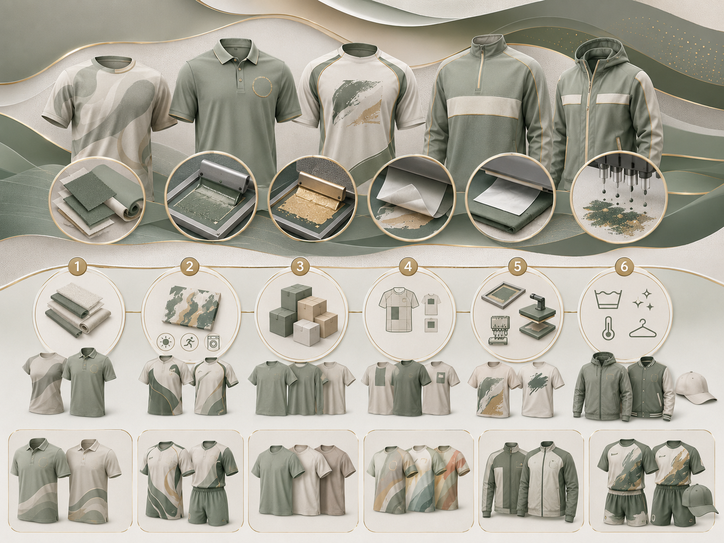
Selection process
How to Choose the Most Durable Method
Identify the Garment Fabric
Confirm whether the shirt is cotton, polyester, microfiber, CVC, TC, pique, honeycomb or another fabric type.
Review the Artwork
Check the number of colours, fine details, gradients, text size and whether names or numbers are required.
Estimate Wear and Washing
Daily uniforms need a different durability plan from one-day event shirts or occasional promotional clothing.
Check the Order Quantity
Quantity can affect whether silkscreen, DTF, embroidery or custom sublimation is the most practical option.
Choose the Method and Placement
Match the technique to the garment and keep decoration away from heavy stretching or repeated rubbing where possible.
Give Wearers Care Instructions
Provide washing, drying and ironing guidance so the chosen method can achieve its expected lifespan.
Buyer scenarios
Best Method for Different Orders
Embroidery
Small chest logos on suitable polos can remain professional and durable through repeated staff use.
Sublimation
Full-colour polyester jerseys benefit from decoration that becomes part of the fabric and does not form a heavy surface layer.
Silkscreen
Simple repeated logos can achieve strong durability and consistent output when production is correctly controlled.
DTF
Detailed artwork and personalised names can be produced efficiently on many compatible ready-stock garments.
Embroidery
Structured garments can support compact stitched logos with a premium finish.
Sublimation and Cut-and-Sew
A full-custom approach allows names, numbers, patterns and team colours to be integrated into the garment design.
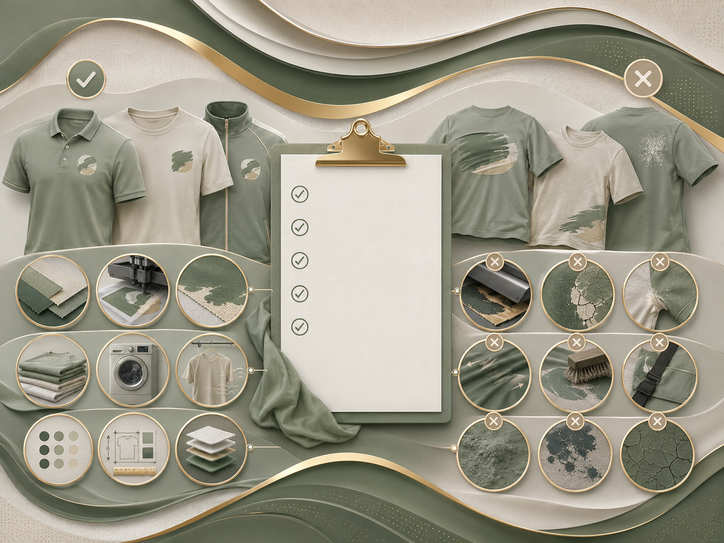
Buyer checklist
Printing Durability Checklist
- The exact garment fabric is confirmed.
- The artwork size and number of colours are final.
- The expected washing frequency is understood.
- The method suits the fabric and garment construction.
- The logo is kept away from high-friction areas.
- The correct production settings are used.
- A sample or digital mockup is approved where applicable.
- Wearers receive suitable washing instructions.
- High heat and harsh chemicals are avoided.
- Future repeat orders use the same approved specifications.
Common Durability Mistakes
- Choosing a method before confirming the fabric.
- Using oversized solid prints on high-stretch garments.
- Placing decoration under bag straps or repeated rubbing points.
- Washing transfers in hot water.
- Ironing directly over a printed logo.
- Assuming every printing method suits every shirt.
Frequently asked questions
Questions About Long-Lasting Printing
Useful Uniform Sabah resources
Continue Planning Your Custom Uniform
Choose a Printing Method That Lasts
Share your garment type, fabric, quantity, artwork, work environment and washing requirements with Uniform Sabah for a suitable recommendation.
WhatsApp Uniform Sabah Explore Uniform SabahOur company network
Our Other Company Websites
Explore related uniform, apparel and custom-printing services through our regional and international websites.