Pros and Cons of Embroidery for Uniforms
Understand when embroidered logos create the best professional result, and when another branding method may be more suitable.
Direct answer
Is Embroidery a Good Choice for Uniforms?
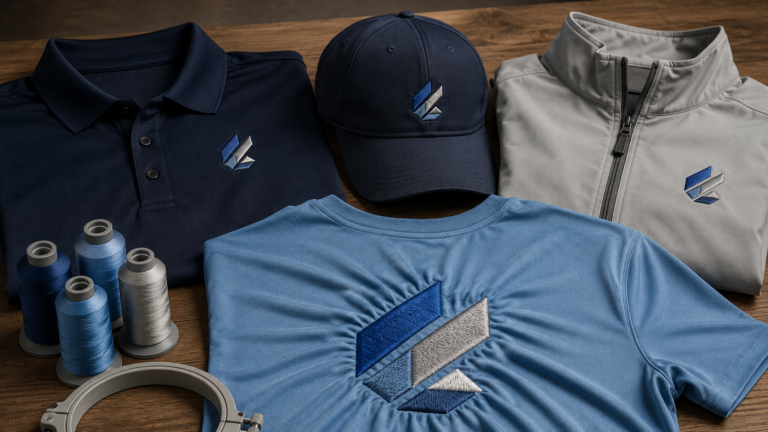
Embroidery is a strong choice for polos, corporate shirts, jackets, caps and selected workwear because it creates a durable, premium stitched finish. It is especially effective for compact company logos, staff names and department labels.
However, embroidery is not ideal for every design or garment. Very detailed artwork, large solid areas, thin fabrics and lightweight sports shirts may become stiff, heavy or distorted when too many stitches are used.
Premium Appearance
Raised thread gives company uniforms a polished and established look.
Strong Durability
Properly stitched logos can handle repeated wear and normal washing.
Not for Every Artwork
Tiny text, gradients and photographic details may not reproduce clearly.
Quick comparison
Embroidery Advantages and Disadvantages
| Factor | Advantage | Possible disadvantage | Best practice |
|---|---|---|---|
| Appearance | Creates a premium, textured and professional finish | Can look bulky when the design is oversized | Keep logos compact and balanced |
| Durability | Thread can withstand repeated normal use | Loose threads may appear if workmanship or care is poor | Use suitable thread, backing and finishing |
| Design detail | Clear for bold logos, names and simple symbols | Fine text, gradients and photographs are limited | Simplify artwork before digitising |
| Garment compatibility | Works well on polos, caps, jackets and structured shirts | Thin or stretchy fabric may pucker or feel stiff | Match stitch density to the garment |
| Comfort | Compact chest logos have limited effect on wearability | Large designs may feel heavy or rough on the inside | Avoid oversized embroidery on hot-weather uniforms |
| Cost planning | Good long-term value for premium uniforms | More stitches and more positions increase cost | Control logo size and stitch count |
Best garment options
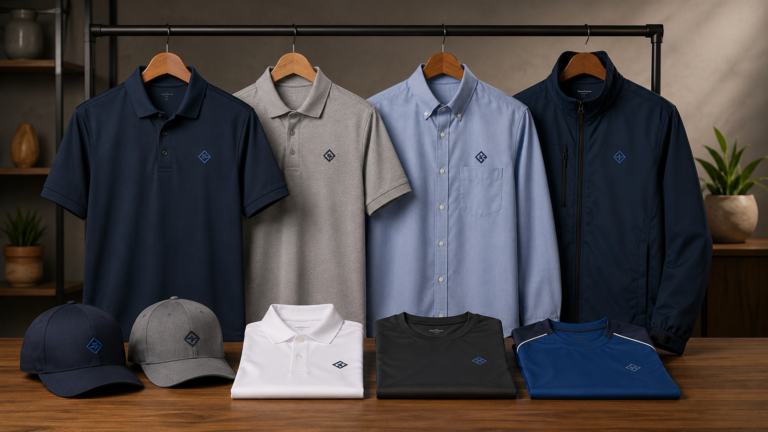
Which Uniforms Suit Embroidery?
Polo Shirts
Pique, honeycomb and other structured polo fabrics often support compact embroidered logos well.
- Suitable for corporate and retail teams
- Works well for chest logos and names
- Creates a professional customer-facing image
- Check fabric thickness and texture first
Corporate Shirts
Embroidery can add a neat logo to office, hospitality and service uniforms when the fabric and backing are appropriate.
- Useful for office and management teams
- Suitable for staff names and departments
- Keep designs small on lighter fabric
- Review placement around pockets and seams
Jackets and Outerwear
Jackets, windbreakers and selected outer layers can carry durable embroidered branding, subject to lining and construction.
- Good for supervisors and field teams
- Suitable for chest or sleeve logos
- Check whether the lining can be accessed
- Avoid blocking functional areas
Caps and Hats
Structured caps provide a visible location for company, event or team logos.
- Useful for outdoor and event teams
- Works best with simplified artwork
- Confirm the embroidery area and cap structure
- Avoid very small lettering
Thin Quick-Dry Shirts
Lightweight performance fabric may pucker, sag or feel heavy when dense embroidery is used.
- Use a compact low-density design
- Test the backing and stabiliser
- Consider DTF for highly detailed artwork
- Request a sample for larger orders
Large Sports Jersey Graphics
Large names, numbers and sponsor graphics are usually more practical with sublimation, DTF or heat-transfer methods.
- Embroidery can add unnecessary weight
- Large stitch areas may reduce breathability
- Detailed sponsor artwork may lose clarity
- Use embroidery only for selected compact logos
Method comparison
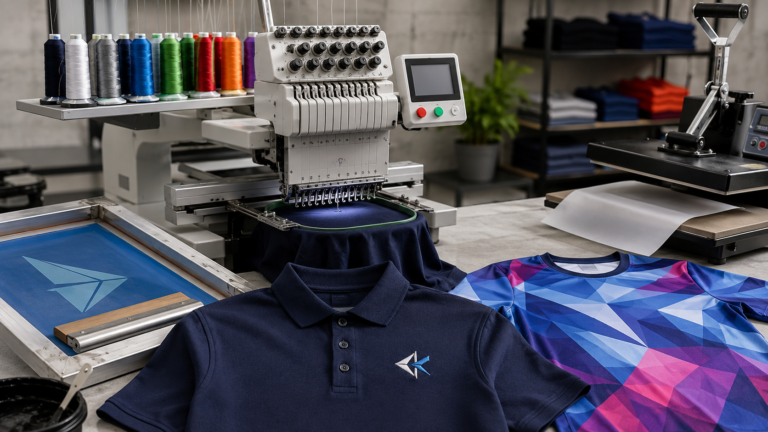
Embroidery Versus Other Branding Methods
Best for Premium Small Logos
Choose embroidery for polos, caps, jackets and corporate garments that need a textured, durable and professional finish.
Best for Colourful Detail
DTF is more suitable for gradients, many colours, fine artwork and smaller quantities on compatible garments.
Best for Bold Bulk Designs
Silkscreen is practical for repeated simple artwork across larger quantities of suitable T-shirts and uniforms.
Best for Full-Custom Sportswear
Sublimation integrates full-colour graphics into compatible polyester and is suitable for all-over jersey designs.
Use More Than One Method When Necessary
- Use embroidery for a small company logo on the front.
- Use DTF for a detailed campaign graphic on the back.
- Use silkscreen for large repeated event artwork.
- Use sublimation for full-colour team jerseys.
- Keep the overall design consistent across all methods.
Artwork and design guide
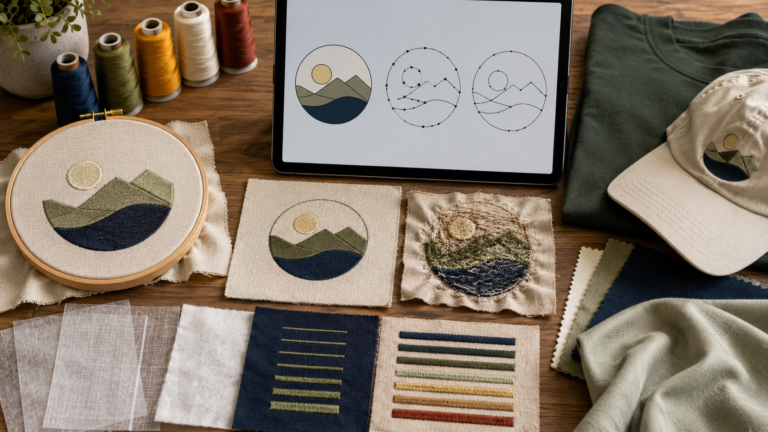
Prepare Artwork for Better Embroidery
Text Is Too Small
Very small letters may close up, merge or become difficult to read.
Too Many Stitches
Dense designs can make the garment stiff, heavy or uneven.
Low Contrast
Thread colours that blend into the garment may reduce visibility.
Design Rules That Improve Results
- Simplify very fine details and thin lines.
- Use readable text at an appropriate finished size.
- Limit unnecessary colour changes.
- Choose strong contrast between thread and fabric.
- Avoid oversized solid embroidery areas.
- Keep the design away from thick seams and difficult edges.
- Approve a sew-out or sample where appropriate.
- Keep the digitised embroidery file for future reorders.
Factors That Affect Embroidery Quality
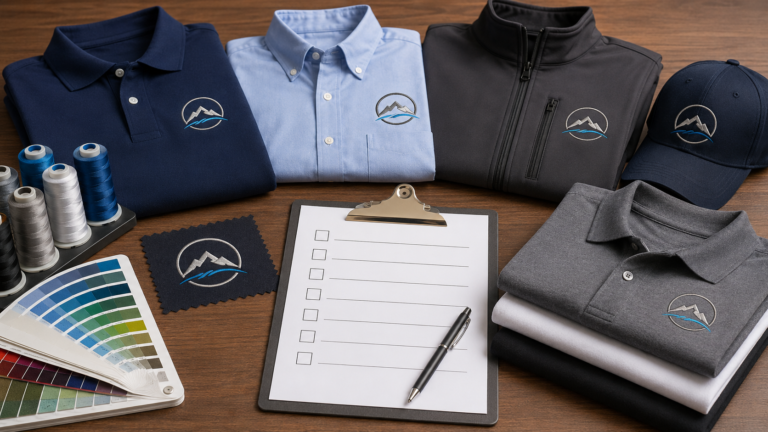
Ordering process
How to Order Embroidered Uniforms
Choose the Garment
Select a polo, corporate shirt, jacket, cap or workwear item that can support embroidery.
Submit the Logo
Provide the clearest available artwork and identify the required thread colours.
Confirm the Finished Size
Approve the logo width, height and placement rather than relying on a vague description.
Digitise and Review
Convert the artwork into stitch instructions and review any simplified details.
Approve a Sample
For important or larger orders, check a sew-out or garment sample before bulk production.
Confirm Names and Quantities
Check every personalised name, department and garment size before production begins.
Buyer scenarios
When Embroidery Is a Strong Choice
Office and Management Uniforms
Small embroidered logos help polos and corporate shirts look polished and consistent.
Hotels, Cafes and Restaurants
Embroidery suits guest-facing polos, aprons, caps and selected jackets.
Store and Service Teams
Staff names and logos can create clearer identification and a professional appearance.
Jackets, Caps and Outerwear
Compact stitched branding can work well on structured garments for supervisors and field teams.
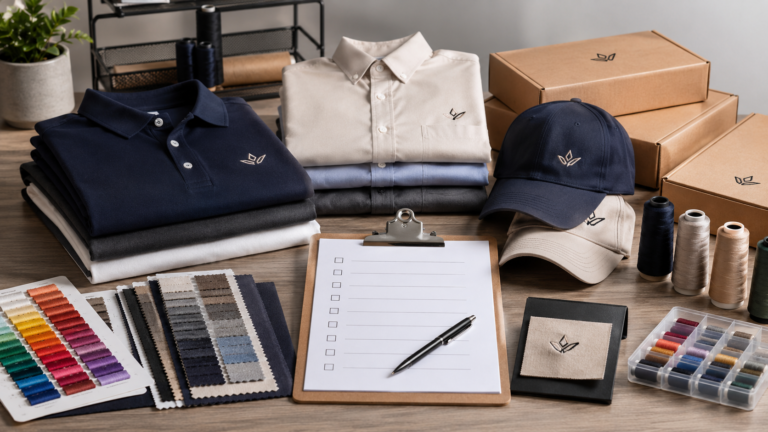
Buyer checklist
Embroidery Order Checklist
- The garment fabric and structure are suitable.
- The logo is simplified where necessary.
- The finished embroidery size is confirmed.
- Thread colours are approved.
- Placement is measured from clear garment reference points.
- Names and departments are checked for spelling.
- A sew-out or sample is approved when needed.
- The digitised file is stored for repeat orders.
- Wearers receive suitable washing instructions.
- The final quantity and size list are confirmed.
Common Embroidery Mistakes
- Using tiny lettering that cannot stitch clearly.
- Making the logo too large for the garment.
- Applying dense embroidery to thin quick-dry fabric.
- Choosing thread colours with poor contrast.
- Approving production without checking personalised names.
- Assuming a print file can be embroidered without digitising.
Frequently asked questions
Questions About Embroidery
Useful Uniform Sabah resources
Plan Your Embroidered Uniform Order
Choose the Right Embroidery Setup
Share your garment, logo, quantity, thread colours, placement and Sabah delivery location for a suitable embroidery recommendation.
WhatsApp Uniform Sabah Explore Uniform SabahOur company network
Our Other Company Websites
Explore related uniform, apparel and custom-printing services through our regional and international websites.