What Is Eyelet Fabric? Features, Uses and Benefits
Eyelet fabric is a textile structure made with small, regularly spaced openings that help air move through the material. In sportswear and uniform T-shirts, the term often refers to polyester or microfiber knits with tiny eyelet-like holes that create a lightweight, breathable and quick-drying feel.
Is eyelet fabric suitable for uniforms and activewear?
Yes. Eyelet fabric is commonly chosen for sports shirts, event tees, training tops and active company uniforms because the open knit structure improves ventilation and usually works well with lightweight synthetic yarns. It is especially useful when buyers want a practical shirt for warm conditions, movement and repeated washing.
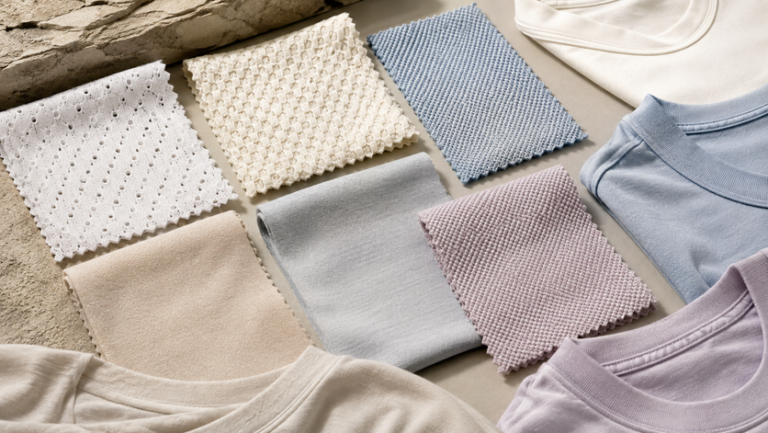
How Eyelet Fabric Compares with Other Common Shirt Fabrics
Eyelet describes the knit structure rather than one exact fibre. Many uniform and sportswear eyelet fabrics are made from polyester or microfiber, while cotton jersey, honeycomb and interlock have different surface textures and wear characteristics.
| Fabric type | Typical feel | Airflow | Common uses | Best reason to choose it |
|---|---|---|---|---|
| Eyelet / mini eyelet | Light, slightly textured, sporty | High because of the small open knit structure | Quick-dry tees, event shirts, sportswear, active uniforms | Breathability and practical performance in warm conditions |
| Honeycomb | More structured with a visible textured surface | Moderate to good | Polo shirts, corporate uniforms, school and club wear | A more substantial, uniform-like appearance |
| Cotton jersey | Soft, familiar and casual | Depends on weight and knit density | Casual tees, merchandise, lifestyle shirts | Natural hand feel and everyday comfort |
| Polyester interlock | Smoother and denser than eyelet | Moderate | Sportswear, sublimation jerseys, uniforms | Cleaner surface for detailed printing and full-colour designs |
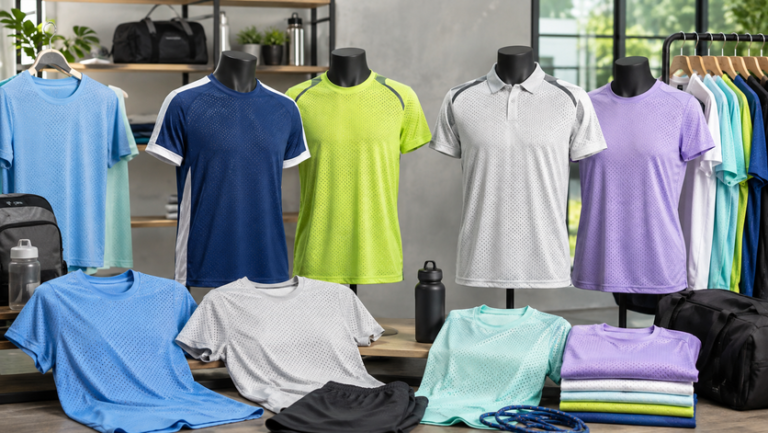
Where Eyelet Fabric Works Best
The combination of small ventilation openings and lightweight synthetic yarns makes eyelet fabric especially useful for garments that need to stay comfortable during movement, outdoor work or long event days.
Team-Building and Event T-Shirts
Eyelet shirts are practical for outdoor company programmes because they feel lighter than many dense knits and allow more air movement around the body.
Training and Support Crew Shirts
For training, fun runs, tournaments and crew uniforms, eyelet fabric provides a sporty appearance without requiring a fully customised jersey construction.
Sports Day and Club Programmes
Schools can use different eyelet shirt colours for houses, clubs, committee roles or activity groups while keeping one easy-to-manage garment type.
Active Work Uniforms
Warehouse crews, delivery teams, roadshow staff and outdoor workers may prefer eyelet fabric when breathability and easy care are more important than a formal polo appearance.
Campaign and Volunteer Shirts
Lightweight eyelet tees can be useful for high-volume events where participants need a practical shirt that can be printed with campaign branding.
Simple Quick-Dry T-Shirts
Eyelet fabric is also suitable for buyers who simply want a lightweight sports T-shirt for daily use, exercise or casual outdoor activities.
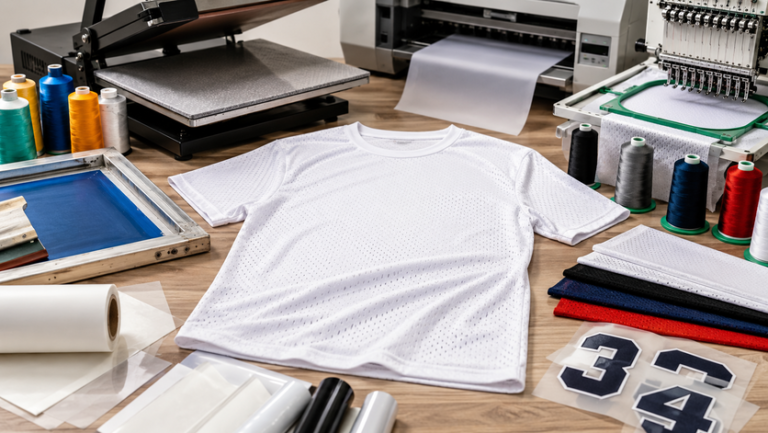
Can Eyelet Fabric Be Printed or Embroidered?
Yes, but the open texture means the artwork method should be selected carefully. The best result depends on the fabric composition, hole size, garment colour, logo detail and placement.
| Branding method | Suitability | Best for | What to watch |
|---|---|---|---|
| DTF printing | Very practical for many ready-made eyelet shirts | Detailed logos, gradients, multi-colour artwork and smaller runs | The texture may be visible beneath thin details, so suitable artwork sizing helps |
| Silkscreen printing | Good for simple repeated designs | Large quantities, one-colour or limited-colour logos | Very fine lines may not reproduce as cleanly on an open textured surface |
| Heat transfer / vinyl | Useful for names and numbers | Player names, jersey numbers, crew roles and one-off personalisation | Heat settings and transfer material should be suitable for the shirt fabric |
| Embroidery | Possible for compact logos | Small chest or sleeve logos | Dense stitching can distort lightweight fabric, so logo size and stabilisation matter |
| Sublimation | Depends on fabric colour and polyester content | White or very light polyester-based fabric and suitable garment construction | A ready-made coloured eyelet tee is not the same as a purpose-made full sublimation jersey |
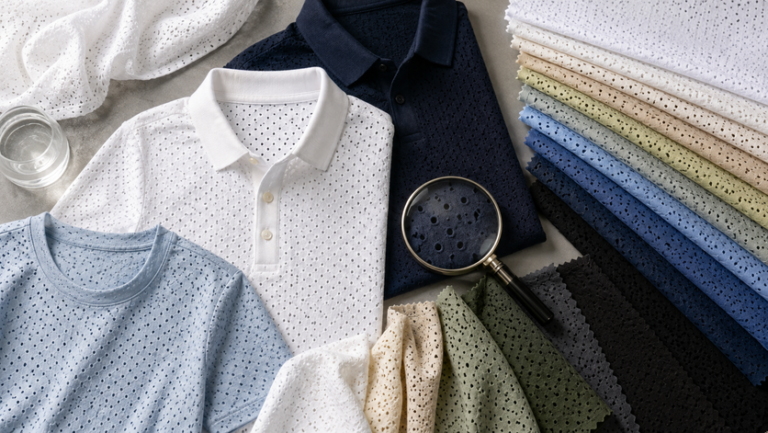
What to Check Before Choosing an Eyelet Shirt
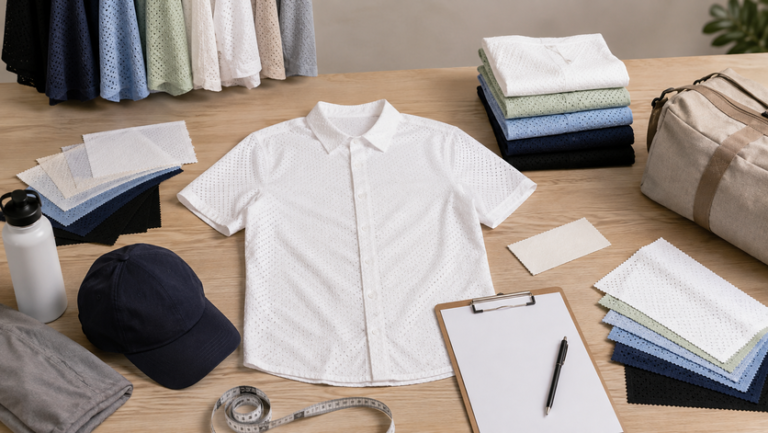
Not every eyelet fabric feels the same. Buyers should look beyond the word “eyelet” and check fibre composition, fabric weight, opening size, stretch, colour and the intended printing method.
GSM Still Matters
A lighter eyelet fabric may feel cooler and faster-drying, while a heavier version can feel more substantial. GSM should be considered together with knit density and fibre type rather than treated as a quality score.
Mini Eyelet vs More Open Eyelet
Smaller openings create a finer surface, while larger openings can feel more ventilated and visibly textured. The difference can affect both appearance and print sharpness.
Polyester and Microfiber Are Common
Many quick-dry eyelet shirts use polyester-based yarns because they are lightweight, easy to wash and relatively fast-drying compared with cotton.
Contrast the Logo with the Shirt
Dark shirts generally need lighter artwork and light shirts usually need darker artwork. Neon and highly saturated colours may require outlines or stronger contrast for readability.
How to Buy Eyelet Shirts for a Group Order
A smooth order starts with the intended use. Once the buyer knows whether the shirts are for sports, an event, staff uniforms or promotion, the fabric weight, colour and branding method become much easier to decide.
Define the use
State whether the shirts are for daily uniforms, outdoor activity, sports, events or merchandise.
Choose the fabric feel
Compare mini eyelet, more open eyelet and alternative fabrics if the wearer needs a smoother or more structured finish.
Confirm shirt colour and sizes
Collect the final size breakdown and check stock across all selected colours before printing starts.
Prepare the artwork
Send a clean vector or high-resolution file and confirm print position, size and colour contrast.
Approve the mock-up
Check spelling, logo scale, placement and shirt colour before the order moves into production.
Confirm delivery details
Provide the Sabah delivery address, contact person and any sorting or packing requirements.
When Eyelet Is a Strong Choice — and When It Is Not
Outdoor Event Crew
Eyelet fabric suits crews who move around for long periods and need a breathable, easy-care T-shirt rather than a formal uniform.
Sports and Activity Groups
Training teams, fun runs, school sports and community activities can benefit from the lightweight construction and sporty look.
Premium Front-Office Uniforms
If the priority is a more structured, formal appearance, a polo made from honeycomb, pique or a smoother knit may be more suitable.
Large Dense Embroidery
If the design requires heavy stitching over a large area, a thicker and more stable fabric can provide a better embroidery base.
Eyelet Fabric Buying Checklist
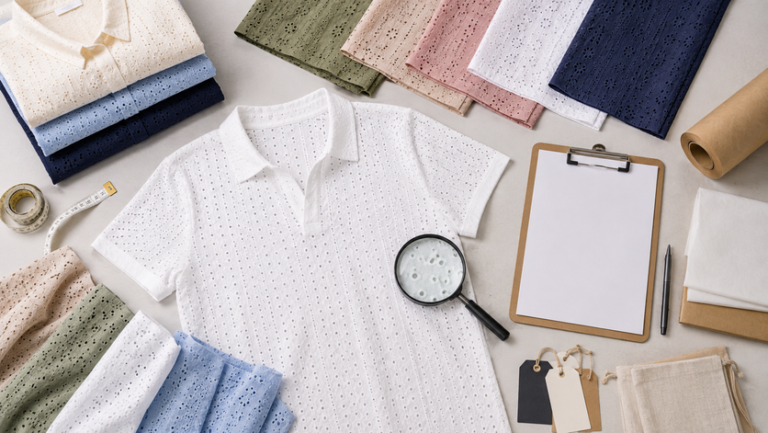
Before approving an eyelet shirt order, make sure the fabric, fit and branding method match the actual use of the uniform or event shirt.
- The intended use of the shirt is clear.
- The fabric composition has been checked.
- The eyelet texture and opening size are suitable.
- The GSM is appropriate for the required feel.
- The final shirt colour is confirmed.
- The size breakdown has been collected.
- The logo has enough contrast against the shirt.
- The printing method suits the open fabric texture.
- The mock-up has been approved.
- Sabah delivery and packing details are ready.
Eyelet Fabric FAQ
What is eyelet fabric?
Is eyelet fabric breathable?
Is eyelet fabric quick-dry?
Is eyelet the same as microfiber?
What is mini eyelet?
Can eyelet fabric be used for company uniforms?
Can eyelet fabric be embroidered?
What printing method is good for eyelet shirts?
Is a higher GSM eyelet shirt always better?
How should I choose between eyelet and honeycomb?
Compare Eyelet Shirts for Your Next Uniform Order
Share your intended use, quantity, artwork and preferred shirt style. Uniform Sabah can help you compare suitable ready-made garments and branding methods for your team.
Continue Planning Your Uniform Order
Use these pages to compare garment choices, branding ideas and ordering support for Sabah customers.
Our Other Company Websites
Explore related uniform, apparel and custom-printing services through our regional and international websites.