Ring-Spun Cotton vs Regular Cotton
Ring-spun cotton is often chosen when buyers want a smoother, softer T-shirt surface, while basic or “regular” cotton is commonly selected when cost and simple everyday use matter more. The important point is that “regular cotton” is not one fixed technical standard, so buyers should compare the yarn construction, GSM, knit, finishing and garment quality instead of relying on the word cotton alone.
Which one is better for company T-shirts?
Choose ring-spun cotton when comfort, a smoother print surface and a more premium hand feel are priorities. Choose a basic cotton tee when you need a practical, budget-conscious shirt for campaigns, giveaways or short-term programmes. For uniforms that will be worn repeatedly, compare the complete garment specification because fabric weight, fibre quality, knit density and finishing can matter just as much as the spinning method.
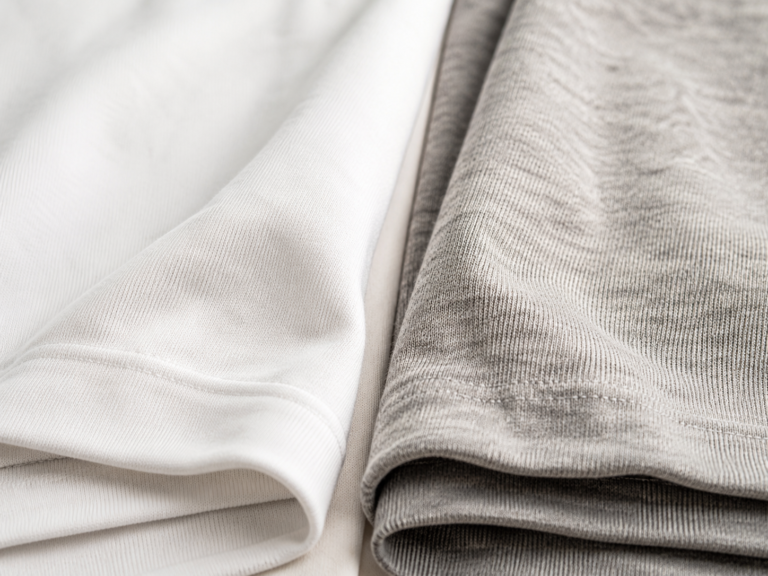
Ring-Spun Cotton vs Basic Cotton at a Glance
The biggest difference is how the yarn is produced. Ring spinning continuously twists fibres into a finer, more compact yarn. “Regular cotton” is a broad retail term and may refer to a more basic cotton yarn or open-end/rotor-spun construction, depending on the supplier.
| Comparison Point | Ring-Spun Cotton | Regular / Basic Cotton | Buyer Takeaway |
|---|---|---|---|
| Yarn construction | Fibres are drawn and continuously twisted into a finer, compact yarn. | Can refer to standard cotton yarn; many value tees use a coarser or open-end yarn. | Ask the supplier for the actual yarn specification if surface quality matters. |
| Hand feel | Usually smoother and softer against the skin. | May feel firmer, drier or slightly rougher depending on yarn and finishing. | Ring-spun is often preferred for staff tees, retail merchandise and premium events. |
| Surface appearance | Typically cleaner with fewer protruding fibres. | Can have a more textured or fuzzy surface. | A smoother surface can help small printed details look cleaner. |
| Print detail | Good base for detailed screen print, DTF and direct-to-garment artwork. | Still printable, but surface texture may influence very fine details. | Always judge the finished garment, not the yarn name alone. |
| Durability | Can provide good yarn strength and a refined surface. | Can also be durable when GSM, knitting and finishing are well controlled. | Ring-spun does not automatically make every shirt more durable. |
| Price | Often positioned above basic cotton tees. | Commonly used for value-focused and promotional ranges. | Compare cost per wear for uniforms, not only the initial piece price. |
| Typical use | Company tees, retail apparel, events, branded merchandise and daily casual wear. | Giveaways, campaigns, budget uniforms, mass events and simple promotional shirts. | Match the shirt to how often and where it will be worn. |
| What to verify | GSM, combed/cardered status, knit, shrinkage control and cutting. | Actual yarn type, GSM, surface, colour fastness, cutting and finishing. | The complete specification is more useful than the word “cotton”. |

Which Cotton Type Fits Different Shirt Programmes?
The best choice depends on the wearer, expected lifespan, branding requirement and budget. Ring-spun cotton is not automatically necessary for every order, while a cheaper basic cotton tee may not be the best value for daily uniforms.
Prioritise comfort and repeat wear
Ring-spun cotton is a strong option for staff who wear their T-shirts regularly, especially in retail, office support, creative teams and customer-facing environments.
A smoother surface improves perceived quality
Brands selling or gifting apparel often prefer ring-spun cotton because the garment can feel more refined in the hand and gives detailed artwork a cleaner base.
Budget may matter more than premium hand feel
For large campaigns, one-day events or giveaways, a well-made basic cotton shirt may be sufficient if the sizing, GSM and print result meet the project requirements.
Balance comfort, washing and replacement cost
If the shirt will be worn repeatedly, choose a fabric that feels comfortable and holds its shape. If it is for a single programme, a simpler cotton option may be more economical.
GSM and knit matter as much as yarn type
A heavyweight tee can be ring-spun or otherwise. Buyers looking for a structured oversized feel should compare GSM, knit density, collar construction and cutting together.
Consider whether cotton is the best fabric at all
For hot, sweaty or physically active work, microfiber or cotton-poly blends may dry faster than 100% cotton. Choose based on the real working environment rather than softness alone.
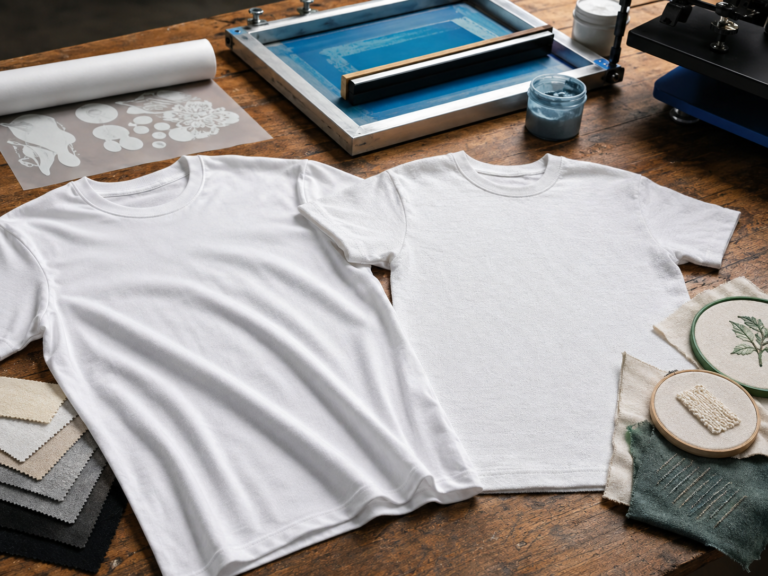
How Cotton Surface Quality Affects Shirt Printing
Both ring-spun and basic cotton shirts can be customised. The main difference is that a smoother, more even surface generally gives printers an easier base for fine artwork, while rougher surfaces may show more texture through the print.
| Branding Method | Ring-Spun Cotton | Regular / Basic Cotton | What to Check |
|---|---|---|---|
| DTF printing | Works well for detailed, colourful logos on a smooth cotton surface. | Also suitable, although heavy surface texture can remain visible around the transfer. | Print size, heat tolerance, fabric colour and transfer feel. |
| Silkscreen printing | Excellent for clean logos, bold graphics and repeated production. | Very common for promotional cotton T-shirts and bulk orders. | Number of colours, ink coverage, quantity and artwork detail. |
| Direct-to-garment | A smooth cotton surface is generally favourable for fine detail and soft-hand prints. | Printable, but coarser yarns and loose fibres can reduce the crisp appearance of very fine details. | Fabric composition, pretreatment, print resolution and shirt colour. |
| Embroidery | Possible for compact logos if the fabric weight and stability are suitable. | Also possible, but lightweight tees may need backing and careful stitch density. | GSM, logo size, stitch count and risk of puckering. |
| Heat transfer / vinyl | Useful for names, numbers and simple personalisation. | Commonly used for small runs and individual names. | Press temperature, garment colour and final transfer thickness. |
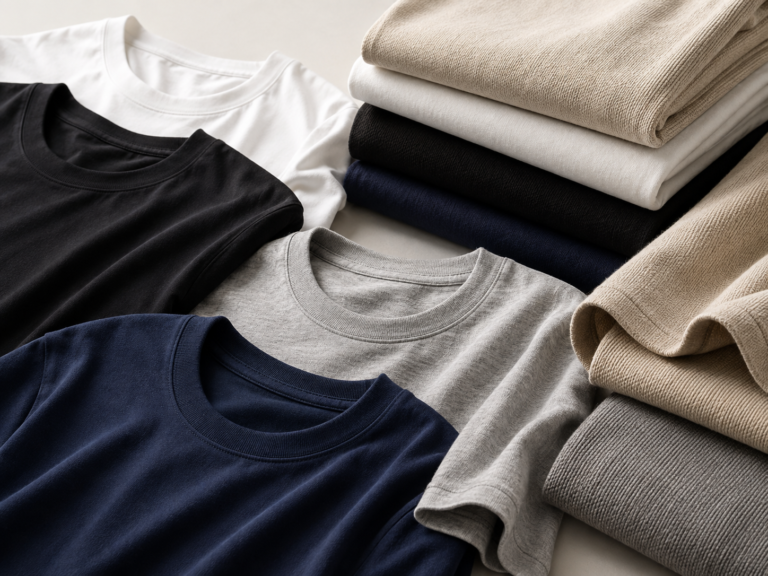
What Else Should You Compare Besides Ring-Spun?
Yarn type is only one part of T-shirt quality. A better buying decision comes from checking the fabric weight, fibre preparation, knit density, finishing, colour and garment construction together.
Fabric weight changes feel and opacity
A 160gsm ring-spun tee and a 240gsm ring-spun tee will wear very differently. Higher GSM generally gives more body and opacity, while lighter fabrics may feel cooler and less structured.
Fibre preparation affects smoothness
Combed cotton removes more short fibres before spinning, which can create a cleaner, more uniform yarn. Do not assume all ring-spun cotton is automatically combed cotton.
Single jersey, interlock and other knits behave differently
Knit structure influences stretch, drape, thickness and printing behaviour. Compare the complete fabric construction rather than focusing only on the yarn label.
Dark and light shirts can feel and print differently
Dark garments may require underbase ink or different transfer preparation. Light colours can show fabric transparency more clearly when the GSM is low.
A soft fabric still needs good construction
Check rib quality, neck taping, stitching, shoulder shape and hem finishing. These areas strongly influence how professional the shirt looks after repeated wear.
Ask how the finished garment should be washed
Cotton can shrink if it is exposed to unsuitable washing and drying conditions. Pre-shrinking, finishing and care instructions all affect the final result.

How to Choose the Right Cotton T-Shirt Before Ordering
A clear specification prevents the buyer from comparing two shirts that only look similar in a product photo. Use the steps below to narrow down the right fabric for your project.
Define how the shirt will be used
Decide whether it is for daily staff wear, a one-day event, retail merchandise, school use, giveaways or premium branding.
Set the comfort and budget priority
If long-term comfort and presentation matter most, shortlist ring-spun or combed ring-spun options. If unit cost dominates, compare good basic cotton tees.
Compare GSM and garment measurements
Check fabric weight, chest width, length, shoulder and available sizes so the chosen model suits the full team.
Match the shirt to the artwork
Detailed prints benefit from a smooth surface, while simple logos can work well on a wider range of cotton tees.
Review a sample where possible
Check softness, opacity, collar stability, colour and fit before approving a large company or event order.
Save the exact model for repeat orders
Record the brand, model, colour, size breakdown and printing method so future top-up orders are easier to reproduce.
Practical Examples for Sabah Buyers
Staff wear several times each month
A comfortable ring-spun cotton shirt can be worth the higher unit cost because staff notice the feel every time they wear it. Check collar quality and shrinkage control as well.
Hundreds of shirts for one programme
A basic cotton shirt can be more suitable when the design is simple, the event duration is short and keeping the total project cost controlled is the main priority.
The shirt itself is part of the product value
Ring-spun or combed ring-spun cotton is often the stronger direction because buyers are paying attention to softness, surface quality and overall garment presentation.
Heat and sweat are bigger concerns than softness
Compare cotton against quick-dry microfiber or cotton-poly blends. A premium cotton tee can still retain more moisture than a performance fabric during active work.
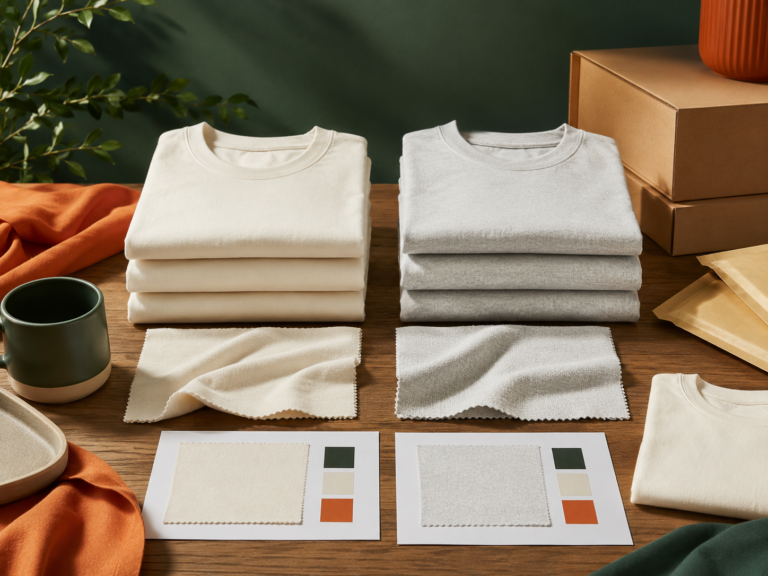
Before Choosing a Cotton T-Shirt
Use this checklist when comparing shirt quotations or samples from different brands.
- Confirm whether the yarn is ring-spun, open-end or another construction.
- Check whether the cotton is combed, carded or unspecified.
- Compare the GSM rather than judging thickness by photos.
- Review the actual knit and surface texture.
- Check collar quality, stitching and garment finishing.
- Compare the full size chart for the intended wearers.
- Choose the shirt colour before finalising print colours.
- Confirm the printing method and artwork size.
- Review a sample for large or repeat orders where possible.
- Save the exact brand and model for future reorders.
Ring-Spun Cotton FAQ
What does ring-spun cotton mean?
Is ring-spun cotton softer than regular cotton?
Is regular cotton the same as open-end cotton?
Is combed cotton the same as ring-spun cotton?
Which cotton is better for T-shirt printing?
Is ring-spun cotton always more durable?
Does higher GSM mean the cotton is higher quality?
Which cotton is better for Sabah weather?
Should company uniforms always use ring-spun cotton?
What information should I provide when requesting a quotation?
Compare T-Shirt Options Before You Print
Share your quantity, usage, budget and artwork with Uniform Sabah. The team can help you compare suitable T-shirt models and choose a fabric that matches the way your staff, members or event participants will actually use it.
Continue Comparing Shirt Materials and Uniform Options
Review related Uniform Sabah pages for company information, custom T-shirt ideas and cotton garment examples.
Our Other Company Websites
Explore related uniform, apparel and custom-printing services through our regional and international websites.