What Temperature Should You Wash Clothes At?
The best wash temperature depends on the care label, fabric, colour, soil level and whether the garment has printing, embroidery or stretch fibres. For many everyday T-shirts and uniforms, 30°C or 40°C is commonly suitable when the label allows it, while hotter washes are usually reserved for garments that specifically need and can tolerate them.
What temperature should most everyday clothes be washed at?
Start with the care label. For lightly soiled everyday clothes, dark colours and many printed shirts, 20–30°C is often a practical choice. Around 40°C can suit many cotton and blended garments when more cleaning is needed and the label permits it. A 60°C wash is better reserved for items that require a hotter hygiene-focused cycle and are specifically rated for that temperature. Do not use hotter water simply because a garment is white.
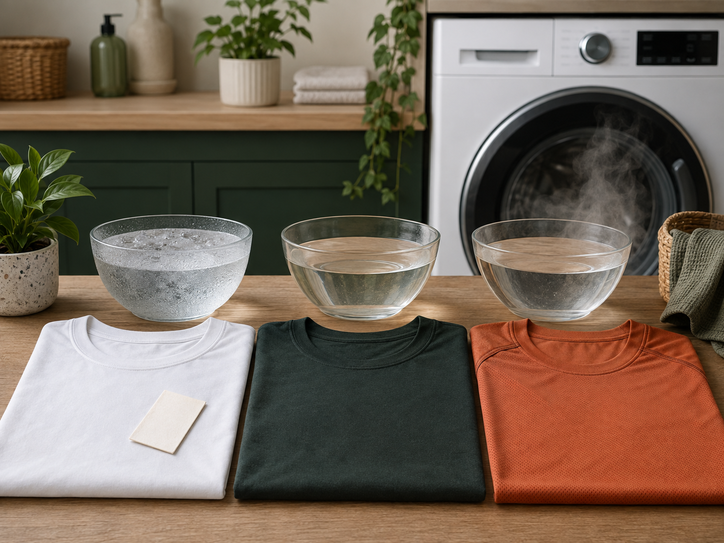
20°C, 30°C, 40°C or 60°C?
These temperatures are common washing-machine options, but the garment care label should always decide the final setting.
| Temperature | Often suitable for | Main advantage | Main caution |
|---|---|---|---|
| 20°C | Lightly worn darks, delicate colours and low-soil clothing when allowed. | Gentle on colour and reduces unnecessary heat exposure. | May be less suitable for heavy soil, grease or hygiene-critical laundry. |
| 30°C | Many T-shirts, sportswear, printed shirts, dark colours and everyday loads. | Good balance between routine cleaning and fabric care. | Still check the label for special fabrics and stain requirements. |
| 40°C | Many cottons, blends, uniforms and moderately soiled garments when permitted. | Can improve cleaning for sweat, body oils and everyday dirt. | May increase fading or shrinkage risk for some garments. |
| 60°C | Some whites, towels, bedding or workwear specifically rated for a hotter wash. | Useful when a higher-temperature hygiene cycle is required. | Not suitable for many prints, stretch fabrics, dark colours or heat-sensitive garments. |
| 90°C | Only selected robust white items whose labels explicitly allow very hot washing. | Maximum-heat wash for limited specialised uses. | Too hot for most T-shirts, uniforms, coloured garments and decorated apparel. |
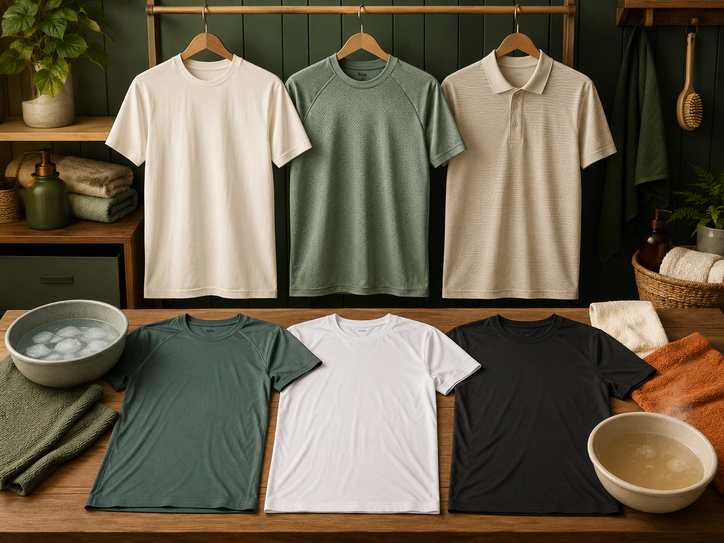
Best Wash Temperature by Shirt Type
Fabric type and garment construction matter as much as colour. These are practical starting points, not replacements for the care label.
Usually 30°C or 40°C
Many cotton tees can be washed at 30°C or 40°C, but repeated high heat may increase shrinkage and colour fading. Use the label as the final reference.
Lower temperatures are often enough
Polyester sports shirts usually do not need very hot water. A cooler wash can help protect colour, shape and heat-applied branding.
Often stable at moderate temperatures
Blended uniforms commonly tolerate routine 30°C or 40°C washing, but the exact limit depends on the blend, dyes and garment finish.
Protect collars and colour
Polo shirts can combine different knit structures in the body, collar and cuffs. Moderate washing temperatures are usually preferable to unnecessary heat.
White does not automatically mean hot
A white shirt may still contain polyester, stretch fibres, prints or embroidery. Use the temperature stated on the care label rather than automatically choosing 60°C.
Match temperature to soil and fabric
Heavily soiled uniforms may need more cleaning power, but higher temperature is only one option. Pre-treatment and the correct detergent can be just as important.
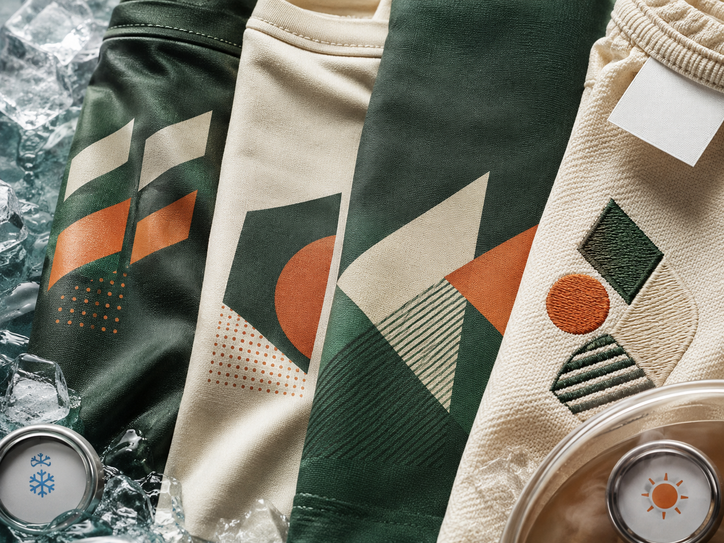
Does Printing Change the Right Wash Temperature?
Yes. The base fabric may tolerate one temperature while the decoration requires a gentler wash. Always care for the finished shirt as a complete garment.
| Branding method | Temperature concern | Better care approach |
|---|---|---|
| DTF printing | Excess heat can stress the transfer over repeated washes. | Use the supplier’s recommended temperature and wash inside out. |
| Silkscreen printing | Hotter washing can accelerate fading or cracking on some ink systems. | Use moderate temperatures and avoid unnecessary heat. |
| Heat-transfer vinyl | High heat may affect adhesive and surface finish. | Follow the transfer supplier’s care instructions closely. |
| Embroidery | The base fabric can still shrink or distort even if the thread tolerates washing. | Choose temperature based on the entire garment. |
| Sublimation | Polyester colour is integrated into the fibre, but very hot washing is still unnecessary. | Use a suitable lower or moderate temperature to protect the fabric and shape. |
Reduce abrasion
Turning printed shirts inside out helps reduce direct rubbing against the drum and other garments.
Washing and drying both matter
A shirt washed at 30°C can still be damaged by a very hot dryer, so consider the full laundry cycle.
Use the lowest safe limit
If one part of the garment has a lower temperature limit, follow the more restrictive instruction.
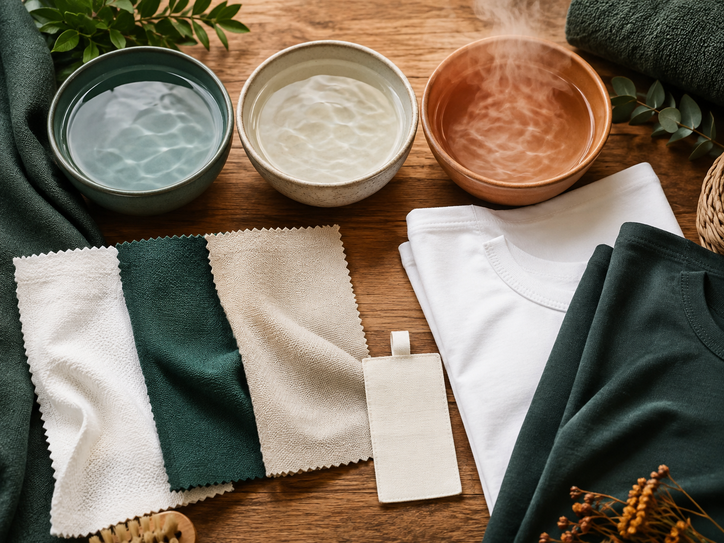
How Heat Affects Fabric, Colour and Fit
Hotter washing is not automatically better. Heat can improve cleaning in some situations, but it can also increase the chance of shrinkage, fading and damage to elastic fibres or decoration.
Temperature Mistakes to Avoid
Using 60°C for every white shirt
A white printed or blended T-shirt may not tolerate a hot wash even though the fabric looks robust.
Using cold water for every stain
Some heavily soiled garments may clean better at 40°C when the care label permits it.
Ignoring drying temperature
A cool wash can still be followed by excessive dryer heat that damages fit or decoration.
Choosing heat instead of pre-treatment
Grease, deodorant and food stains often benefit more from targeted treatment than simply hotter water.
Washing mixed fabrics blindly
A cotton tee and a stretch sports shirt may have very different temperature limits.
Ignoring the care label
The label gives the maximum intended treatment for that specific garment and should guide the final setting.
How to Choose the Right Wash Temperature
Use this six-step routine whenever you are unsure whether to choose a cold, 30°C, 40°C or hotter wash.
Read the care label
Identify the maximum recommended wash temperature and any special instructions.
Check the fabric
Cotton, polyester, blends and stretch garments react differently to heat.
Check colour depth
Darks and saturated colours usually benefit from lower temperatures when cleaning needs are light.
Assess soil level
Use 30°C for routine wear and consider 40°C for more soil when the garment allows it.
Protect printing
Turn printed shirts inside out and avoid temperatures above the decoration’s recommended limit.
Match the drying method
Do not undo a careful cool wash by using unnecessarily high dryer heat afterwards.
Common Washing Scenarios
Light daily wear
30°C is often enough for lightly worn polos or T-shirts if the care label permits it, especially for dark colours.
Sweat and visible dirt
40°C may be useful when more cleaning power is needed and the garment allows it, with stain pre-treatment as needed.
Heat-sensitive polyester
Lower-temperature washing is usually appropriate. Focus on prompt washing, correct detergent and proper rinsing.
Do not assume 60°C
If the shirt has DTF, silkscreen, heat transfer or synthetic fibres, follow the garment label instead of using a hot white-wash cycle automatically.
Before You Choose a Wash Temperature
Use this checklist to avoid unnecessary fading, shrinkage and print damage.
- Read the care label first.
- Check whether the shirt is cotton, polyester or a blend.
- Check for stretch fibres.
- Separate whites, lights and dark colours.
- Turn printed shirts inside out.
- Use 20–30°C for lightly soiled clothes when appropriate.
- Use 40°C only when more cleaning is needed and allowed.
- Reserve 60°C for garments specifically rated for it.
- Pre-treat stains instead of relying only on hotter water.
- Avoid overloading the washing machine.
- Check the dryer temperature too.
- Keep care instructions consistent for uniforms.
Wash Temperature FAQ
Is 30°C enough to wash clothes?
When should I use 40°C?
Should white T-shirts be washed at 60°C?
Will hot water shrink cotton T-shirts?
What temperature is best for black clothes?
What temperature is best for sports shirts?
Does hotter water clean better?
Is the number on the wash symbol a target temperature?
Choose Shirts That Fit Your Team’s Laundry Routine
Uniform Sabah can help you compare cotton, microfiber, polos, quick-dry shirts and other options for company, school, event and sports use.
More T-Shirt and Uniform Resources
Continue with related Uniform Sabah pages for garment selection, branding and custom uniform planning.
Our Other Company Websites
Explore related uniform, apparel and custom-printing services through our regional and international websites.