Why Printed Logos Crack, Peel or Fade
Understand the production, fabric, artwork and care problems that can damage printed logos—and learn how to help custom uniforms stay presentable longer.
Direct answer
What Causes Printed Logos to Fail?
Printed logos usually crack, peel or fade when the printing method is not well matched to the fabric, the production settings are incorrect, the artwork creates excessive stress, or the garment is exposed to harsh washing, heat and friction.
Cracking normally happens when a printed layer loses flexibility. Peeling happens when the decoration separates from the garment. Fading happens when colour weakens because of sunlight, chemicals, repeated washing or unsuitable production.
The Surface Splits
Common causes include thick print layers, repeated stretching, high heat and an ink or transfer that is less flexible than the garment.
The Print Lifts Away
Adhesion may weaken because of incorrect heat-press settings, incompatible fabric, contamination, direct ironing or hot tumble drying.
The Colour Becomes Dull
Strong sunlight, bleach, harsh detergent, hot washing and normal long-term wear can gradually reduce colour strength.
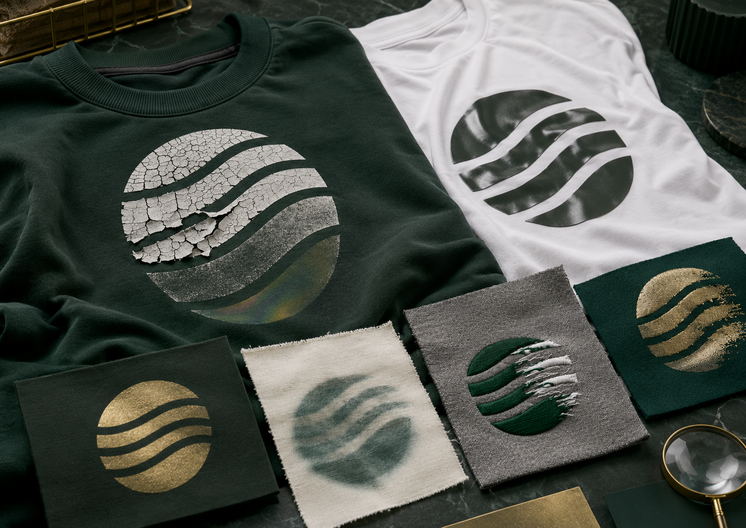
Quick problem guide
Cracking, Peeling and Fading Compared
| Visible problem | Common causes | Early warning signs | Prevention direction |
|---|---|---|---|
| Fine cracks across the logo | Repeated stretching, thick decoration, high dryer heat or ageing | Small lines appear when the fabric is pulled | Use a compatible flexible method and avoid overstretching |
| Edges lifting from the garment | Weak adhesion, incorrect press settings, coated fabric or direct heat | Corners curl or feel loose after washing | Confirm fabric compatibility and use correct time, pressure and temperature |
| Logo colour becomes dull | UV exposure, bleach, harsh detergent, hot water or low colour stability | Bright colours lose contrast first | Wash gently, shade-dry and use colour-safe detergent |
| Print looks wrinkled or distorted | Fabric shrinkage, excessive heat or decoration larger than the stable area | The garment and print contract differently | Pre-test the garment and control heat exposure |
| Colour appears through the logo | Dye migration from certain polyester garments | The print changes colour after pressing or storage | Use suitable low-temperature or dye-blocking production systems |
| Embroidery becomes loose | Snagging, broken thread, poor backing or unsuitable stitch density | Raised loops or loose thread ends appear | Use suitable stabilisation and avoid pulling loose threads |
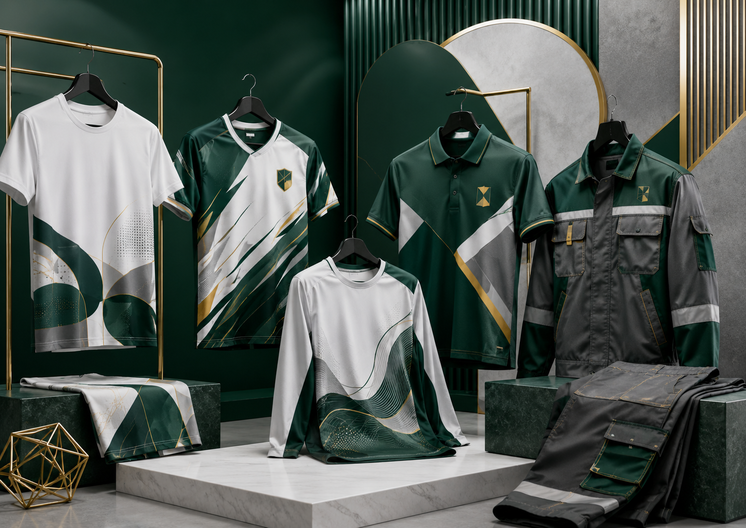
Failure patterns
Why Logos Become Damaged
Incorrect Heat-Press Settings
DTF and other heat-applied decorations need suitable temperature, time and pressure. Too little may reduce adhesion, while excessive heat can damage the garment or decoration.
Incompatible or Coated Fabric
Water-repellent finishes, silicone, heavy texture, high stretch and certain polyester dyes can affect adhesion, colour and print stability.
Oversized Solid Printing
A large solid logo receives more bending, sweat, friction and stretching than a compact design, increasing the chance of visible wear.
A Shirt That Is Too Tight
Constant stretching across the chest, shoulders or sleeves places extra stress on printed areas and can cause cracking earlier.
Hot Washing and Tumble Drying
High temperatures can soften adhesives, weaken transfer edges, shrink fabric and accelerate cracking or colour loss.
Friction and Outdoor Exposure
Backpack straps, safety vests, counters, tools, sunlight and repeated rubbing can wear the same logo area every day.
Garments That Need Extra Planning
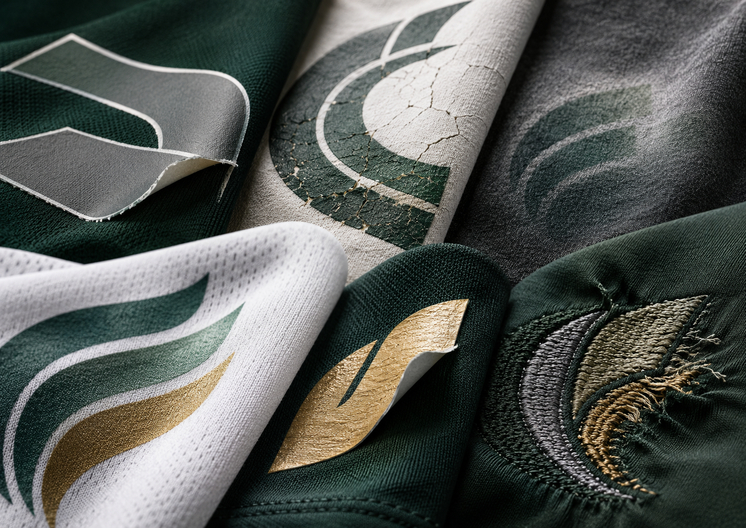
Method-by-method risks
How Different Printing Methods Can Fail
Cracking or Edge Peeling
DTF forms a flexible transfer layer. It may crack or lift when the press settings, fabric compatibility, washing or drying conditions are unsuitable.
- Use correct pressing and finishing procedures.
- Keep large transfers away from high-stretch areas.
- Wash inside out with cooler water.
- Never iron directly over the transfer.
Cracking, Wear or Fading
Silkscreen durability depends on the ink, fabric and curing process. An overly thick layer or poor curing can make wear more visible.
- Match the ink system to the fabric.
- Control curing temperature and time.
- Avoid harsh bleach and high dryer heat.
- Use a print size suitable for garment movement.
Fading or Colour Change
Sublimation does not peel because the colour enters compatible polyester fibres. However, long UV exposure, unsuitable material or dye issues may affect colour.
- Use compatible polyester fabric.
- Control transfer conditions.
- Avoid prolonged unnecessary sun exposure.
- Follow the garment’s wash instructions.
Snagging or Loose Thread
Embroidery does not crack or peel like a surface print, but thread can snag, break or distort thin fabric when the design is unsuitable.
- Use suitable backing and stitch density.
- Keep fine details large enough to sew clearly.
- Do not pull loose thread ends.
- Avoid dense embroidery on very light fabric.
Lifting Corners or Surface Cracks
Vinyl works well for names and numbers, but repeated stretching, hot drying and direct ironing can weaken the applied layer.
Choose the Method With the Garment
Sublimation suits compatible polyester jerseys, embroidery suits structured garments, silkscreen suits repeated bold prints and DTF suits detailed artwork.
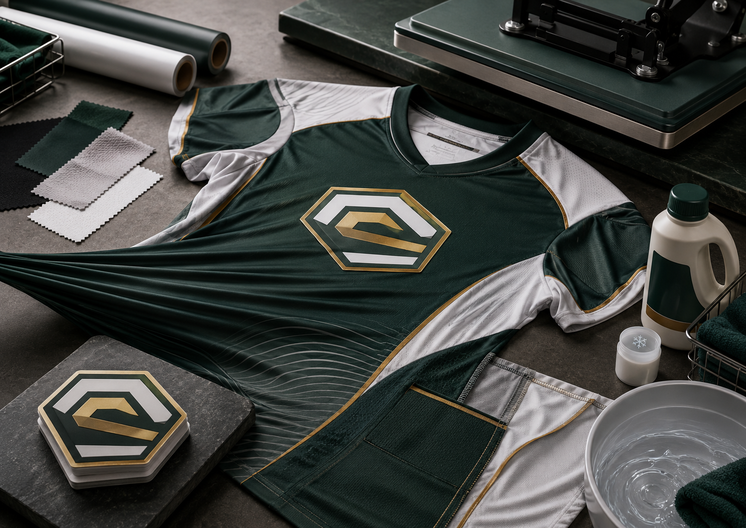
Prevention guide
Protect the Logo From Production to Washing
Too Much Solid Coverage
Large solid areas can feel hotter and experience more bending, rubbing and stretching.
High-Friction Locations
Bag straps, waist belts and work equipment can repeatedly scrape the same printed area.
Direct Heat
Ironing, hot water and high-temperature drying can damage many surface decorations.
Better Artwork and Placement Choices
- Use compact logos where possible.
- Reduce unnecessary solid background blocks.
- Keep decoration away from seams, zips and heavy stretch zones.
- Avoid placing logos directly under backpack or apron straps.
- Use artwork details that suit the selected printing method.
- Approve the logo size on the actual garment model.
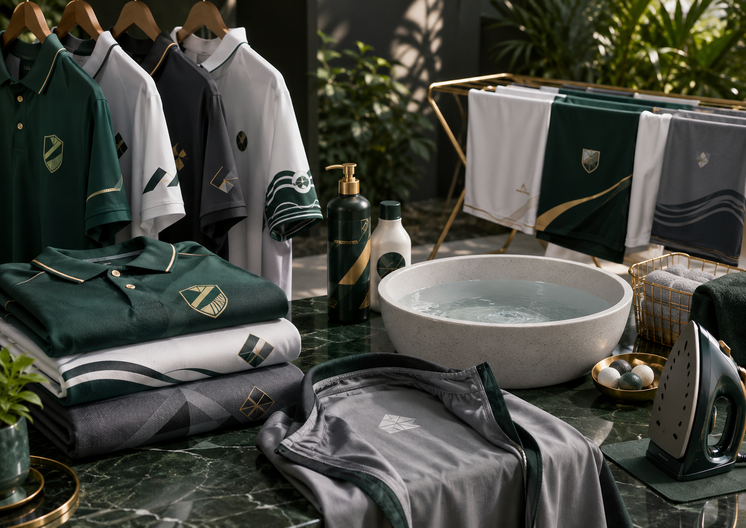
Recommended Washing Habits
- Turn printed garments inside out before washing.
- Separate dark, bright and light colours.
- Use cool or lukewarm water where permitted.
- Choose mild detergent and a gentle cycle.
- Avoid bleach unless the care label specifically allows it.
- Air-dry in the shade whenever practical.
- Do not iron directly over printed decoration.
- Store garments only after they are fully dry.
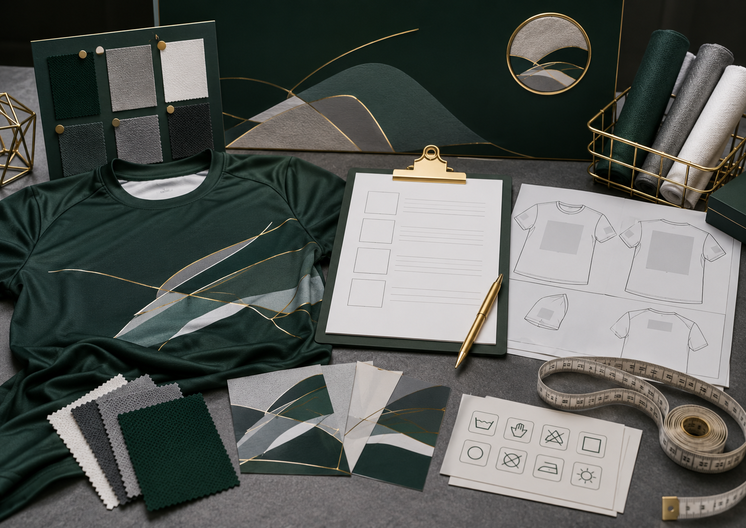
Prevention process
How to Reduce Logo Damage Before Ordering
Explain How the Uniform Will Be Used
Share whether the garment is for office work, outdoor duties, sport, factory use, events or daily washing.
Confirm the Exact Garment
Identify the brand, model, fabric composition, texture, colour and size range.
Review the Artwork
Check logo size, colours, fine details, solid areas and placement against garment movement.
Select a Compatible Method
Match DTF, silkscreen, sublimation, embroidery or another method to the fabric and design.
Approve the Mockup or Sample
Confirm logo position, scale, spelling and expected appearance before full production.
Share Care Instructions
Give every wearer clear washing, drying and ironing guidance with the finished uniform.
Buyer scenarios
Different Uniforms Need Different Solutions
Compact Embroidery or DTF
Use a small chest logo and choose a method that suits the polo texture and washing routine.
Sublimation for Full Designs
Compatible polyester sublimation avoids a heavy surface layer across large artwork areas.
DTF or Silkscreen
Choose according to artwork detail, quantity and fabric, then provide simple care instructions.
Plan for Sun and Friction
Keep logos away from safety-vest edges, bag straps and repeated contact with equipment.
Confirm Laundry Conditions
Strong detergents, oils and high-temperature washing should be disclosed before method selection.
Use Comfortable Print Coverage
Avoid large stiff decoration and choose the correct size to reduce repeated stretching.
Quality checklist
Printed Logo Protection Checklist
- The garment fabric and surface finish are confirmed.
- The printing method suits the exact product model.
- The artwork does not use unnecessary solid coverage.
- The logo is placed away from high-friction areas.
- The garment size allows normal movement without overstretching.
- Production settings are controlled for the selected method.
- The mockup, spelling and print size are approved.
- Wearers receive washing and ironing instructions.
- Bleach, hot dryers and direct ironing are avoided.
- Damage is reported early before the area becomes worse.
Common Mistakes
- Using the same decoration method on every fabric.
- Choosing a shirt that is too tight across the printed area.
- Applying very large solid logos to stretch sportswear.
- Washing decorated garments in very hot water.
- Using bleach or strong stain remover directly on the logo.
- Ironing directly over DTF, vinyl or silkscreen printing.
Frequently asked questions
Questions About Damaged Printed Logos
Useful Uniform Sabah resources
Plan a Better Custom Uniform Order
Choose Printing That Suits Your Uniform
Share your garment, fabric, quantity, logo, work environment and laundry routine with Uniform Sabah for a suitable printing recommendation.
WhatsApp Uniform Sabah Explore Uniform SabahOur company network
Our Other Company Websites
Explore related uniform, apparel and custom-printing services through our regional and international websites.