Benefits of Buying Clothes in the Correct Size
Improve comfort, movement, appearance and uniform durability by choosing sizes based on actual measurements instead of guessing from labels.
Direct answer
Why Does the Correct Clothing Size Matter?
Correctly sized clothing sits more comfortably on the body, allows easier movement and creates a neater appearance. It also reduces unnecessary pulling, stretching, sagging and friction that can shorten the useful life of a uniform.
For staff orders, accurate sizing also reduces exchanges, replacement costs and delays. Every wearer should compare actual garment measurements instead of assuming that the same size label fits the same way across every brand.
Easier Daily Wear
The garment feels less restrictive during long working hours.
Neater Team Image
Correctly fitted uniforms help employees look organised and professional.
Fewer Replacements
Better sizing reduces avoidable exchanges, unused garments and rushed reorders.
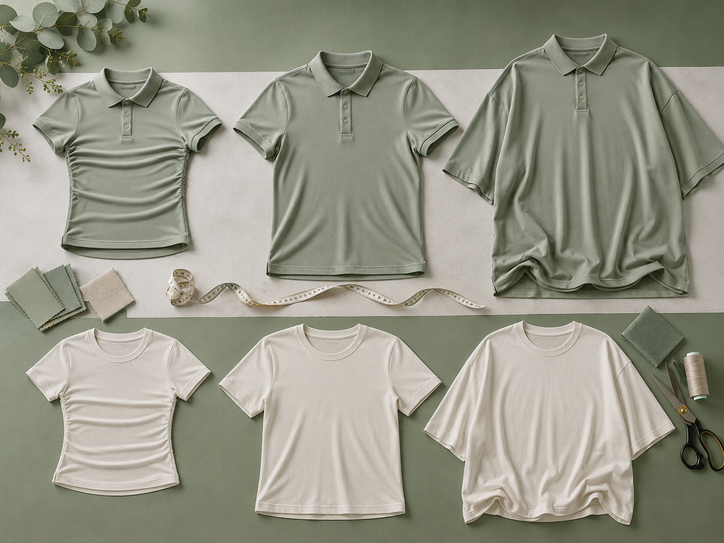
Quick comparison
Correct Size Versus the Wrong Size
| Fit issue | What the wearer may experience | Possible uniform problem | Better approach |
|---|---|---|---|
| Too tight across the chest | Restricted breathing and arm movement | Seams, buttons and printed areas face extra stress | Choose a size that allows comfortable upper-body movement |
| Too short in the body | The shirt rises when bending or reaching | Untidy appearance and frequent adjustment | Compare body length with a comfortable existing shirt |
| Too loose around the torso | Excess fabric moves or bunches | Less professional appearance and possible snagging | Select a regular fit suited to the job |
| Sleeves too tight | Reduced shoulder and arm movement | Extra pulling at the armhole and sleeve seam | Test reaching, lifting and work-related movements |
| Collar too small | Discomfort around the neck | Placket and collar may sit poorly | Check neck comfort when the top buttons are used |
| Wrong size chart used | Unexpected fit after delivery | Higher exchange and replacement risk | Use the chart for the exact brand and model |
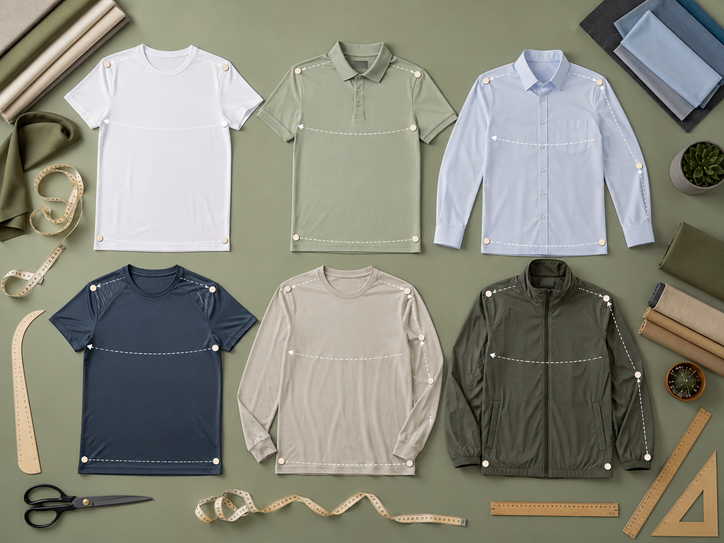
Uniform fit examples
Correct Sizing for Different Clothing Types
Different garments need different fit checks. A round-neck T-shirt, polo, corporate shirt, long sleeve and jacket should not all be measured in exactly the same way.
Check Chest Width and Body Length
The shirt should sit comfortably across the chest without pulling at the shoulder seams or hanging excessively below the body.
- Compare armpit-to-armpit width.
- Check where the shoulder seam sits.
- Review body length when standing and sitting.
- Allow room for normal movement.
Check the Collar, Placket and Sleeves
A correctly sized polo should close comfortably at the neck and sit neatly around the shoulders, chest and upper arms.
- Button the placket during fitting.
- Check sleeve opening comfort.
- Make sure the collar does not feel tight.
- Confirm the shirt can be tucked in if required.
Check Sitting and Reaching
Office and service uniforms should remain comfortable when the wearer sits, types, reaches forward or raises both arms.
- Check button gaps across the chest.
- Test shoulder and back movement.
- Review sleeve length at the wrist.
- Allow room for an undershirt if needed.
Avoid Excessive Tightness
Performance fabric may stretch, but that does not mean the garment should fit tightly. A regular fit supports airflow and movement.
- Check underarm and shoulder comfort.
- Test bending and lifting movements.
- Avoid overstretching printed areas.
- Consider the working temperature.
Check Cuffs and Arm Reach
Sleeves should be long enough to cover the wrist without pulling tightly when the arms are extended.
- Reach both arms forward.
- Check cuff tightness.
- Review shoulder mobility.
- Avoid excessive loose fabric near equipment.
Allow Space for Inner Clothing
A jacket should fit over the intended base uniform without restricting the chest, shoulders or elbows.
- Try it over the normal work shirt.
- Close the zip during fitting.
- Check elbow and shoulder movement.
- Confirm the hem does not ride up.
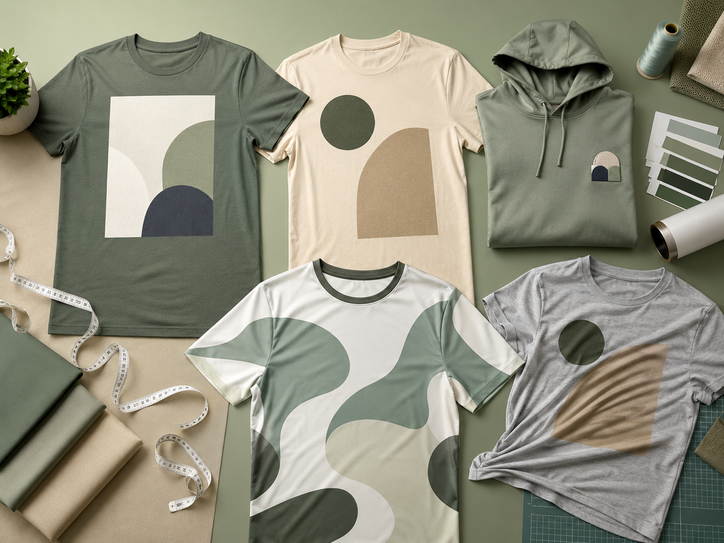
Printing and logo appearance
Correct Sizing Protects Custom Branding
The garment fit affects how a printed or embroidered logo looks. A shirt that is too tight can stretch artwork, while a shirt that is too loose may cause the design to fold, sag or sit in the wrong position.
Reduce Stretching and Creasing
Correct sizing helps a DTF design remain flatter across the chest or back instead of being pulled by an undersized garment.
- Avoid stretching a large transfer across the body.
- Check artwork placement on every garment size.
- Use proportionate print dimensions for kids and adults.
Keep the Logo Sitting Evenly
A properly fitted shirt helps a screen-printed logo stay centred and readable instead of folding beneath the arms or pulling across the torso.
- Review print position on small and large sizes.
- Avoid using one oversized print for every garment.
- Check the shirt while standing naturally.
Prevent Distortion Around the Logo
Tight fabric can pull around dense stitching, while loose garments may cause the embroidered area to sit unevenly.
- Check chest comfort after embroidery.
- Use compact artwork on lighter garments.
- Confirm logo placement after the correct size is chosen.
Keep Names and Numbers Proportionate
Full-custom uniforms should scale names, numbers and panels according to the actual garment measurements.
- Use the correct wearer measurements.
- Check name and number scale by size.
- Allow movement for sports and active duties.
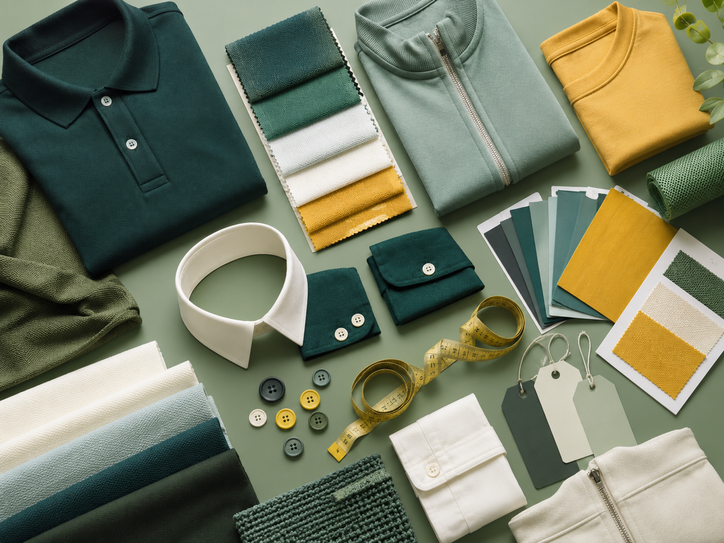
Measurement and fit guide
Measure the Garment, Not Only the Body
One practical method is to measure a comfortable garment that the wearer already owns. Lay it flat, record the chest width and body length, then compare those measurements with the exact supplier size chart.
Measuring While Worn
Clothing can stretch or curve around the body, making flat measurements less accurate.
Assuming Every M Is Equal
Medium sizes can differ between brands, models, fabrics and cuttings.
Guessing for Children
Children of the same age can have very different chest width and body length.
Useful Measurements to Check
- Chest width measured from armpit to armpit
- Body length measured from shoulder to hem
- Shoulder width where relevant
- Sleeve length for long-sleeve garments
- Neck comfort for polos and corporate shirts
- Waist or hip room for longer fitted garments
Fit Descriptions to Clarify
Sizing process
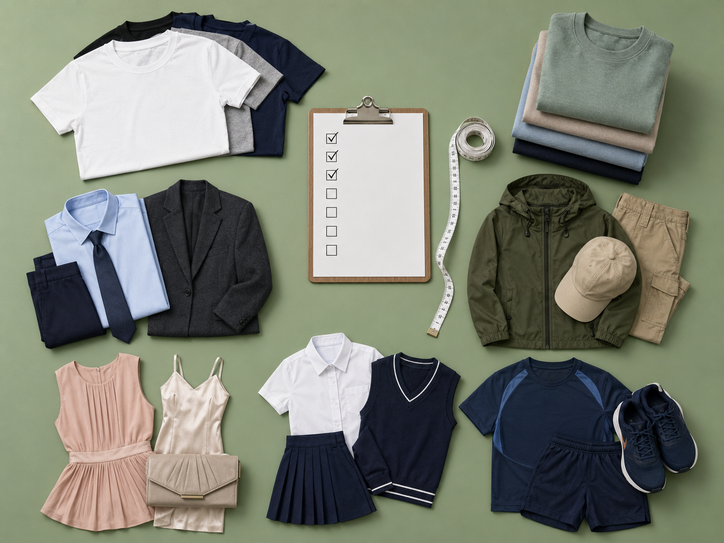
How to Collect Uniform Sizes Correctly
Choose the Exact Garment First
Confirm the brand, product code, fabric and cutting before asking people to submit sizes.
Share the Correct Size Chart
Use the chart for that exact product instead of a general S-to-3XL guide.
Measure a Comfortable Existing Garment
Lay it flat and compare chest width, body length and sleeve measurements.
Test Work Movements
Check sitting, bending, lifting, reaching, driving or other movements related to the wearer’s job.
Record Sizes by Name
Keep a clear list with employee name, department, garment type, size and quantity.
Approve the Final List
Ask the organiser and wearers to review the information before personalised production begins.
Buyer scenarios
Correct Sizing for Different Groups
Prioritise a Neat, Comfortable Fit
Staff should be able to sit, type and reach comfortably while the polo or corporate shirt remains tidy.
Allow Movement and Airflow
Avoid tight quick-dry shirts that restrict lifting or trap heat, and avoid excessive loose fabric around equipment.
Collect Sizes Before the Deadline
Early size collection reduces last-minute guessing and helps every crew member receive a wearable shirt.
Use Measurements, Not Only Age
Children and teenagers grow at different rates, so age or school year alone is not enough for accurate sizing.
Test Active Movement
Jerseys should allow running, reaching and stretching without excessive pulling or loose fabric.
Use Separate Charts When Needed
Office polos, outdoor tees and jackets may each use different brands, models and size charts.
Buyer checklist
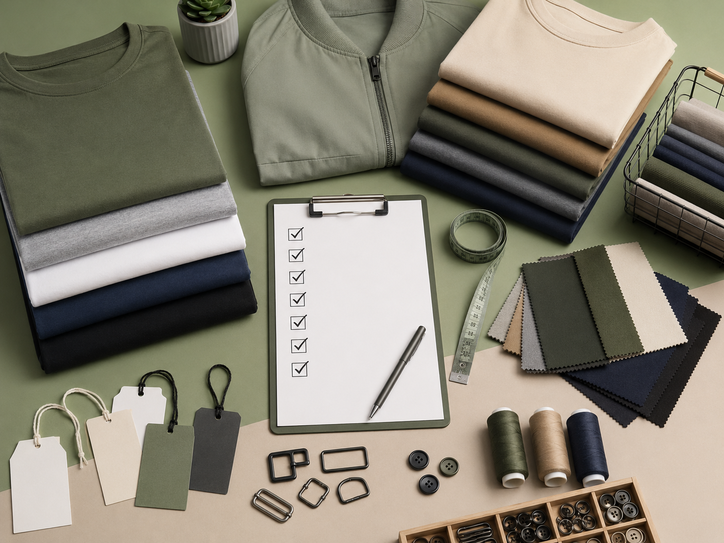
Correct Clothing Size Checklist
- The exact brand and product code are confirmed.
- The correct size chart is shared with every wearer.
- A comfortable existing garment is measured flat.
- Chest width and body length are compared.
- Sleeve, collar or shoulder measurements are checked where relevant.
- Work-related movements are tested.
- Layering needs are considered for jackets or outerwear.
- Children are measured instead of sized only by age.
- Names and sizes are recorded clearly.
- The final list is approved before production.
Common Sizing Mistakes
- Using one generic size chart for several brands.
- Guessing sizes from height or body weight alone.
- Assuming employees know their size in every brand.
- Ordering one size larger without checking garment measurements.
- Forgetting to test sitting, reaching and lifting movements.
- Submitting personalised sizes without a final review.
Frequently asked questions
Questions About Choosing the Correct Size
Useful Uniform Sabah resources
Plan Your Uniform Sizes With Confidence
Choose the Correct Size Before You Order
Share your garment type, quantity, size requirements, staff roles, colours, logo and Sabah delivery location with Uniform Sabah.
WhatsApp Uniform Sabah Explore Uniform SabahOur company network
Our Other Company Websites
Explore related uniform, apparel and custom-printing services through our regional and international websites.