Rainy-Season Uniforms for Construction Crews
Plan practical layers that dry faster, maintain worker identification and support site visibility without confusing ordinary uniforms with certified PPE.
Direct answer
What Should Construction Crews Wear in Rain?
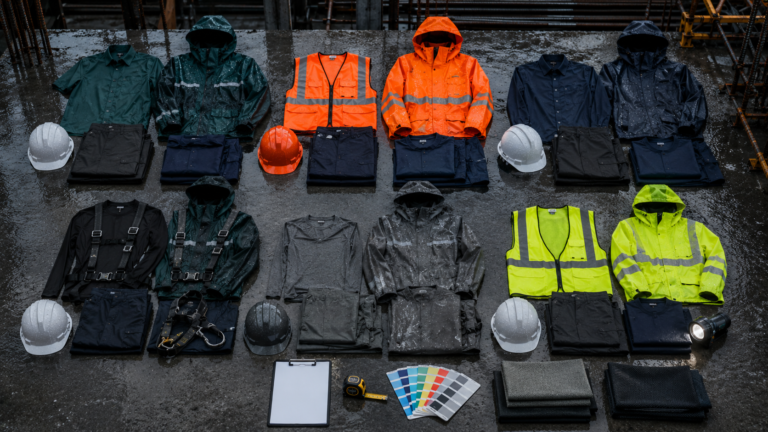
A practical rainy-season uniform normally uses layers: a lightweight quick-dry base shirt, a visible outer layer selected through the site risk assessment, and a suitable rain shell or rain suit when required. Crews should also have dry replacement clothing available after prolonged exposure.
The uniform should allow normal movement, fit beneath required equipment and avoid loose fabric that may catch on tools or machinery. Branding should remain readable without covering reflective or safety-critical areas.
Quick-Dry Work Shirt
Lightweight performance fabric can dry faster than a heavy absorbent shirt.
High-Visibility Garment
Use approved or recognised high-visibility clothing when the site assessment requires it.
Rain Protection
Select a suitable rain shell, jacket or rain suit that works with the required PPE system.
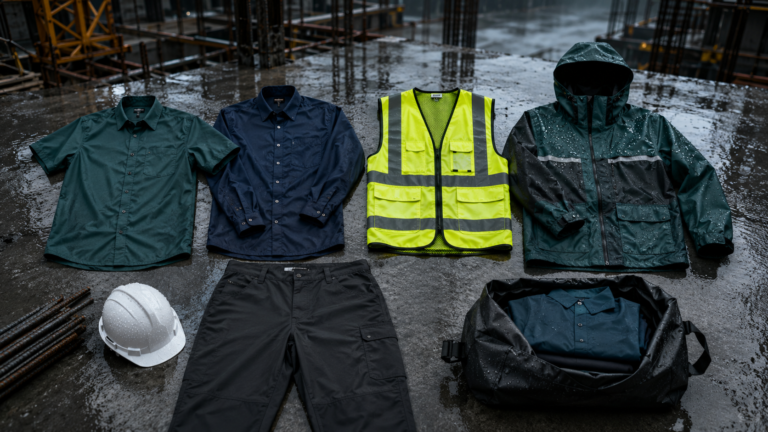
Quick comparison
Compare Rainy-Season Uniform Layers
| Uniform item | Main purpose | Useful material direction | Branding approach | Important caution |
|---|---|---|---|---|
| Quick-dry short-sleeve shirt | Base layer for warm, active work | Lightweight polyester or microfiber | Compact DTF, silkscreen or small embroidery where suitable | Short sleeves may not suit every hazard or site requirement |
| Quick-dry long-sleeve shirt | More arm coverage with faster drying | Lightweight performance knit | Small chest logo and clear back identification | Coverage does not replace specialist protective clothing |
| High-visibility vest or garment | Improve conspicuity around vehicles and equipment | Approved high-visibility product where required | Keep branding away from reflective and safety-critical zones | Decorative reflective tape is not equal to certified high-visibility PPE |
| Rain shell or rain suit | Reduce direct rain exposure | Water-resistant or waterproof outer material | Use minimal branding that does not interfere with function | Check breathability, heat stress, hood design and PPE compatibility |
| Work trousers | Movement, pocket access and lower-body coverage | Durable fabric appropriate to the task | Department colour or small identification where useful | Avoid excessively loose hems near moving equipment |
| Dry replacement set | Allow workers to change after saturation | Same approved uniform specification | Label by worker, team or size | Store in a sealed dry bag or protected locker |
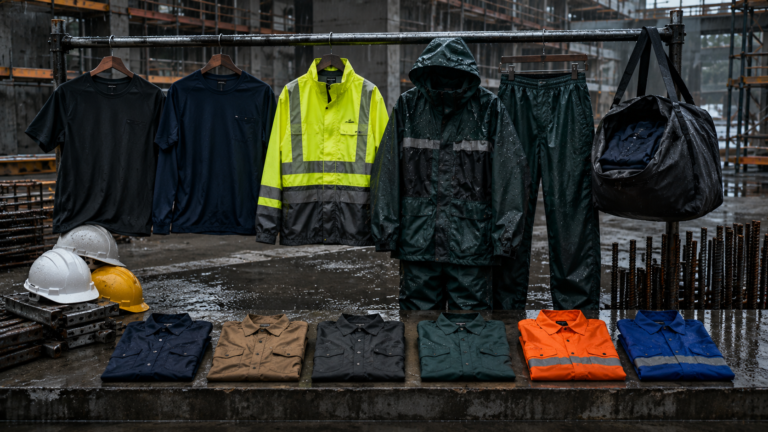
Uniform options
Useful Products for Wet Construction Sites
Lightweight Quick-Dry T-Shirt
A practical base layer for workers who remain active in humid conditions. Choose a fit that allows movement without becoming excessively loose.
- Faster drying than heavy absorbent fabric
- Suitable for compact printed identification
- Easy to keep as spare sets
- Available in short- or long-sleeve directions
Long-Sleeve Performance Shirt
Long sleeves can provide practical coverage against light dirt and weather, subject to the task and site requirements.
- Useful for open-site work
- Can support department colour coding
- Suitable under selected outer layers
- Must not restrict wrist or arm movement
High-Visibility Outer Garment
Where site risks require high visibility, use an approved or recognised garment selected by the responsible safety team.
- Maintains worker conspicuity
- Should remain visible over the base uniform
- Branding must not obstruct reflective zones
- Inspect for dirt, damage and reduced visibility
Rain Jacket or Rain Suit
Select the outer rain layer according to exposure, heat, movement and compatibility with helmets, harnesses and other required equipment.
- Water resistance appropriate to exposure
- Secure cuffs and practical closure
- Enough room for safe movement
- No loose parts around machinery
Spare Uniform Set
A labelled dry shirt and trousers can reduce the time workers remain in wet, uncomfortable clothing after exposure.
- Pack by employee or size
- Keep in a dry bag or protected storage
- Use the same approved logo layout
- Include spare socks where site procedures allow
Role-Identification Garments
Different colours or clear role labels can help identify supervisors, safety personnel, visitors and subcontractor groups.
- Use a controlled colour system
- Keep wording short and readable
- Maintain visibility in rain and low light
- Avoid too many similar department colours
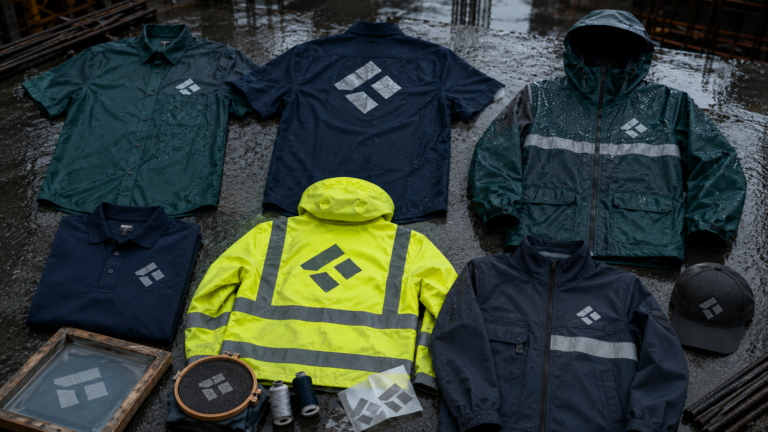
Printing and identification
Branding Methods for Construction Uniforms
Rainy-season workwear still needs clear company and role identification, but decoration should not reduce breathability, flexibility or visibility.
DTF Printing
DTF supports colourful logos and clear wording on many compatible base shirts. Keep the transfer compact to reduce heat and stiffness.
- Useful for small and medium orders
- Supports department names
- Avoid very large solid back prints
- Protect from high-temperature washing and drying
Silkscreen Printing
Silkscreen can suit larger quantities using a consistent, bold design on compatible shirts.
- Good for simple company logos
- Practical for large team orders
- Use high contrast for readability
- Confirm ink compatibility with performance fabric
Embroidery
Small embroidery may suit structured polos, jackets and selected outerwear, provided the fabric can support the stitching.
- Professional small chest logo
- Useful for supervisor names
- Avoid heavy stitching on thin quick-dry fabric
- Check water resistance after puncturing outer fabric
Reflective Identification
Reflective names or logos may improve identification, but decorative reflective material must not be presented as certified high-visibility PPE.
- Keep away from certified reflective bands
- Do not reduce required visible surface area
- Use only after site approval
- Inspect adhesion and damage regularly
Recommended Logo Placement
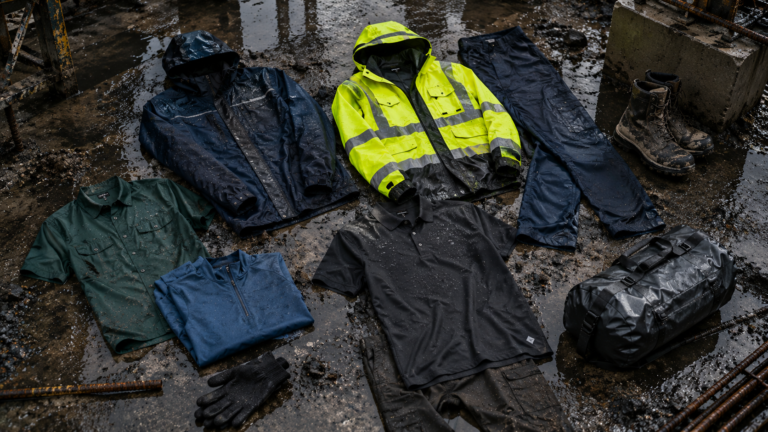
Material, colour and design
Design Uniforms for Rain, Mud and Low Light
Using Only Dark Colours
Dark base shirts may hide dirt, but the required outer visibility system must remain obvious around vehicles and equipment.
Choosing One Heavy Layer
A thick absorbent garment may become heavier and slower to dry after rain.
Adding Loose Features
Loose drawcords, open hems and oversized fabric can create snagging concerns.
Material Selection Principles
- Use quick-dry fabric for base garments exposed to humidity and light rain.
- Choose durable outerwear appropriate to the task and weather exposure.
- Check that rain layers do not interfere with harnesses or other PPE.
- Use breathable layering to manage heat where practical.
- Select collars and cuffs that remain secure during movement.
- Plan spare garments for workers who become fully soaked.
Practical Colour System
Controlled Dark or Mid-Tone Colours
Navy, charcoal, dark green or medium blue can help hide mud and repeated staining, subject to the company identity and site visibility system.
Approved High-Visibility Colours
The safety team should select high-visibility garments that meet the applicable requirement for the specific work zone and lighting condition.
Weather-Ready Design Details
Ordering process
How to Plan a Rainy-Season Uniform Order
Review the Site Risk Assessment
Identify rain exposure, traffic movement, low-light areas, machinery, work-at-height requirements and other hazards before selecting clothing.
Separate Uniforms From PPE
List ordinary branded garments separately from approved helmets, footwear, harnesses, high-visibility clothing and other required protective equipment.
Choose the Layering System
Select the base shirt, visibility layer, rain layer and spare set for each role.
Confirm Sizes With Full Movement
Check bending, reaching, climbing and layering rather than measuring workers only while standing still.
Approve Branding and Placement
Keep logos readable and away from certified reflective zones, attachment points and areas exposed to heavy rubbing.
Plan Storage and Replacement
Prepare dry storage, spare garments, laundering instructions and replacement quantities before the rainy period begins.
Buyer scenarios
Uniform Ideas for Different Construction Roles
Quick-Dry Base Plus Required PPE
Use a practical base shirt under the approved site visibility and rain system.
Visibility-First Layering
Prioritise approved high-visibility clothing and keep company identification clear without reducing reflective coverage.
Distinct Role Identification
Use a controlled colour or role label that remains visible over rain layers.
Harness-Compatible Clothing
Avoid bulky seams, loose fabric and logo placement that interferes with harness use.
Easy-Replacement Base Shirts
Use practical colours, simple branding and enough spare garments for frequent washing.
Approved Visibility System
Lighting, traffic and work-zone risks should guide the selected high-visibility clothing.
Buyer checklist
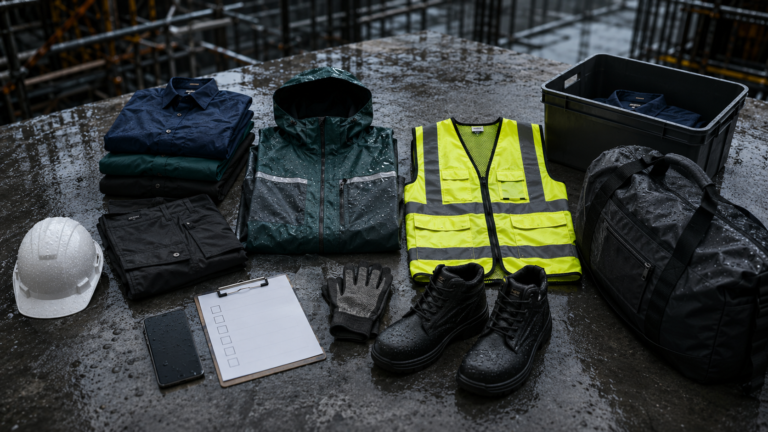
Rainy-Season Construction Uniform Checklist
- The site risk assessment has been reviewed.
- Uniform garments and required PPE are listed separately.
- The base shirt dries quickly and allows safe movement.
- High-visibility clothing is approved or recognised where required.
- The rain layer works with helmets, harnesses and other equipment.
- Logos do not cover reflective or safety-critical areas.
- Sizes are checked while workers perform normal movements.
- Each worker has access to a dry spare set where practical.
- Wet garments have a drying and laundering procedure.
- Damaged visibility or rain garments are replaced promptly.
Common Mistakes
- Using an ordinary promotional vest as certified PPE.
- Printing over reflective bands or inspection labels.
- Choosing one heavy cotton layer for prolonged rain.
- Ordering rainwear without testing movement and heat comfort.
- Allowing workers to remain in saturated clothing for long periods.
- Failing to replace dirty or damaged high-visibility garments.
Frequently asked questions
Questions About Wet-Weather Construction Uniforms
Useful Uniform Sabah resources
Continue Planning Your Construction Uniforms
Plan Branded Construction Uniforms for Rain
Share your crew size, garment requirements, colours, logo, job roles and Sabah delivery location for a practical branded-uniform recommendation.
WhatsApp Uniform Sabah Explore Uniform SabahOur company network
Our Other Company Websites
Explore related uniform, apparel and custom-printing services through our regional and international websites.