Different Shirt Thicknesses and GSM Guide
Learn how fabric weight affects comfort, structure, heat, opacity, printing and everyday uniform use before choosing a shirt model.
Direct answer
What Does Shirt Thickness Mean?
Shirt thickness is often compared using GSM, meaning grams per square metre. A lower GSM usually feels lighter, while a higher GSM usually feels more substantial. However, GSM alone does not determine softness, breathability or overall quality.
Fabric composition and construction matter too. A 160GSM microfiber quick-dry shirt can behave very differently from a 160GSM cotton T-shirt, even though the number is the same.
Lightweight
Suitable for hot weather, sports, outdoor duties and quick-dry uniforms.
Medium Weight
A balanced choice for events, daily uniforms, merchandise and general printing.
Thick or Structured
Useful for premium T-shirts, structured polos and garments needing more body.
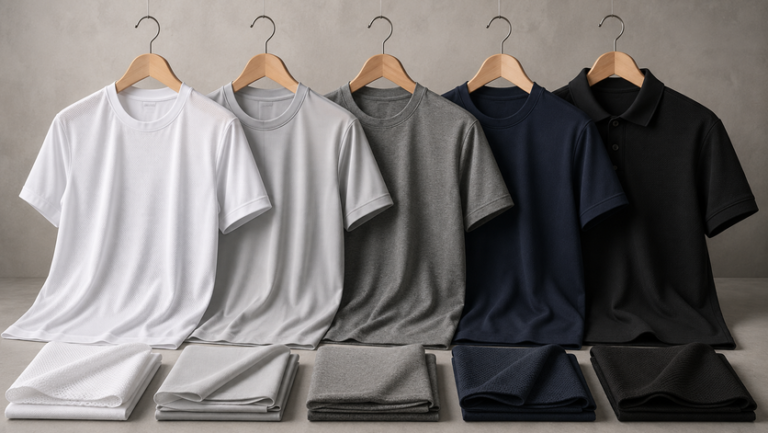
Quick thickness comparison
Shirt Weight Categories at a Glance
| Approximate weight | Typical feel | Main advantages | Possible limitations | Example models |
|---|---|---|---|---|
| About 130–150GSM | Very light and flexible | Fast drying, suitable for movement and warm weather | May feel less structured or show body shape more easily | United Athle 5900-01, 4.1 oz dry athletic T-shirt |
| About 150–170GSM | Lightweight everyday performance | Comfortable for active teams, events and outdoor work | Thin fabrics may need careful logo size and placement | Oren Sport QD06, 160GSM microfibre polo |
| About 175–195GSM | Balanced and familiar | Useful for general uniforms, printing and merchandise | May feel warmer than performance microfiber | Gildan G5000, about 180GSM; United Athle 5001-01, about 190GSM |
| About 200–215GSM | Substantial and more structured | Better opacity, firmer drape and premium presentation | Slower drying and potentially warmer | Gildan G2000, about 203GSM; United Athle 5942-01, about 210GSM |
| About 220–230GSM+ | Thick, firm or structured | Strong shape and suitable base for corporate polos | May be less comfortable for strenuous outdoor work | Oren Sport HC01, 220–230GSM CVC honeycomb polo |
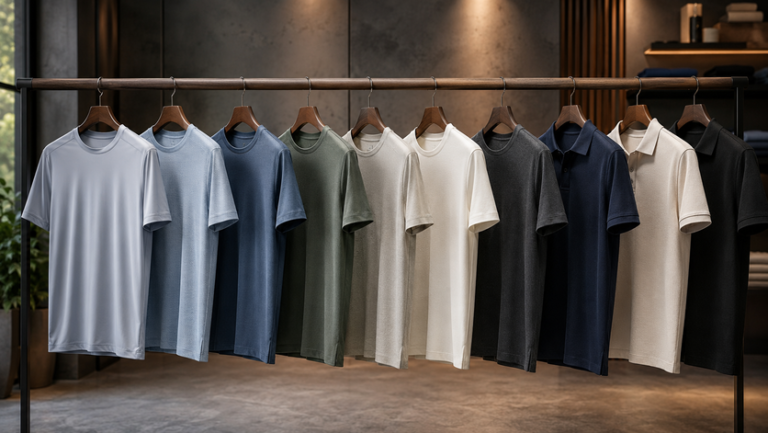
Brand and model examples
Examples From Lightweight to Thick Shirts
United Athle 5900-01
This dry athletic T-shirt is listed at 4.1 oz, approximately 139GSM. It is a useful direction for sports, training, event crews and active wear.
- Light and quick-drying direction
- Suitable for movement and warm environments
- Useful for sublimation alternatives, DTF or compatible printing
- Check opacity and colour before ordering
Oren Sport QD06
Oren Sport lists QD06 as a 160GSM, 100% microfibre short-sleeve polo. It suits teamwear, work, school, corporate, event and casual use.
- Performance polo for active teams
- Lighter than many cotton or CVC polos
- Useful for hot weather and repeated movement
- Confirm printing compatibility and colour stock
Gildan G5000
The Gildan G5000 Heavy Cotton T-shirt is listed at 5.3 oz per square yard, which is approximately 180GSM.
- Balanced everyday cotton weight
- Useful for events, organisations and merchandise
- Suitable base for common printing methods
- Check colour-specific fabric composition
United Athle 5001-01
This 5.6 oz high-quality T-shirt is approximately 190GSM and is designed as a substantial everyday blank with a broad colour range.
- More structure than lightweight event tees
- Suitable for merchandise and premium staff wear
- Useful for screen printing and other compatible methods
- Check current colours and sizes
Gildan G2000
Gildan lists the G2000 Ultra Cotton T-shirt at 6.0 oz per square yard, approximately 203GSM.
- Thicker and more substantial feel
- Suitable for durable uniforms and merchandise
- Good opacity in many colours
- Potentially warmer for outdoor use
United Athle 5942-01
The United Athle 5942-01 Premium T-shirt is listed at 6.2 oz, approximately 210GSM, with a thick and durable direction.
- Structured premium presentation
- Suitable for lifestyle brands and merchandise
- More resistant to looking thin or transparent
- Check heat comfort for the intended wearer
Oren Sport HC01
Oren Sport lists HC01 at 220–230GSM using 60% cotton and 40% polyester honeycomb fabric.
- Structured corporate polo appearance
- Suitable for embroidery and silkscreen
- Useful for office, retail and customer-facing teams
- May feel warmer than a lightweight quick-dry polo
Full-Custom Uniforms
Sublimation and cut-and-sew uniforms may use different polyester weights depending on the sport, work role, opacity and design requirements.
- Fabric selected for the specific application
- Full-colour patterns and integrated logos
- Custom collars, sleeves and panels
- Sample approval recommended
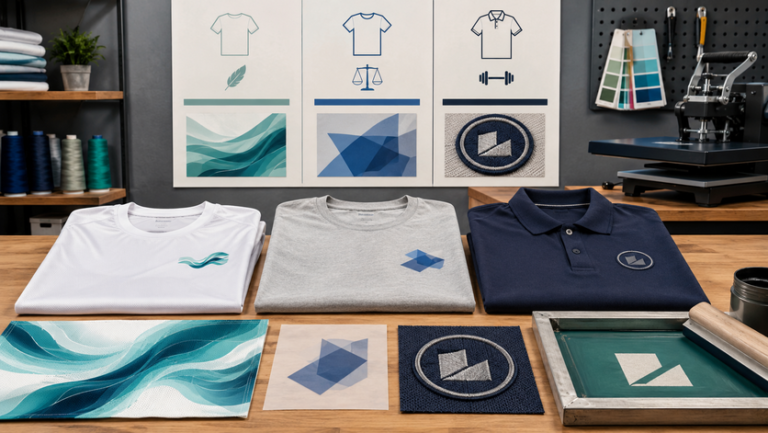
Printing and embroidery
How Shirt Thickness Affects Branding
Keep Decoration Flexible
Thin quick-dry shirts can feel uncomfortable when covered by a large, heavy transfer. Compact logos and breathable layouts are usually better.
- Use smaller DTF areas where practical.
- Avoid dense embroidery on very thin fabric.
- Place logos away from high-stretch zones.
- Test opacity on light colours.
Flexible Printing Choice
Midweight cotton tees often provide a balanced surface for DTF, silkscreen and other common decoration methods.
- Suitable for event and company logos
- Good balance between structure and comfort
- Useful for front, back and sleeve printing
- Match the ink or transfer to the fabric
Strong Merchandise Base
Thick cotton shirts create a substantial background for bold artwork, premium merchandise and streetwear-style designs.
- Suitable for larger screen-printed artwork
- Provides a more structured drape
- Can support premium design positioning
- Check heat and drying comfort
Good Support for Embroidery
Structured CVC, honeycomb and pique polos often support compact embroidered logos more effectively than very light performance shirts.
- Use suitable backing and stitch density.
- Keep logos compact for comfort.
- Check collar and placket alignment.
- Approve embroidery colour and size.
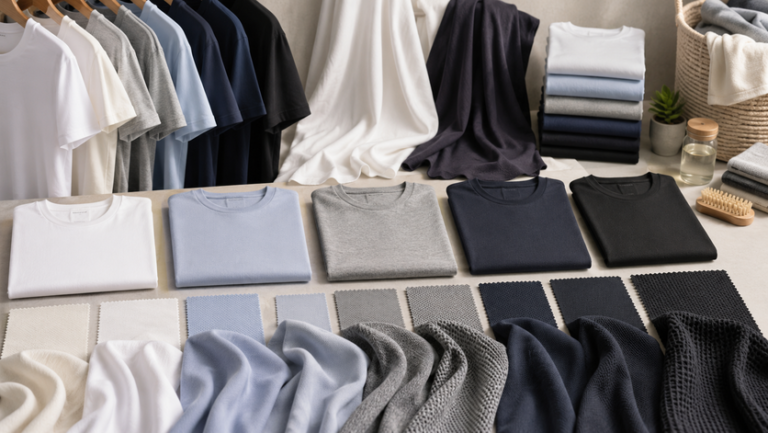
Material and design guide
GSM Is Only One Part of the Fabric
Assuming Thick Means Cool
A high-GSM shirt may retain more heat, especially during outdoor activity.
Judging Quality by GSM Alone
Fibre quality, knitting, finishing and construction also affect durability.
Ignoring Fabric Texture
Honeycomb, pique and smooth jersey surfaces produce different decoration results.
How Common Fabrics Feel
- Microfiber polyester: often light, quick-drying and suitable for active wear.
- Cotton jersey: soft, familiar and suitable for general T-shirts and merchandise.
- CVC or TC blends: combine cotton comfort with polyester stability.
- Honeycomb or pique polo fabric: textured and usually more structured.
- Heavy cotton jersey: firmer, more opaque and suitable for premium designs.
- Sublimation polyester: selected for full-colour custom sports and team uniforms.
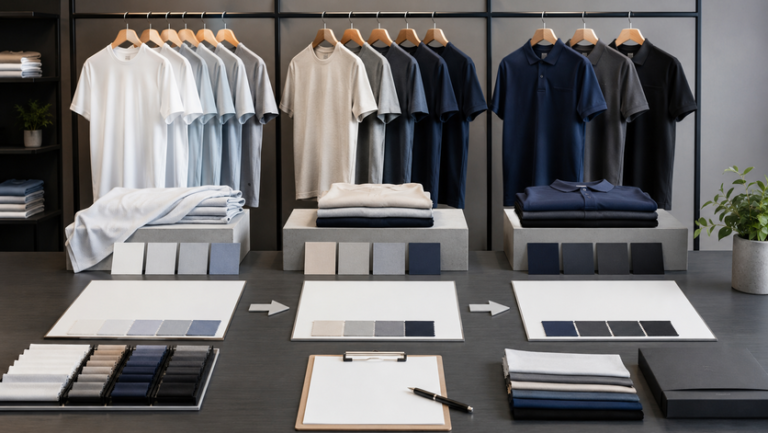
Choose Thickness by Colour and Use
Selection process
How to Choose the Right Shirt Thickness
Identify the Working Environment
Decide whether the wearer works indoors, outdoors, in air-conditioning, near heat sources or during physical activity.
Choose the Fabric Type
Select cotton, microfiber, CVC, TC, honeycomb, pique or full-sublimation polyester according to the required comfort and appearance.
Set the GSM Direction
Shortlist lightweight, medium or heavyweight products instead of choosing the highest GSM automatically.
Compare Exact Models
Review samples or specifications from suitable models such as QD06, G5000, 5001-01, G2000, 5942-01 or HC01.
Match the Printing Method
Confirm whether DTF, silkscreen, embroidery or sublimation suits the selected fabric and artwork.
Approve a Sample and Size Chart
Check colour, opacity, drape, heat comfort, measurements and branding before confirming the full order.
Buyer scenarios
Thickness Recommendations by Use
Choose Lightweight Performance Fabric
A lighter quick-dry shirt around 140–170GSM is often more practical for delivery, logistics, events and active field work.
Choose a Balanced Midweight
Around 175–200GSM can provide a familiar balance of comfort, opacity and structure.
Choose Heavy Cotton
Around 200–220GSM can create a more substantial retail or lifestyle appearance.
Choose Structured Polo Fabric
A 220–230GSM CVC honeycomb polo can provide a firm customer-facing appearance.
Choose Fabric by Activity
Lightweight performance or custom sublimation fabric is usually more useful than thick cotton during matches and training.
Allow More Structure
A midweight or thicker polo may work well when staff spend most of the day indoors.
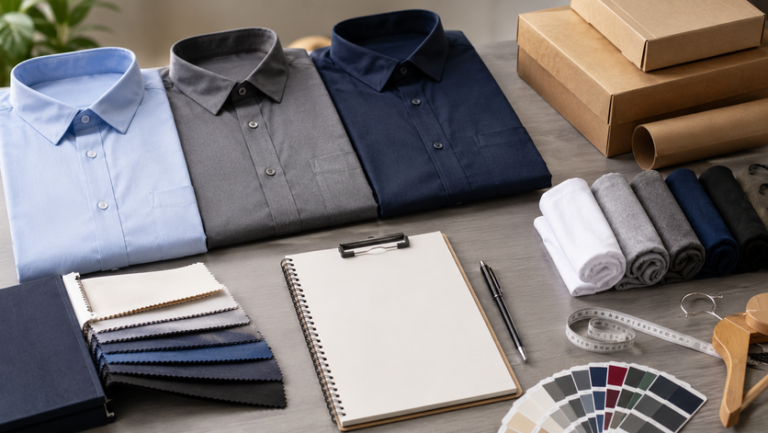
Buyer checklist
Shirt Thickness Checklist
- The working environment and activity level are confirmed.
- The preferred fabric type is identified.
- The GSM or ounce weight is checked.
- The exact brand and product model are recorded.
- Opacity is checked in the chosen colour.
- The fabric feel and heat comfort are tested.
- The size chart is reviewed for the exact model.
- The printing or embroidery method is compatible.
- Current stock and larger sizes are confirmed.
- A sample is approved before a large order.
Common Thickness Mistakes
- Choosing the highest GSM because it sounds more durable.
- Comparing microfiber and cotton using GSM alone.
- Ignoring heat and humidity in the working environment.
- Ordering white shirts without checking opacity.
- Applying dense embroidery to very light fabric.
- Using one shirt thickness for every department.
Frequently asked questions
Questions About Shirt Thickness
Useful Uniform Sabah resources
Continue Planning Your Uniform
Choose the Right Shirt Thickness
Share your work environment, garment type, quantity, preferred fabric, printing method and Sabah delivery location for a suitable recommendation.
WhatsApp Uniform Sabah Explore Uniform SabahOur company network
Our Other Company Websites
Explore related uniform, apparel and custom-printing services through our regional and international websites.