How to Wash White T-Shirts
White T-shirts look clean and versatile, but sweat, body oils, deodorant, food marks and repeated washing can make them look dull or yellow over time. The best washing method depends on the fabric, care label and whether the shirt is plain, printed or embroidered.
What is the best way to wash a white T-shirt?
Separate whites from coloured clothing, check the care label, treat visible stains before washing, use the correct amount of detergent and choose the recommended water temperature. Use bleach only when the garment label allows it. Dry the shirt according to its care instructions and avoid excessive heat when the shirt has prints, heat transfers or other decoration.

Which Washing Method Should You Use?
Not every white shirt needs the same treatment. Start with the mildest method that can clean the garment properly, then only move to stronger stain or whitening treatments when the care label allows them.
| Method | Best for | Main benefit | Main caution |
|---|---|---|---|
| Regular detergent wash | Normal weekly washing and lightly soiled shirts | Simple everyday cleaning with the least aggressive treatment | Too much detergent can leave residue and make fabric feel dull or stiff |
| Pre-treatment + detergent | Sweat marks, food stains, collar soil and underarm build-up | Targets the problem area before the full wash cycle | Use a stain remover compatible with the fabric and decoration |
| Oxygen / non-chlorine bleach | Dull whites or shirts whose labels allow non-chlorine bleach | Can help brighten washable whites with a milder approach than chlorine bleach | Still follow the garment label and product dosage instructions |
| Chlorine bleach | Compatible white garments whose care labels specifically permit it | Strong whitening and stain-removal action | Can damage unsuitable fibres, trims, coloured stitching and printed decoration |
| Low-heat or air drying | Printed, heat-transferred and shrink-sensitive shirts | Helps reduce unnecessary heat exposure after washing | Drying advice should still follow the garment care label |

How Different White T-Shirts Should Be Washed
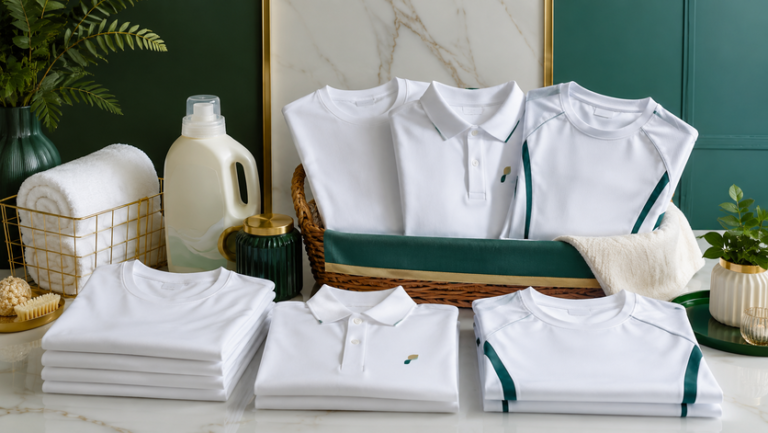
A plain cotton tee, a quick-dry microfiber shirt and a printed company uniform may all be white, but they should not automatically be washed the same way. Check the material and decoration before choosing the wash cycle.
Comfortable everyday option
Cotton absorbs sweat and body oils well, so collars and underarms may need occasional pre-treatment. Follow the care label for water temperature and drying because cotton can shrink under excessive heat.
- Wash with other suitable whites
- Pre-treat visible sweat or food stains
- Avoid unnecessary high dryer heat
Quick-dry sports and event shirt
Microfiber and polyester sports shirts usually release moisture quickly but can hold body odour when overloaded with detergent or fabric softener. Use the garment label as the main guide.
- Do not assume chlorine bleach is suitable
- Avoid excessive detergent residue
- Dry thoroughly before storage
Structured uniform with collar and placket
Pay extra attention to collar soil, makeup, sunscreen and food marks. If the polo contains coloured tipping, embroidery or trims, treat it as a decorated garment rather than a plain white shirt.
White fabric with branded artwork
Turn the shirt inside out when the printer recommends it, avoid harsh treatment on the graphic and use lower heat if required by the print-care instructions.

How to Wash White Printed and Embroidered Shirts
Custom branding changes how a shirt should be cared for. Even when the base fabric is white, the logo, transfer film, embroidery thread or adhesive layer may need gentler washing than the fabric itself.
| Branding method | Washing approach | What to avoid | Practical tip |
|---|---|---|---|
| DTF printing | Use the printer's recommended wash temperature and turn inside out when advised | Harsh bleach, excessive heat and direct ironing over the graphic | Let the shirt cool and dry fully before folding |
| Silkscreen printing | Use a normal gentle wash suitable for the garment and ink system | Unnecessary aggressive bleaching or repeated high-heat drying | Wash inside out when recommended to reduce surface abrasion |
| Heat transfer / vinyl | Use a mild cycle and follow the transfer supplier's care directions | High heat, direct ironing and strong chemical treatment on the transfer | Keep the printed surface away from direct iron contact |
| Embroidery | Wash according to both the shirt fabric and thread requirements | Bleach that may affect coloured thread or backing materials | Check embroidery colourfastness before using any whitening product |
| Sublimation | Use a gentle wash suitable for polyester sportswear | Harsh chemical treatment and unnecessarily high drying heat | Because the colour is transferred into polyester fibres, care for the garment as sportswear rather than as a plain white cotton tee |

How to Keep White T-Shirts Looking Brighter
Good white-shirt care is mostly about preventing soil, residue and heat damage from building up. Consistent washing habits usually work better than waiting until the shirt becomes heavily yellowed.
Wash whites with suitable whites
Separate white shirts from dark colours and heavily soiled items. This reduces dye transfer, lint contamination and unnecessary soil redeposition.
Use the correct amount
More detergent is not always better. Excess product can leave residue, especially when the washer is overloaded or the rinse is insufficient.
Follow the care label
Warm or hot water is not automatically right for every white shirt. Fabric type, shrinkage risk and decoration determine the safe temperature.
Work on marks before drying
Check the shirt after washing. If a stain remains, treat it again before using high heat because drying can make some stains harder to remove.
Avoid unnecessary heat
High heat can contribute to shrinkage, print damage and fabric wear. Use the drying method recommended by the care label and print supplier.
Store only when completely dry
Do not fold damp shirts into bags, lockers or cupboards. Trapped moisture can lead to stale smells and mildew-related problems.
Why White Shirts Turn Yellow or Dull
Body oil and sweat build-up
Collars and underarms receive repeated contact with sweat, deodorant, sunscreen and skin oils. Pre-treating those areas can help before the soil becomes deeply embedded.
Detergent or softener residue
Overdosing products or overloading the machine can reduce rinsing efficiency and leave white garments looking less crisp.
Mixing with coloured garments
White shirts can pick up tiny amounts of dye or lint from darker items, making the fabric look grey or dull over repeated washes.
Heat-setting leftover stains
If a mark is still visible after washing, do not automatically move it to a hot dryer. Inspect and re-treat first when the fabric allows it.

A Simple Step-by-Step White T-Shirt Wash Routine
This process works as a practical starting point for homes, sports teams and companies managing white shirts. Always adjust it according to the garment care label and decoration instructions.
Read the care label
Confirm the fabric, wash temperature, bleach symbol and drying method before choosing the cycle.
Separate the load
Wash whites with compatible light garments and keep heavily coloured or dirty items separate.
Inspect and pre-treat stains
Check collars, underarms, food marks and visible soil before the shirt enters the washer.
Add the correct detergent amount
Follow the detergent directions and avoid overloading the washing machine so the shirts can rinse properly.
Choose the correct cycle and temperature
Use the garment label and print-care instructions instead of assuming every white shirt needs a hot wash.
Inspect before drying
If a stain remains, treat it again before using high heat. Dry the shirt according to the care instructions.
White Shirt Care for Different Uniform Users
White polos with embroidered logos
Provide staff with one simple washing note that covers collar treatment, acceptable bleach type and drying method so the whole team cares for the uniform consistently.
White tees with large front or back prints
Prioritise the print-care directions. A plain-fabric whitening method may be too aggressive for the decorated area.
White quick-dry microfiber shirts
Wash promptly after heavy activity, avoid storing the shirts damp and make sure they are fully dry before packing them into team bags.
White cotton shirts used repeatedly
Collect care instructions together with the size and uniform information so parents and students know how to handle stains and drying correctly.
White T-Shirt Washing Checklist
Use this quick checklist before washing plain, printed or embroidered white shirts.
- Read the garment care label.
- Separate whites from dark and strongly coloured garments.
- Check collars, underarms and visible stains.
- Pre-treat stains with a compatible product.
- Use the recommended detergent amount.
- Do not overload the washing machine.
- Choose water temperature according to the care label.
- Use bleach only when the garment instructions allow it.
- Inspect stains before using high drying heat.
- Store the shirt only when it is completely dry.
White T-Shirt Washing FAQ
Should I wash white T-shirts separately?
Should white T-shirts be washed in hot water?
Can I use bleach on every white T-shirt?
How do I remove yellow underarm marks?
Why do my white shirts look grey after washing?
Should I turn a printed white T-shirt inside out?
Can I use fabric softener on quick-dry white shirts?
Can I dry white T-shirts in direct sunlight?
How often should company white uniforms be replaced?
How can a company make white uniform care easier?
Choose White Shirts That Suit Your Team's Daily Use
Tell Uniform Sabah how the shirts will be worn, washed and branded. The team can help compare cotton, microfiber, polos and T-shirts before you place a company or event order.
Plan Your Next Shirt Order
Explore related pages for custom apparel, branding support and other uniform options for Sabah organisations.
Our Other Company Websites
Explore related uniform, apparel and custom-printing services through our regional and international websites.