How to Remove Deodorant Stains From Shirts
Deodorant marks can appear as fresh white streaks on dark shirts or as older yellowish buildup around the underarms of light-coloured garments. The best treatment depends on the fabric, colour, stain age and any printing or embroidery on the shirt.
What is the safest way to remove deodorant stains?
Start with the garment care label. For a fresh white mark, gentle rubbing with a clean damp cloth may be enough. For older underarm buildup, pre-treat the affected area with a suitable laundry detergent or stain remover, allow it to work for the recommended time, then wash according to the label. Avoid aggressive scrubbing, excessive heat and untested bleach because they can damage colour, fibres or printed designs. Test a treatment on an inconspicuous area first.
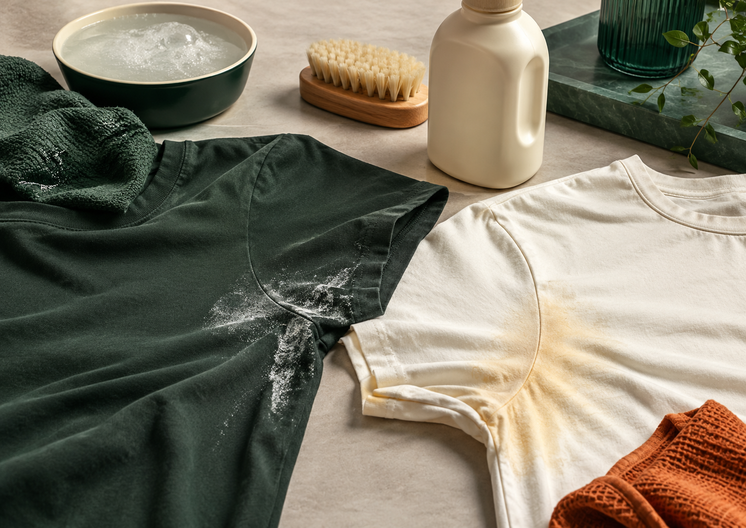
Fresh Marks vs Older Underarm Stains
Not every deodorant stain needs the same treatment. Identify whether you are dealing with surface residue or a buildup that has been repeatedly washed and dried.
| Stain type | What it looks like | First approach | What to avoid |
|---|---|---|---|
| Fresh white deodorant mark | Chalky or powdery streak on dark fabric. | Gently wipe or rub with a clean damp cloth before laundering. | Aggressive scrubbing that can roughen the fabric surface. |
| Light underarm residue | Stiff or slightly discoloured area near the underarm. | Pre-treat with a suitable detergent or stain-removal product. | Drying the shirt before confirming the stain is gone. |
| Yellow underarm stain | Yellowish discolouration, often more visible on white shirts. | Use a fabric-safe pre-treatment and allow enough contact time before washing. | Assuming chlorine bleach is always safe or effective. |
| Old set-in buildup | Harder, darker or stiffened patch from repeated wear and washing. | Repeat a gentle pre-treatment rather than using stronger force immediately. | High heat, harsh scraping or mixing cleaning chemicals. |
| Deodorant near a printed area | Residue close to DTF, vinyl or screen-printed artwork. | Treat only the stained fabric and protect the decorated surface. | Strong chemicals or scrubbing directly across the print. |
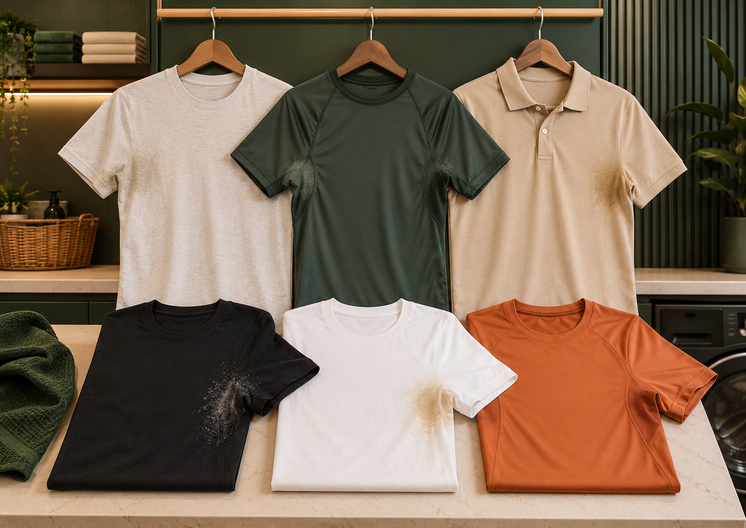
How Different Shirt Fabrics Should Be Treated
The safest stain-removal method depends on the shirt material. Cotton, microfiber and blended uniforms do not always respond the same way to rubbing, heat or chemical products.
Usually easier to pre-treat
Cotton can absorb sweat and deodorant residue deeply. Apply a suitable laundry pre-treatment, work it in gently and wash according to the care label.
Use gentle treatment
Polyester microfiber can hold body oils even though it dries quickly. Avoid rough scrubbing that may damage the surface and use a product suitable for synthetic fabric.
Check both colour and fibre compatibility
Blended uniforms combine different fibre properties. Choose stain products that are safe for the complete fabric blend rather than treating it like pure cotton.
Treat the underarm without distorting the shirt
Focus the pre-treatment on the stained area and avoid excessive twisting or scrubbing that can affect the garment shape.
Be careful with heat
Garments containing elastic fibres can be sensitive to excessive heat and harsh chemicals. Follow the care label closely.
Yellow stains need targeted treatment
White fabric makes underarm discolouration more visible, but whitening products should still be selected based on fibre and decoration compatibility.
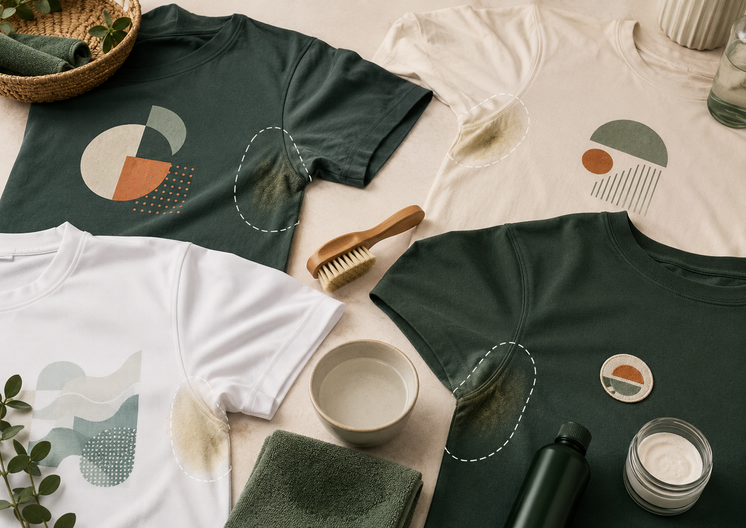
Removing Stains From Branded Shirts
A uniform may be washable, but the logo can have different care limits. Treat the completed garment according to both the fabric and the decoration method.
| Branding method | Stain-removal concern | Safer approach |
|---|---|---|
| DTF printing | Strong rubbing and heat can stress the transfer surface. | Pre-treat the underarm area separately and keep aggressive products away from the print. |
| Silkscreen printing | Harsh chemicals can affect ink or shirt colour. | Use a fabric-safe stain treatment and wash inside out when practical. |
| Heat-transfer vinyl | High heat and strong chemicals can affect adhesion. | Avoid direct heat over the design and follow the supplier's care instructions. |
| Embroidery | Strong rubbing can catch threads or distort dense stitching. | Work on the stained fabric gently and avoid scrubbing across the embroidery. |
| Sublimation | The polyester base still needs appropriate stain care even though the design is integrated. | Use treatments suitable for polyester and avoid unnecessary heat. |
Keep it localised
Apply stain treatment only where needed instead of soaking the entire printed shirt in a strong product.
Turn decorated shirts inside out
This reduces direct rubbing across DTF, screen print and transfer surfaces during a normal wash.
Check the stain before using heat
If the mark remains after washing, treat it again before high-heat drying because heat can make some stains harder to remove.
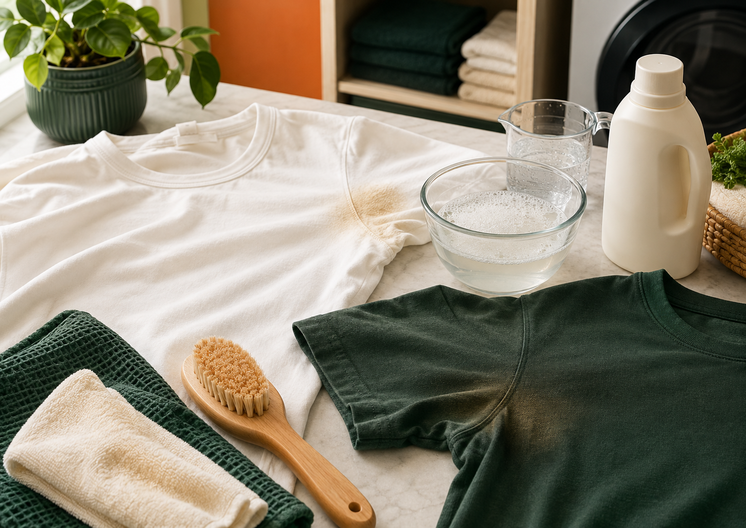
Why Deodorant Stains Look Different on Different Shirts
Deodorant residue is influenced by sweat, body oils, antiperspirant ingredients, fabric colour and how the shirt is washed. A fresh white streak and an old yellow underarm patch are not the same problem.
What Not to Do With Deodorant Stains
Do not scrub aggressively
Hard rubbing can roughen cotton, damage microfiber and stress printed surfaces.
Do not use high heat too early
Check that the stain is gone before tumble-drying or ironing the affected area.
Do not assume bleach is safe
Bleach can affect colour, fibres and decorated areas and may not be appropriate for the stain.
Do not mix cleaning chemicals
Combining household cleaning products can create dangerous reactions.
Do not overload the washer
The treated shirt needs enough water movement and rinsing to remove loosened residue.
Do not ignore repeat buildup
If the same area keeps staining, adjust both the laundry routine and how deodorant is applied.

A Step-by-Step Way to Treat Deodorant Stains
A controlled process is safer than jumping directly to the strongest stain remover. Start gently, inspect the result and repeat treatment only if needed.
Read the care label
Check fabric, washing temperature, bleach guidance, drying and ironing instructions.
Identify the stain
Decide whether it is a fresh white mark, yellow discolouration or older stiff buildup.
Test the treatment
Try the chosen product on a hidden part of the shirt before applying it to a visible area.
Pre-treat gently
Apply a suitable detergent or stain remover to the affected area and follow its contact-time instructions.
Wash normally
Wash using the garment's recommended cycle without overloading the machine.
Inspect before drying
If the stain remains, repeat a suitable treatment before exposing the shirt to high heat.
Common Deodorant-Stain Situations
White buildup on dark polos
Remove surface residue quickly and wash the shirt before the deposit becomes layered through repeated wear.
Yellow underarm discolouration
Use a fabric-safe pre-treatment, avoid premature heat and repeat the treatment if necessary before drying.
Odour plus deodorant buildup
Wash promptly after activity and make sure detergent and body oils rinse fully from synthetic fabric.
Stain close to a logo
Keep the stain treatment localised and avoid scrubbing or soaking the printed area in strong chemicals.
Before You Treat a Deodorant Stain
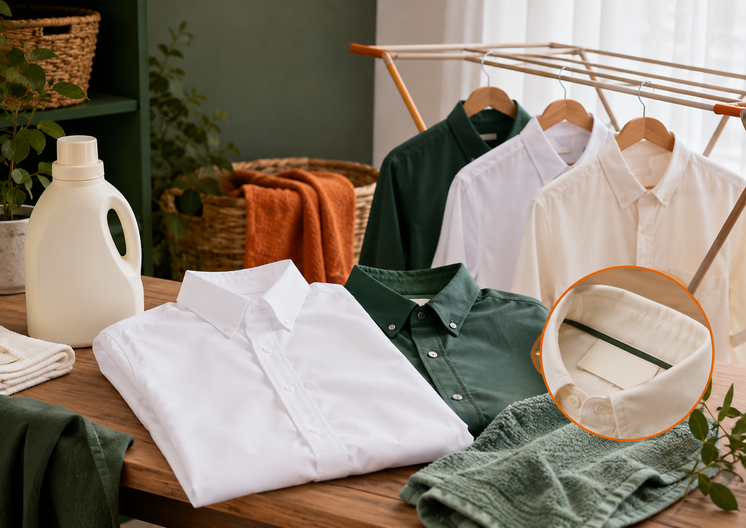
Use this checklist to protect the shirt while improving the chance of removing the mark.
- Read the garment care label.
- Identify the fabric type.
- Check whether the stain is fresh or old.
- Test stain remover on a hidden area.
- Keep strong products away from printing.
- Use gentle rubbing instead of hard scrubbing.
- Follow the product contact-time instructions.
- Do not overload the washing machine.
- Inspect the shirt before drying.
- Repeat gentle treatment if needed.
- Do not mix cleaning chemicals.
- Make sure the shirt is fully dry before storage.
Deodorant Stain Removal FAQ
Why does deodorant leave white marks on black shirts?
Why do white shirts get yellow underarm stains?
Can I use bleach on deodorant stains?
Can vinegar remove deodorant stains?
Should I use hot water on an underarm stain?
Why does the underarm area feel hard?
Can deodorant stains be removed from polyester sports shirts?
How can I prevent deodorant marks from returning?
Choose Uniforms That Suit Everyday Wear
Uniform Sabah can help you compare cotton, microfiber, polo and quick-dry shirt options for company, school, sports and event requirements.
More T-Shirt and Uniform Resources
Continue with related Uniform Sabah pages for garment selection, branding and custom uniform planning.
Our Other Company Websites
Explore related uniform, apparel and custom-printing services through our regional and international websites.