Common T-Shirt Washing Mistakes
T-shirts often wear out faster because of how they are washed rather than how often they are worn. Excessive detergent, high heat, overloaded machines, poor sorting and rough drying can affect colour, fit, fabric feel and printed logos. A few simple laundry habits can help everyday tees, uniforms and event shirts stay presentable for longer.
What are the most common T-shirt washing mistakes?
The biggest mistakes are ignoring the care label, washing dark and light colours together, using too much detergent, choosing water that is hotter than necessary, overloading the machine, leaving sweaty shirts damp for too long, using strong bleach without checking compatibility, and drying printed shirts with excessive heat. The safer approach is to sort carefully, use a suitable cycle and detergent amount, turn decorated shirts inside out and follow the garment’s own care instructions.
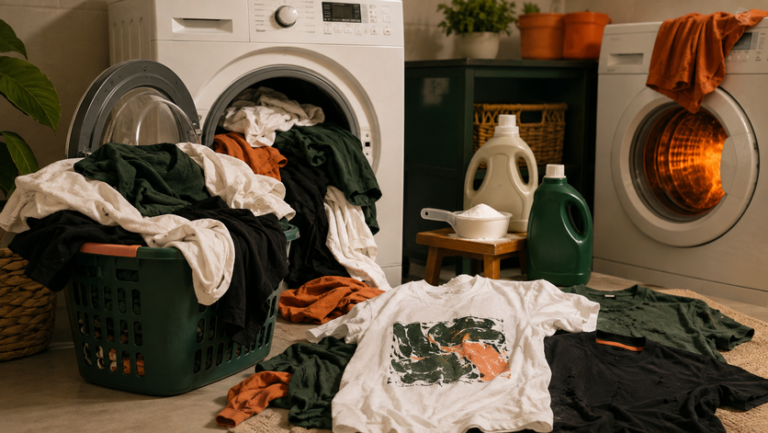
Washing Mistakes and Better Alternatives
The table below shows the habits that most often shorten the useful life of a T-shirt and the simpler washing choices that are usually easier on the garment.
| Common mistake | What can happen | Better approach |
|---|---|---|
| Ignoring the care label | Heat, bleach or drying settings may be unsuitable for that specific fabric or decoration. | Check the sewn-in care label before the first wash and after changing laundry products. |
| Mixing darks, brights and whites | Dye transfer can dull white shirts or alter lighter colours. | Separate whites, light colours and dark colours, especially for newer garments. |
| Using too much detergent | Residue can remain in the fabric and may trap odour or make shirts feel less fresh. | Use the detergent amount recommended for the load size and water conditions. |
| Using very hot water by default | Some fabrics, dyes and printed decorations may fade, distort or shrink faster. | Use the temperature stated on the care label and choose cooler settings when appropriate. |
| Overloading the washing machine | Clothes may not move or rinse properly, increasing friction and leaving detergent behind. | Leave enough room for garments to move freely through the wash cycle. |
| Leaving sweaty shirts damp | Odour can become harder to remove and damp storage may create an unpleasant smell. | Air out wet shirts and wash them as soon as practical. |
| Using bleach without checking compatibility | Colour loss, fibre weakening or damage to prints can occur. | Check the care label and bleach instructions; use only products suitable for the garment. |
| High-heat drying | Heat can stress fibres, elastic components and some heat-applied decorations. | Use a suitable lower setting or air-dry when the garment care instructions recommend it. |
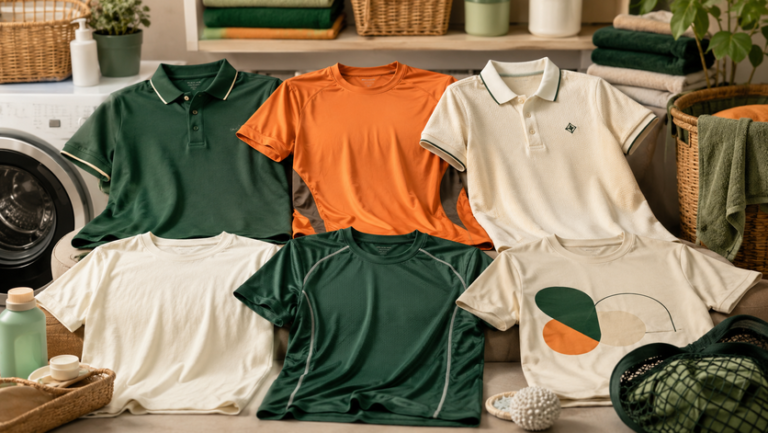
Different T-Shirts Need Different Laundry Care
A cotton tee, a microfiber sports shirt and a printed company uniform should not automatically be treated in exactly the same way. Start by identifying the fabric and decoration before choosing the cycle.
Avoid unnecessary heat and rough treatment
Cotton is comfortable and widely used, but repeated high heat can affect fit and softness. Wash according to the label, separate colours and avoid assuming every cotton tee needs a hot cycle.
Focus on rinsing and odour control
Sports shirts can hold sweat and body oils after active use. Do not leave them wet in a bag for long, and avoid using more detergent than needed in an attempt to cover odours.
Protect collars and structured areas
Polo collars and plackets benefit from gentler handling. Avoid overloading the machine and reshape the collar before drying if needed.
Turn them inside out before washing
Turning printed shirts inside out can reduce direct rubbing against other garments and the washing drum. Use the care method recommended for the print and fabric combination.
Prevent unnecessary abrasion
Avoid washing embroidered garments with sharp zips, hooks or rough accessories where possible. Close fasteners and use a sensible load to reduce snagging.
Do not treat every stain with strong bleach
White fabric still needs care. Identify the stain, check the care label and consider the print or embroidery before choosing any whitening or stain-removal product.
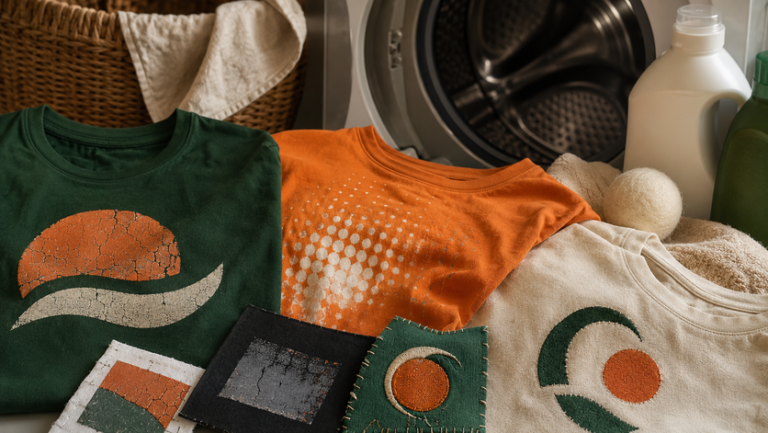
Washing Mistakes That Can Damage Shirt Branding
Custom logos can change how a shirt should be washed. The fabric may tolerate one condition while the decoration requires more care, so the finished garment should be treated as one complete product.
| Branding method | Common washing mistake | Safer care habit |
|---|---|---|
| DTF printing | Using excessive heat or repeatedly rubbing the printed face against rough garments. | Turn the shirt inside out and follow the supplier’s recommended wash and drying conditions. |
| Silkscreen printing | Harsh washing, unsuitable bleach or very high drying heat over repeated cycles. | Use a normal suitable cycle, wash inside out and avoid unnecessary chemical treatment. |
| Heat-transfer vinyl | High heat and direct ironing over the decoration. | Follow the transfer-care instructions and avoid placing a hot iron directly on the design. |
| Embroidery | Washing with exposed hooks, zips or rough items that can catch the stitches. | Close fasteners, separate rough items and use an appropriate garment-washing cycle. |
| Sublimation | Assuming the print itself cannot be affected by any laundry condition. | Still follow the fabric care label because heat, detergents and fabric construction matter. |
Reduce surface friction
Turning decorated shirts inside out is a simple way to reduce direct contact between the print and other garments during normal washing.
Keep heat away from the decoration
Do not assume a printed logo can be ironed like plain fabric. Follow the print supplier’s instructions and iron from the reverse side when appropriate.
Do not use maximum heat by default
The hottest drying setting is not automatically the best choice. Use the garment’s care instructions and the needs of the decoration.

Why Fabric and Colour Change the Way You Should Wash
Washing mistakes are often caused by treating every T-shirt as if it were made from the same material. Fibre type, colour depth, GSM, stretch content and print coverage can all affect the best care routine.
Small Mistakes That Add Up Over Time
1. Washing every load on the same setting
Choose the cycle based on the garment care label, soil level and fabric type instead of habit.
2. Treating fragrance as cleanliness
Adding more detergent or fragrance does not automatically remove sweat, oil or residue more effectively.
3. Leaving stains until later
Prompt stain treatment is often easier than trying to remove a set stain after several wash-and-dry cycles.
4. Washing shirts with rough hardware
Open zips, hooks and abrasive items can rub against jersey fabric, prints and embroidery.
5. Drying everything on maximum heat
More heat is not always better. It can be unnecessary for many T-shirts and decorations.
6. Storing shirts before fully dry
Putting away damp garments can encourage stale or musty smells and makes the next wear less pleasant.

A Better T-Shirt Washing Process
A simple routine makes it easier to avoid the most common mistakes, especially for households, sports teams, schools and workplaces that wash similar shirts repeatedly.
Check the care label
Confirm the permitted wash temperature, drying method, bleach guidance and ironing instructions.
Sort the load
Separate colours and remove garments with rough hardware or unusually heavy soil when necessary.
Pre-treat stains
Address visible stains before washing rather than simply adding more detergent to the whole machine.
Turn printed shirts inside out
This helps reduce direct rubbing across large printed or heat-applied surfaces.
Use the correct detergent amount
Follow the detergent instructions for the load size instead of assuming more product gives a better wash.
Dry appropriately
Use the recommended drying method and make sure shirts are fully dry before storing them.
Common Situations for Uniform and Event Shirt Owners
Frequent weekly washing
Standardise a simple care routine for staff so printed logos and shirt colours are not exposed to unnecessarily aggressive settings from one wash to the next.
Sweaty shirts after training
Do not leave damp sports shirts sealed in a bag for long periods. Air them out and wash promptly when practical.
Mixed sizes and colours
Parents and students may wash the same event shirt differently, so providing a short care instruction together with the shirt can help maintain consistency.
Large front and back prints
Turn the shirt inside out, avoid unnecessary heat and follow the print supplier’s care advice to reduce wear on large decorated areas.

Quick T-Shirt Washing Checklist
Use this before starting the wash if you want to reduce fading, shrinkage, print damage and lingering odours.
- Read the shirt care label first.
- Separate whites, lights and dark colours.
- Check pockets, zips, hooks and rough accessories.
- Pre-treat obvious stains.
- Turn printed shirts inside out.
- Use the correct detergent amount.
- Avoid overloading the washing machine.
- Choose a suitable temperature and cycle.
- Do not use bleach unless the garment allows it.
- Dry according to the care label.
- Make sure shirts are fully dry before storage.
- Keep care instructions for custom uniforms and teamwear.
T-Shirt Washing Mistakes FAQ
Should I wash every T-shirt in cold water?
Is more detergent better for sweaty shirts?
Should printed T-shirts be washed inside out?
Can I wash white T-shirts together with pale colours?
Why do T-shirts still smell after washing?
Can bleach damage T-shirts?
Does high heat make shirts cleaner?
Why do some shirts shrink after washing?
Choose Uniforms That Suit the Way Your Team Works
Uniform Sabah can help you compare T-shirt fabrics, colours, printing methods and shirt types for company, school, event and sports use.
More T-Shirt and Uniform Resources
Continue with related Uniform Sabah pages for garment selection, printing ideas and custom uniform planning.
Our Other Company Websites
Explore related uniform, apparel and custom-printing services through our regional and international websites.