Should You Separate Whites and Colours?
Separating whites from coloured clothes is still one of the simplest ways to reduce dye transfer, dull-looking whites and uneven colour changes. It matters most when garments are new, deeply dyed, very bright or washed at higher temperatures.
Do you really need to separate whites and colours?
Yes, especially when washing new dark garments, strong reds, navy, black or other heavily dyed colours. Dye can release into the wash water and transfer to pale fabric, making whites look grey, pink or dull. For the safest routine, keep whites separate, group light colours together, and wash dark colours in another load. Always follow the care label because some uniforms, prints and specialty fabrics may need additional separation by fabric or soil level.
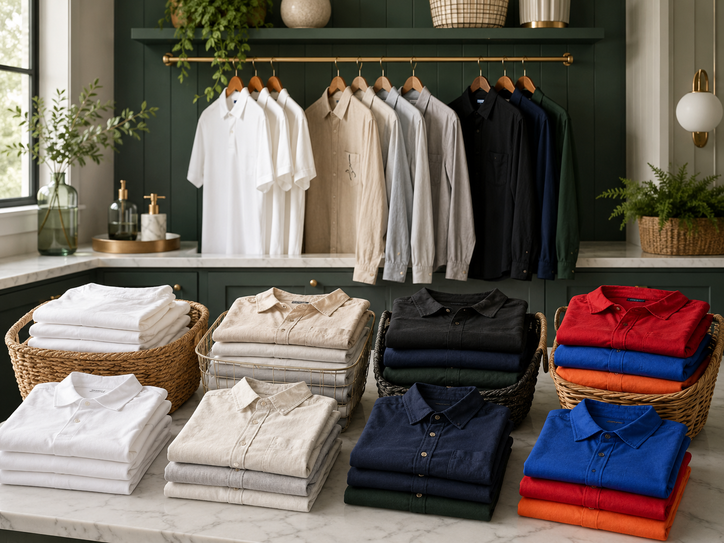
How to Sort Whites, Lights and Darks
A simple three-group system works for most everyday T-shirts and uniforms.
| Laundry group | Typical colours | Main reason to separate | Extra caution |
|---|---|---|---|
| Whites | Pure white, off-white, very pale cream | Prevents visible dye transfer and keeps whites looking cleaner. | Do not automatically use bleach; check the garment and print first. |
| Light colours | Pastels, light grey, pale blue, beige | Reduces the chance of darker dyes affecting pale fabric. | New light-coloured garments may still release some dye. |
| Dark colours | Black, navy, maroon, dark green, charcoal | Dark dyes are more likely to make pale garments look dull. | Wash new dark garments separately for the first few cycles when practical. |
| Bright colours | Red, royal blue, orange, purple | Strong dyes can transfer noticeably to white or light fabric. | Separate especially when the garment is new. |
| Heavily soiled workwear | Any colour | Oil, mud or grease can transfer even when colours are compatible. | Sort by soil level as well as colour. |
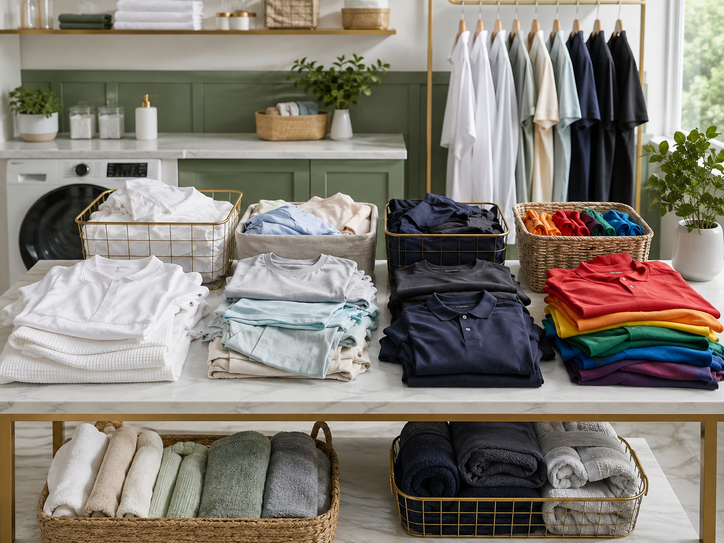
Which T-Shirts Need More Care When Sorting?
Colour is only one part of laundry sorting. Fabric type, garment age and decoration can also affect the safest load.
Highest risk of visible dye release
Black, navy, maroon and strong fashion colours can release more dye during early washes. Keep them away from white and pale garments until you know how colourfast they are.
Easy to dull with transferred colour
White cotton can pick up loose dye and appear grey or tinted. Washing whites separately is the safest routine.
Sort by colour and soil level
Quick-dry fabric may be heavily sweaty after activity, so sports shirts sometimes need separation from lightly worn office clothing even when the colours match.
Protect contrast collars and panels
Some polos use multiple colours in one garment. Follow the care label carefully because separating the colours within the shirt is impossible.
Consider the print as well as the base colour
A white T-shirt with a dark print should still be washed according to the finished garment’s care instructions.
Heavy dirt can matter more than colour
Grease, mud or workshop residue can soil another load even if the garments are all dark. Separate by soil level when necessary.
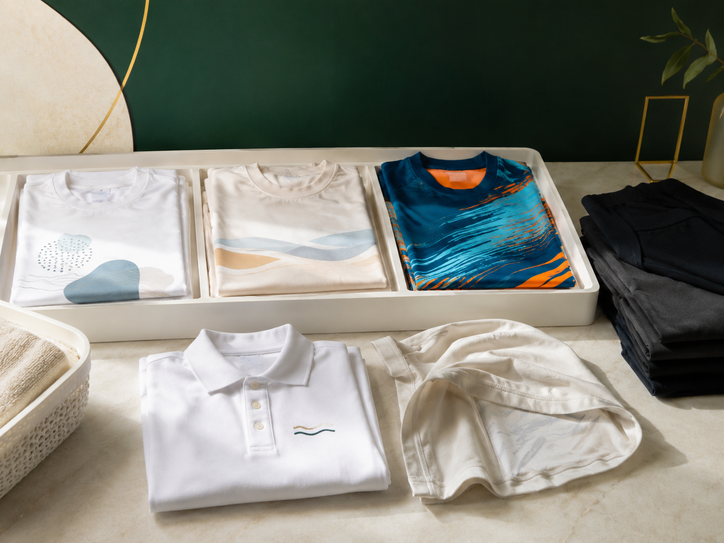
Does Shirt Printing Change How You Should Sort Laundry?
Printed and embroidered uniforms still need colour sorting, but the decoration method adds another layer of care.
| Branding method | Sorting concern | Better care habit |
|---|---|---|
| DTF printing | A white shirt may have a large dark transfer. | Wash according to the finished garment instructions and turn inside out. |
| Silkscreen printing | Strong contrast between ink and shirt colour can complicate visual care. | Sort mainly by the garment base colour and follow print-care instructions. |
| Heat-transfer vinyl | High heat used to treat whites may not suit the transfer. | Do not choose washing conditions based on colour alone. |
| Embroidery | Thread colours can contrast strongly with the garment. | Follow the full garment care label and avoid harsh colour treatments. |
| Sublimation | Multi-colour designs are permanently part of the polyester fabric. | Sort mainly by garment care requirements and overall colour depth. |
Do not treat it like a plain white tee
Strong whitening products or bleach may be unsuitable for the printed area even when the base shirt is white.
Protect the garment colour
Dark uniforms should generally stay with other darks to reduce visible fading and colour transfer.
Follow the garment label
When several colours are built into one shirt, careful temperature and detergent choices matter more than trying to separate by colour.
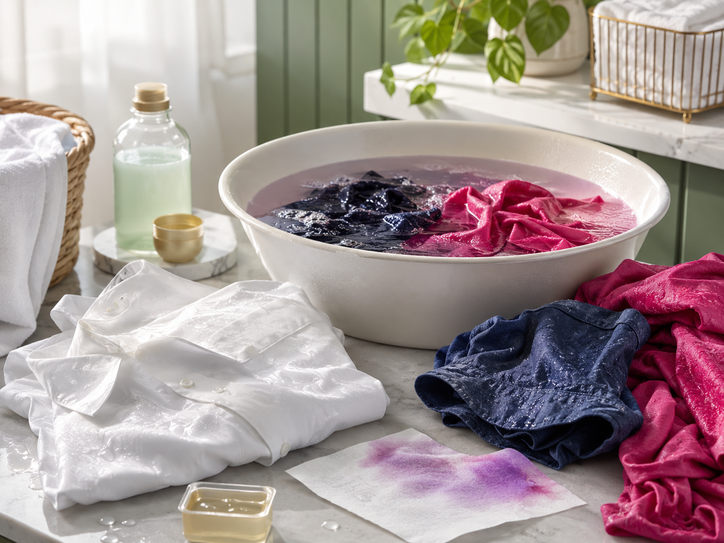
Why Colours Transfer in the Wash
Dye transfer happens when loose dye moves from one garment into the wash water and is picked up by another. New garments, saturated colours and higher wash temperatures can make the risk more noticeable.
Sorting Mistakes That Can Ruin a Load
Mixing a new red shirt with whites
One strongly dyed garment can tint an entire pale load.
Assuming colour-catcher sheets remove all risk
They may help with loose dye but do not replace careful sorting when colour transfer would be costly.
Using bleach just because the shirt is white
Printed, blended or stretch garments may not tolerate chlorine bleach.
Ignoring heavily soiled workwear
Oil and dirt can contaminate another load even when all the colours are similar.
Leaving mixed clothes wet together
Damp contact after washing can allow colour migration to continue.
Sorting only by colour
Fabric type, care temperature, print method and soil level can also matter.

A Simple Way to Sort T-Shirts Before Washing
You do not need a complicated system. A quick sort before each load can prevent most colour-transfer problems.
Check the care labels
Separate garments that require very different wash temperatures or care methods.
Create a white load
Keep pure whites and very pale garments away from dark and saturated colours.
Group light colours
Pastels, light grey, beige and pale blue can usually be washed together when care labels match.
Group dark colours
Black, navy, maroon, charcoal and dark green are safer together than with whites.
Separate new or risky colours
Wash strong reds, deep blues and new dark garments separately when practical.
Sort heavy soil separately
Kitchen, workshop and outdoor uniforms may need their own load even if the colours match.
Common Sorting Situations
Staff wear several uniform colours
Provide a simple care note telling staff to keep white uniforms separate from dark ones, especially during the first few washes.
New brightly coloured shirts
Event tees are often washed for the first time after heavy wear. Keep strong colours away from white school garments and pale household laundry.
Mixed team colours and sweaty jerseys
Sort by colour, then consider soil level. Heavily sweaty jerseys may need a separate sportswear load.
Only a few white shirts
If a full white load is impractical, combine whites only with very pale, colourfast garments and accept that there is still more risk than washing whites separately.

Before You Start the Washing Machine
Use this checklist to reduce colour transfer and protect white, light and dark T-shirts.
- Read each garment care label.
- Keep pure whites separate where possible.
- Group pale colours together.
- Group dark colours together.
- Separate new reds, blues and dark garments.
- Turn printed shirts inside out.
- Sort heavily soiled workwear separately.
- Use the care-label wash temperature.
- Do not overload the washing machine.
- Remove wet clothes promptly after washing.
- Check mixed-colour garments before using bleach.
- Keep care instructions consistent for uniforms.
Whites and Colours FAQ
Can I wash whites and colours together in cold water?
Can I wash light grey with whites?
Do new black shirts need to be washed separately?
Can red clothes turn white shirts pink?
Do colour-catcher sheets mean I can mix everything?
Should white printed T-shirts be washed with whites?
Can I wash all dark colours together?
Should work uniforms be sorted by colour or dirt level?
Choose Shirt Colours and Fabrics That Suit Daily Use
Uniform Sabah can help you compare shirt colours, cotton, microfiber, polos and quick-dry options for company, school, event and sports requirements.
More T-Shirt and Uniform Resources
Continue with related Uniform Sabah pages for garment selection, branding and custom uniform planning.
Our Other Company Websites
Explore related uniform, apparel and custom-printing services through our regional and international websites.