How to Remove Grease Stains From T-Shirts
Cooking oil, oily sauces, machinery grease and body oils can leave dark patches that survive an ordinary wash. Grease is easier to remove when it is treated before drying, and the safest method depends on the shirt fabric, colour and any printed or embroidered decoration.
What should you do first when grease gets on a T-shirt?
Blot or lift off excess grease without spreading it further, then check the care label. Apply a suitable liquid laundry detergent or fabric-safe grease stain remover to the affected area, follow the product's contact-time instructions, and wash using the recommended garment setting. Inspect the stain before using a dryer or iron. If oil remains, repeat the treatment rather than exposing the shirt to high heat.
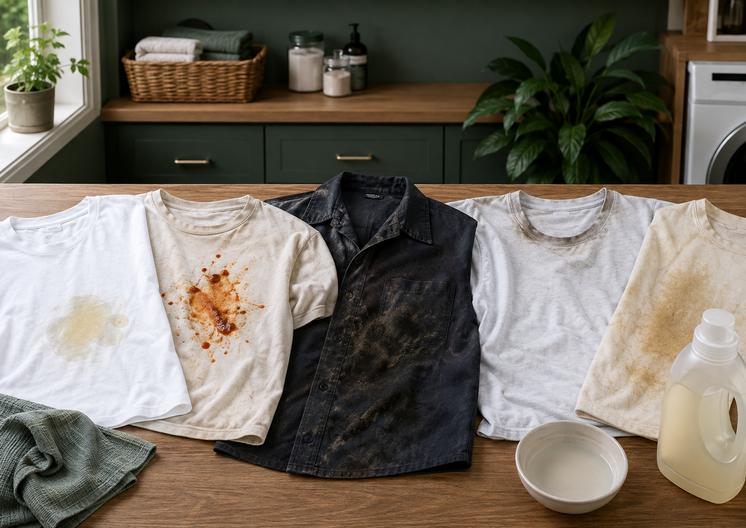
Grease Stain Types and First Treatment
Identify the source first. Food oil, workshop grease and old body-oil buildup do not always need the same treatment.
| Stain type | Typical appearance | Recommended first step | Common mistake |
|---|---|---|---|
| Cooking oil | Transparent or darkened patch that may spread. | Blot excess oil and pre-treat with suitable liquid detergent. | Rubbing immediately and spreading the stain. |
| Oily food or sauce | Grease mixed with colour, seasoning or food residue. | Remove solid residue first, then treat the oily area. | Drying the shirt before checking whether the mark is gone. |
| Automotive or workshop grease | Dark, heavy residue often mixed with dirt. | Separate heavily soiled garments and use a product suitable for workwear. | Washing with lightly soiled or delicate clothes. |
| Body oil around collar | Gradual darkening or stiffness around the neckline. | Pre-treat high-contact areas before routine washing. | Adding more detergent to the whole load instead of targeting the area. |
| Old set-in grease | Dark or yellowish mark remaining after earlier washes. | Repeat a fabric-safe pre-treatment before trying stronger methods. | Using aggressive scrubbing or heat too early. |
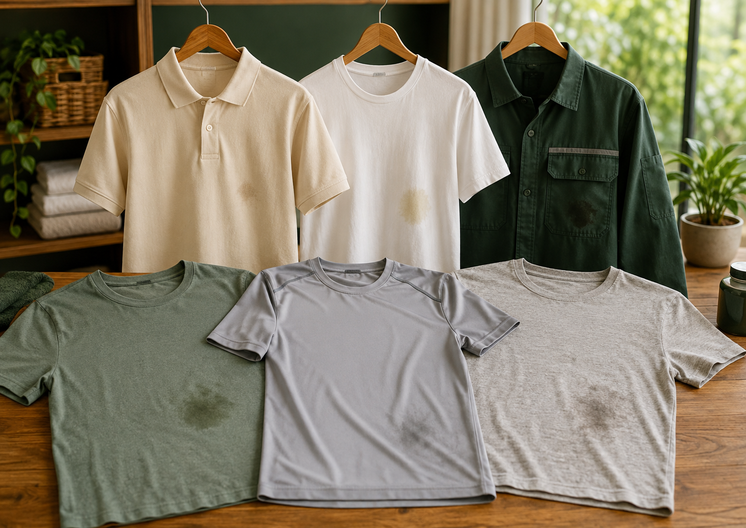
How Fabric Type Changes Grease Stain Removal
Cotton, microfiber, blends and polos absorb and release oils differently. Use the gentlest effective method that matches the care label.
Absorbent fibres can hold oily stains
Cotton can absorb oil into the yarn. Early pre-treatment with a suitable laundry product improves the chance of removing the mark before it becomes set.
Body oils can cling to synthetics
Polyester dries quickly but can retain oily residues. Avoid unnecessary heat and use a treatment suitable for synthetic fabrics.
Treat the complete fabric blend
Choose products compatible with both fibre types rather than treating a blended uniform exactly like pure cotton.
Watch collars and structured areas
Grease around collars or food stains near the chest should be pre-treated locally without excessive twisting or scrubbing.
Grease may leave a yellow shadow
White shirts reveal old grease clearly. Do not assume chlorine bleach is the right answer; choose treatment based on fibre and decoration compatibility.
Heavy contamination may need separate handling
Kitchen, workshop and maintenance uniforms can carry larger amounts of oil. Separate heavily soiled garments from ordinary laundry when practical.
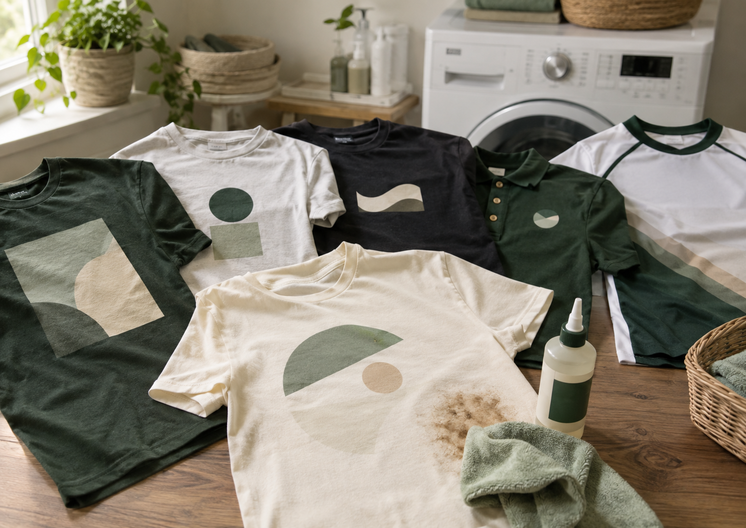
Removing Grease From Printed and Branded T-Shirts
A cleaner that is safe for the base fabric may not be ideal for the logo or transfer. Treat the finished garment as one complete product.
| Branding method | Main risk | Better approach |
|---|---|---|
| DTF printing | Strong chemicals, scrubbing or heat can stress the transfer. | Pre-treat only the stained fabric and keep aggressive products off the print. |
| Silkscreen printing | Harsh cleaners may affect ink or fabric colour. | Use a suitable laundry pre-treatment and wash inside out. |
| Heat-transfer vinyl | High heat can affect adhesion or surface finish. | Avoid direct ironing and unnecessary dryer heat while treating the stain. |
| Embroidery | Heavy rubbing can catch or distort threads. | Work on the stained fabric gently without scrubbing across embroidery. |
| Sublimation | Polyester can retain oily residue even though the colour is integrated into the fibre. | Use a synthetic-safe grease treatment and rinse thoroughly. |
Target the grease, not the whole shirt
Applying treatment only where needed reduces unnecessary exposure across logos and transfers.
Reduce abrasion
Turning a printed shirt inside out helps reduce direct rubbing across the decorated surface.
Inspect before heat
If a greasy shadow remains, pre-treat again before tumble-drying or ironing.
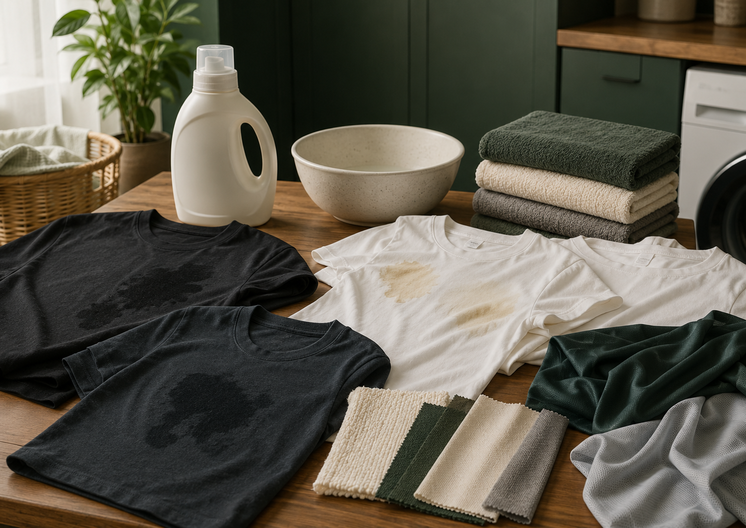
Why Grease Stains Can Be Difficult to Remove
Oil can coat fibres, spread beyond the original spot and become less obvious when wet, then reappear as the shirt dries.
What Not to Do With Grease Stains
Do not rub a fresh spill hard
Rubbing can push oil deeper and spread it beyond the original spot.
Do not dry before checking
Heat can make remaining grease more difficult to remove.
Do not assume bleach removes oil
Bleach is not the automatic solution for grease and may damage fabric, colour or printing.
Do not use random solvents
Strong solvents can damage dyes, synthetic fibres, prints and finishes.
Do not overload the washer
The shirt needs enough movement and rinsing to carry loosened grease away.
Do not mix cleaning chemicals
Combining household cleaners can be dangerous and is unnecessary for ordinary laundry stain treatment.
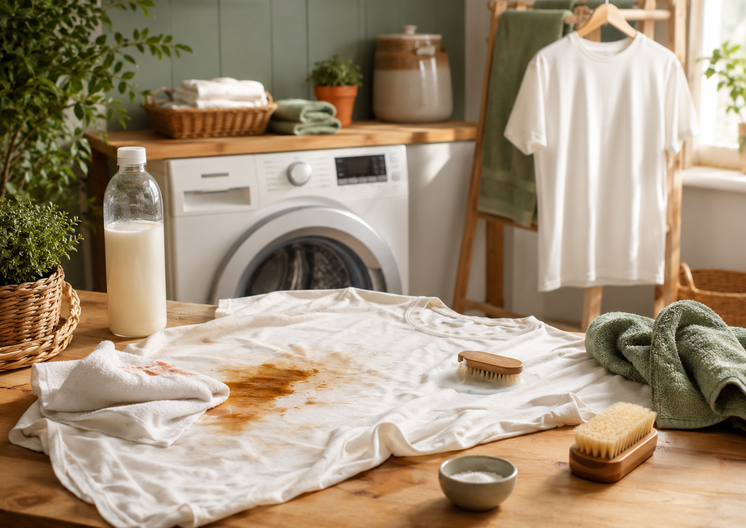
A Step-by-Step Grease Stain Routine
Treating the stain before washing gives you a better chance of removing it without overworking the shirt.
Remove excess grease
Blot liquid oil or gently lift away solid food residue without spreading the stain.
Check the care label
Confirm fabric type, wash temperature, bleach guidance and drying instructions.
Apply suitable pre-treatment
Use liquid laundry detergent or a stain remover designed for grease and compatible with the garment.
Allow contact time
Follow the product instructions instead of rinsing immediately or leaving the product indefinitely.
Wash normally
Use the garment's recommended setting and avoid packing the washing machine too tightly.
Inspect before drying
If the mark remains, repeat treatment before exposing the T-shirt to high heat.
Common Grease-Stain Situations
Cooking oil and sauce splashes
Pre-treat oily spots after each shift instead of allowing several days of grease to accumulate.
Machine grease and dirt
Wash heavily contaminated work shirts separately and use treatment suitable for workwear and the fabric type.
Food stain near a printed logo
Keep treatment focused on the stained fabric and avoid scrubbing across the print.
Small cooking-oil spot
Blot the spill, pre-treat promptly and check the mark before drying.

Before You Treat a Grease Stain
Use this checklist to reduce the chance of spreading the oil or damaging the shirt.
- Blot or lift off excess grease first.
- Read the garment care label.
- Identify the fabric type.
- Check whether the stain is fresh or set-in.
- Test stain remover on a hidden area.
- Keep strong products away from printing.
- Use a grease-compatible laundry pre-treatment.
- Follow product contact-time instructions.
- Do not overload the washing machine.
- Inspect the stain before drying.
- Repeat treatment if the oily shadow remains.
- Never mix incompatible cleaning chemicals.
Grease Stain Removal FAQ
Can normal laundry detergent remove grease?
Should I use hot water on a grease stain?
Can dishwashing liquid remove grease from a T-shirt?
Why does the grease stain come back after washing?
Can bleach remove grease from a white shirt?
Can grease stains be removed from polyester?
What if the grease stain is already old?
How do I protect a printed logo while treating grease?
Choose Shirts That Match Your Working Environment
Uniform Sabah can help you compare cotton, microfiber, polos and quick-dry options for restaurants, workshops, events, schools and company teams.
More T-Shirt and Uniform Resources
Continue with related Uniform Sabah pages for garment selection, branding and custom uniform planning.
Our Other Company Websites
Explore related uniform, apparel and custom-printing services through our regional and international websites.