Can You Wash Towels With Clothes?
Towels can sometimes be washed with clothes, but it is usually better to separate them when they are heavily soiled, very linty, a different colour, or much heavier than the garments in the load. Towels absorb more water and create more friction, which can affect lightweight T-shirts, printed shirts and delicate uniform fabrics.
Should towels and clothes be washed together?
You can wash towels with sturdy clothes when the colours, care temperatures and soil levels are similar. However, separating towels is usually the safer choice for white shirts, dark T-shirts, microfiber sportswear, delicate garments and heavily decorated uniforms. Towels can shed lint, hold more water and rub against lighter clothing during the wash, so mixed loads should be kept small and compatible.

When Towels Can and Cannot Be Washed With Clothes
The best decision depends on colour, lint, fabric weight, soil level and the washing instructions on both items.
| Laundry combination | Wash together? | Why | Main caution |
|---|---|---|---|
| White towels + white cotton T-shirts | Sometimes | Colours and many care settings may be compatible. | New towels can shed lint onto smooth shirts. |
| Dark towels + dark cotton clothes | Sometimes | Colour transfer is less visible when shades are similar. | Heavy towels can create friction and fading. |
| Towels + microfiber sports shirts | Usually separate | Towels can shed lint that clings to synthetic sports fabric. | Sportswear may also need a cooler or gentler cycle. |
| Towels + printed event shirts | Better separate | Rough towel surfaces can rub against large prints and transfers. | Turn printed garments inside out if they must share a load. |
| Kitchen towels + office clothes | Separate | Food grease, strong odour and heavy soil can transfer. | Sort by soil level as well as colour. |
| New towels + light-coloured clothes | Separate | New towels may release both lint and some loose dye. | Wash new towels separately during early cycles when possible. |
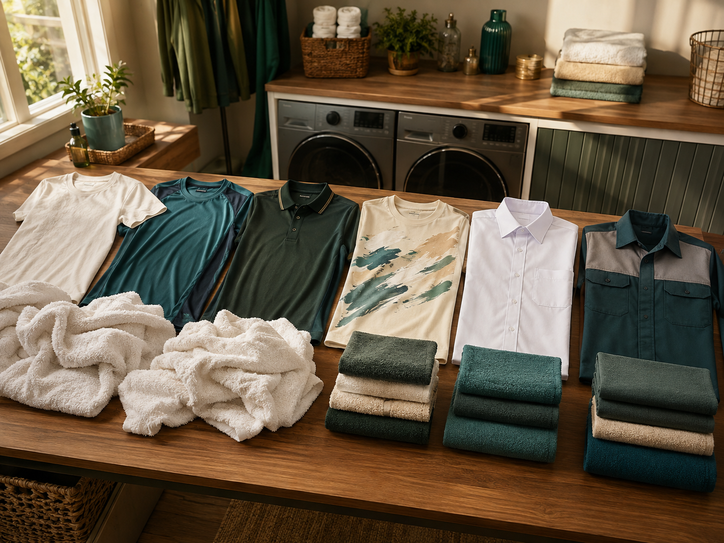
How Different Shirt Types React to Towels
A heavy cotton towel and a lightweight T-shirt behave very differently in the washing machine. Some garments are much more sensitive to lint and abrasion.
Usually the easiest to mix
Plain cotton tees can sometimes share a load with similar-coloured towels when their care labels match. Keep the machine from becoming overloaded because wet towels become heavy.
Better washed separately
Lint from cotton towels can cling to smooth polyester fibres. Sports shirts also often benefit from cooler, lighter loads that rinse sweat and body oils effectively.
Protect collars and surface finish
Heavy towels can create more friction around polo collars and plackets. A separate garment load is usually safer.
Avoid rough towel contact
Large DTF, vinyl or silkscreen areas can rub against textured towels. Wash inside out and separate where practical.
Watch colour and lint
White towels may be compatible, but coloured towels can transfer dye and darker lint may be visible on pale clothing.
Sort by contamination
Workshop rags, kitchen towels and heavily soiled cleaning cloths should not be mixed with normal uniforms, even when the colours are similar.

Why Branded Shirts Should Usually Avoid Heavy Towels
Custom logos can tolerate normal washing, but heavy towel fabric increases rubbing. The decoration method determines how much extra care is sensible.
| Branding method | Risk from towels | Better care habit |
|---|---|---|
| DTF printing | Towel loops can create extra abrasion across transfer edges and surface. | Wash inside out and separate from heavy towels when practical. |
| Silkscreen printing | Repeated rubbing can age the printed surface faster. | Use a garment-focused load with similar fabrics. |
| Heat-transfer vinyl | Heavy friction may stress raised transfer surfaces. | Avoid packed loads with thick towels and high heat. |
| Embroidery | Towel loops may catch on loose or raised threads. | Separate embroidered garments from rough, linty items. |
| Sublimation | The print itself is integrated, but polyester can collect cotton lint. | Wash jerseys separately from lint-producing towels. |
Reduce direct rubbing
Turning decorated shirts inside out provides an extra layer of protection if towels must be included in the same load.
Leave space for movement
Towels absorb a lot of water. A crowded machine can rinse shirts poorly and increase friction.
Consider separate drying too
Towels often take longer to dry than lightweight shirts, so one drying setting may not suit the entire load.
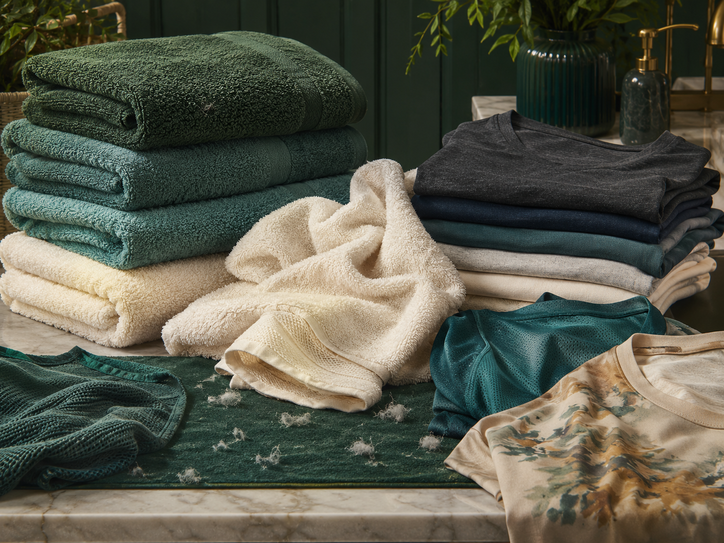
What Makes Towels Different From Everyday Clothes?
Towels are designed to absorb water and usually have a thicker, looped surface. That construction changes how they behave in the wash compared with T-shirts and uniforms.
Laundry Mistakes When Mixing Towels and Clothes
Overloading the machine
Wet towels are heavy, so a mixed load can become crowded much faster than expected.
Mixing new towels with dark shirts
Fresh towels can release visible lint that sticks to darker fabric.
Mixing kitchen towels with office clothes
Grease, food residue and strong odours may transfer into otherwise lightly soiled garments.
Using one temperature for everything
Towels may tolerate a hotter wash than a printed or synthetic shirt in the same load.
Drying towels with heat-sensitive shirts
Longer or hotter towel drying can be too aggressive for prints, elastic fibres and lightweight fabrics.
Ignoring colour separation
A dark towel can cause the same dye-transfer problems as any other strongly coloured garment.
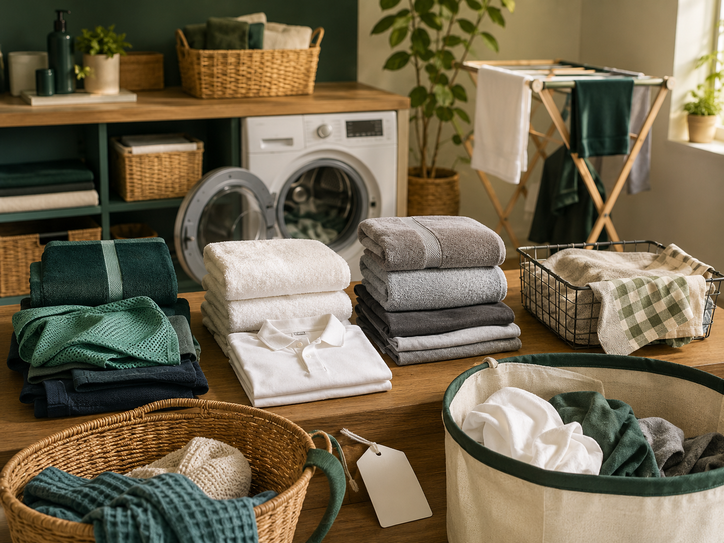
How to Decide Whether to Mix Towels and Clothes
Use this six-step check before putting towels into the same load as T-shirts or uniforms.
Check colour
Keep whites, lights and darks separated, especially when towels are new.
Check soil level
Do not mix greasy kitchen towels or heavily used cleaning cloths with normal clothing.
Check fabric weight
Separate thick towels from lightweight sports shirts, thin tees and delicate garments.
Check care temperature
Only combine items that can use the same wash temperature and cycle.
Check decoration
Keep printed, vinyl and embroidered shirts away from rough towel loads when possible.
Keep the load loose
Leave enough room for heavy towels and clothes to move and rinse properly.
Common Towels-and-Clothes Situations
Sports towel + quick-dry jersey
Separate them when practical. Cotton towel lint can cling to polyester sportswear and the fabrics may need different drying conditions.
White towel + white cotton polo
They may be compatible if the care labels match, but older low-lint towels are safer than brand-new fluffy towels.
Kitchen towels + staff T-shirts
Keep them separate because kitchen towels may contain food oil, sauces and stronger odours than normal clothing.
Small load with mixed items
If you need to combine items, choose sturdy, similar-coloured clothes with matching care requirements and avoid delicate or heavily printed garments.
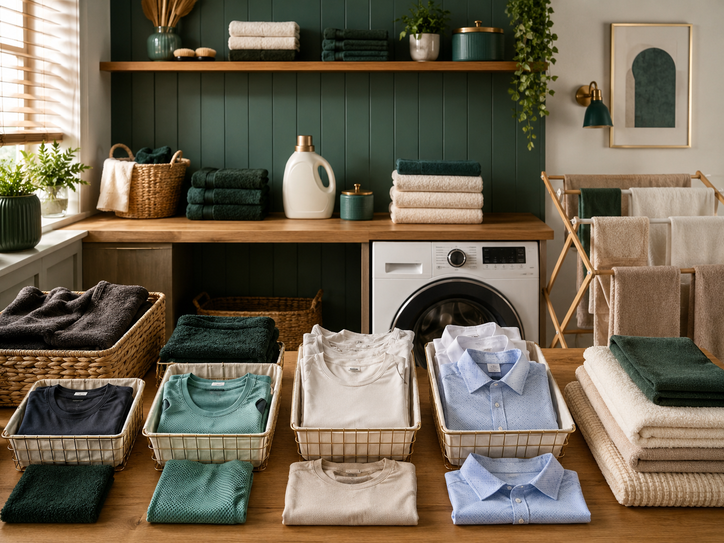
Before Washing Towels With Clothes
Use this checklist to avoid lint, colour transfer, excessive friction and poor rinsing.
- Check the colour of both towels and clothes.
- Separate new dark or brightly coloured towels.
- Check whether the towel sheds lint.
- Keep microfiber sportswear away from linty towels.
- Separate kitchen towels and heavily soiled cloths.
- Turn printed T-shirts inside out.
- Check that wash temperatures are compatible.
- Avoid mixing delicate shirts with heavy towels.
- Keep the washing machine loosely loaded.
- Use the correct detergent amount.
- Consider separate drying for towels and shirts.
- Make sure everything is fully dry before storage.
Towels and Clothes FAQ
Can I wash towels with T-shirts?
Why do towels leave lint on clothes?
Can I wash white towels with white clothes?
Can I wash dark towels with black clothes?
Can towels damage printed T-shirts?
Should gym towels be washed with sports jerseys?
Can kitchen towels be washed with uniforms?
Should towels and clothes be dried together?
Choose Shirts That Suit Everyday Washing
Uniform Sabah can help you compare cotton, microfiber, polos, quick-dry shirts and other uniform options for company, school, event and sports use.
More T-Shirt and Uniform Resources
Continue with related Uniform Sabah pages for garment selection, branding and custom uniform planning.
Our Other Company Websites
Explore related uniform, apparel and custom-printing services through our regional and international websites.