What Clothes Need a Laundry Bag?
A mesh laundry bag is useful for garments that can snag, stretch, tangle or rub against rougher items in the washing machine. Delicate underwear, lace, hosiery, small socks, embroidered clothing and some lightweight sportswear are common examples. A laundry bag adds protection, but it does not replace the garment care label or make every item machine washable.
Which clothes should you put in a laundry bag?
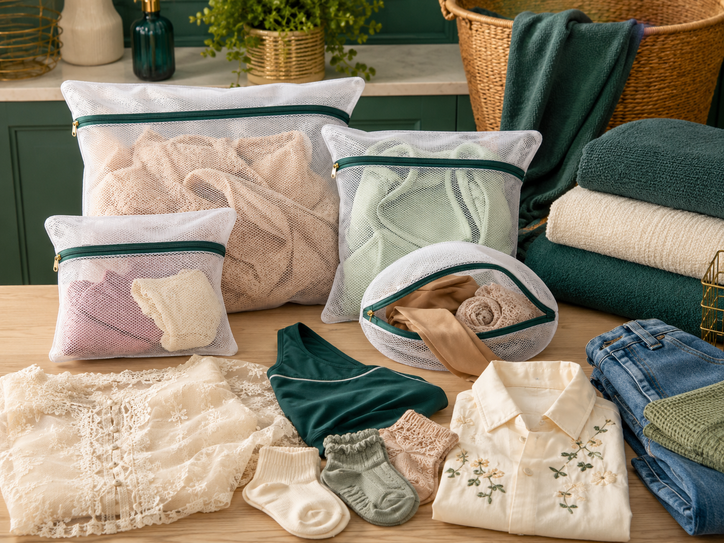
Use a laundry bag for small, delicate or snag-prone garments such as bras, lace underwear, hosiery, thin knitwear, embroidered pieces and small socks. It can also help protect lightweight shirts from zippers, hooks or rough hardware. Choose a bag large enough for the garment to move rather than packing it tightly, fasten the bag securely and follow the care label for the correct wash cycle and temperature.
Which Clothes Should Go in a Laundry Bag?
The main reason to use a laundry bag is to reduce snagging, stretching, tangling and direct abrasion during machine washing.
| Garment type | Use a laundry bag? | Why it helps | Main caution |
|---|---|---|---|
| Bras and delicate underwear | Usually yes | Reduces tangling, strap stretching and hooks catching other garments. | Close hooks first and check whether the item is machine washable. |
| Lace and sheer garments | Usually yes | Protects fine fabric from rougher clothes and exposed hardware. | Use a gentle cycle if the care label allows machine washing. |
| Hosiery and tights | Yes | Helps prevent twisting, stretching and snagging. | Avoid mixing with heavy jeans, towels or workwear. |
| Small socks | Helpful | Keeps pairs together and reduces the chance of small items becoming trapped in other laundry. | Do not overfill the bag. |
| Embroidered clothing | Often helpful | Reduces rubbing and helps protect raised threads. | Repair loose embroidery before washing. |
| Lightweight sportswear | Sometimes | Can protect mesh panels, thin microfiber and delicate trims. | A bag may reduce agitation, so avoid stuffing several sweaty shirts together. |
| Heavy towels or jeans | Usually no | These sturdy items normally do not need bag protection. | Wash them separately from delicate bagged items when possible. |
Which Shirts and Uniforms Benefit From a Laundry Bag?
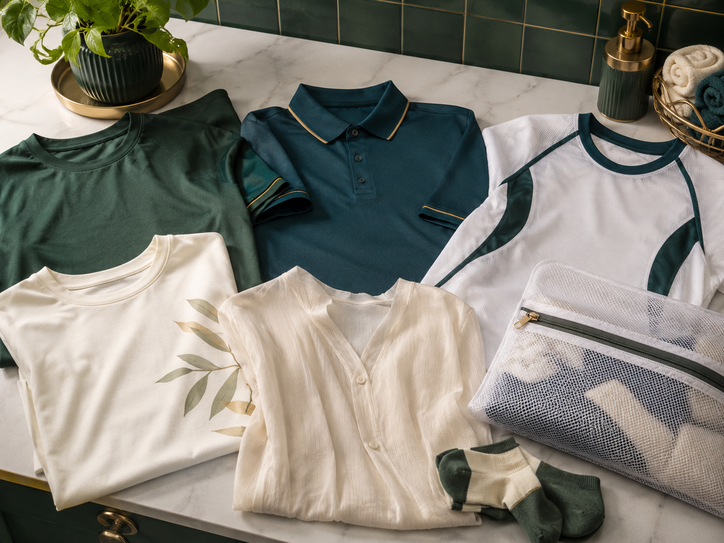
Most plain T-shirts do not need a mesh bag, but certain fabrics, trims and branding details benefit from extra protection.
Useful for snag-prone sportswear
Thin quick-dry shirts with mesh panels or fine knit structures can be placed in a roomy laundry bag when the rest of the load contains rougher clothing.
Extra protection for raised threads
A bag can reduce rubbing around embroidered logos, especially when the design has dense stitching or exposed thread texture.
Close the zipper first
Zip the garment fully before placing it in the bag. The bag then provides an extra barrier between the zipper hardware and other clothing.
Usually inside-out is enough
Plain DTF or silkscreen T-shirts normally do not require a bag, but using one may help when the print is large and the rest of the load contains rough hardware.
Reduce tangling and pulling
Garments with elastane, thin straps or fitted stretch panels may benefit from a bag, particularly on a gentle wash cycle.
Usually no bag required
A normal cotton tee can typically be washed inside out with similar colours and fabrics. A bag is more useful when the shirt has delicate trim, decoration or a snag-prone construction.
Do Printed and Embroidered Shirts Need a Laundry Bag?
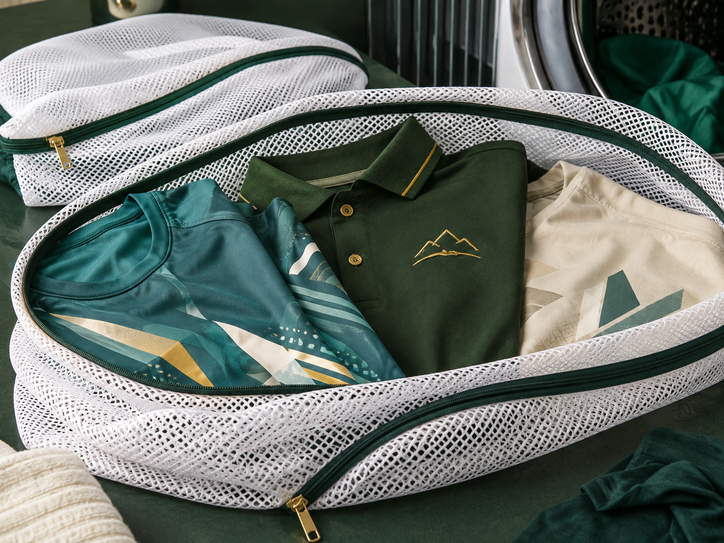
A laundry bag can reduce abrasion, but the need depends on the branding method and the other garments in the wash.
| Branding method | Is a bag useful? | Better care habit |
|---|---|---|
| DTF printing | Optional for normal tees; helpful in rough mixed loads. | Turn the shirt inside out and avoid washing with exposed zippers or heavy hardware. |
| Silkscreen printing | Usually optional. | Inside-out washing and a suitable temperature are normally more important. |
| Heat-transfer vinyl | Can be helpful. | Use a roomy bag if the transfer is large, raised or surrounded by snag-prone garments. |
| Embroidery | Often useful. | Place the garment in a bag to reduce rubbing, but repair loose threads first. |
| Sublimation | Usually not necessary for the print itself. | Use a bag when the polyester jersey has delicate mesh, trims, zippers or snag-prone panels. |
Use both methods when needed
Turning a decorated shirt inside out before placing it in the bag gives an extra layer of protection against direct rubbing.
The garment still needs movement
A tightly stuffed laundry bag can reduce effective washing and rinsing. Use a larger bag or split the load.
Close zippers and hooks first
A bag does not replace proper preparation. Fasten snag-prone hardware before washing.

How to Choose the Right Laundry Bag
The bag should protect the garment without preventing water and detergent from circulating through the fabric.
Laundry Bag Mistakes to Avoid
Stuffing several shirts into one small bag
Overpacking reduces movement and may prevent dirt and detergent from rinsing away properly.
Using a bag to ignore the care label
A hand-wash-only or dry-clean-only garment does not automatically become machine washable inside a bag.
Leaving bra hooks open
Close hooks before bagging so they do not catch on the garment itself.
Putting wet, heavily soiled clothes together
Separate grease, mud and strong odour loads even when delicate items are protected by bags.
Mixing whites and darks because they are bagged
Mesh allows water and loose dye through, so normal colour sorting still matters.
Assuming the bag protects against heat
A mesh bag does not protect fabric, prints or elastic fibres from an overly hot wash or dryer.

How to Use a Laundry Bag Properly
A few preparation steps make the bag more effective and help the garment wash and rinse properly.
Read the care label
Make sure the garment is suitable for machine washing before using a laundry bag.
Fasten snag-prone hardware
Close zippers, bra hooks and hook-and-loop fasteners before placing the item in the bag.
Turn decorated items inside out
This adds protection for embroidery, transfers and printed surfaces.
Choose the right bag size
Leave enough space for water, detergent and movement around the garment.
Wash with compatible clothing
Match colours, wash temperature, fabric weight and soil level even when items are bagged.
Remove promptly after washing
Take garments out of the bag and dry them according to the care label instead of storing them damp.
Common Laundry Bag Situations
Small embroidered logo
Turn the polo inside out and use a roomy mesh bag if the rest of the load contains zippers or rougher fabrics.
Thin mesh panels
A bag can help protect delicate mesh, but do not stuff several sweaty jerseys into one pouch because they still need proper washing and rinsing.
Delicate blouse or thin knit
Use a fine-mesh bag and a suitable gentle cycle if the care label allows machine washing.
Small socks disappearing in larger loads
Put socks in a small mesh bag to keep pairs together while still allowing normal washing.
Before Putting Clothes in a Laundry Bag
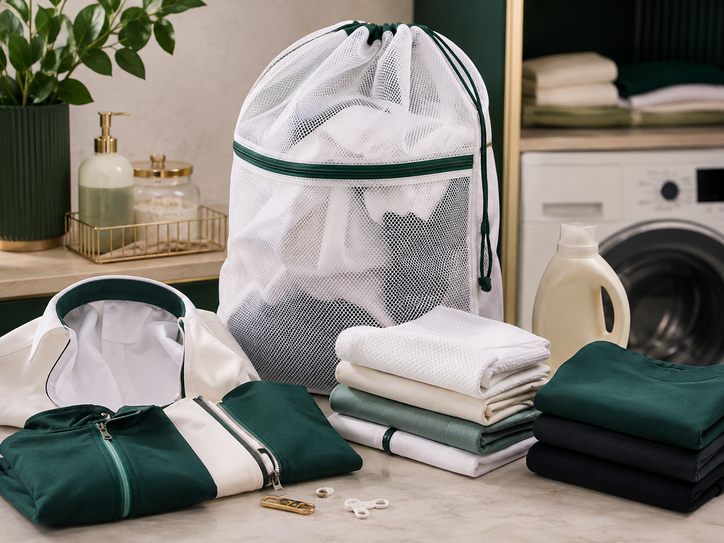
Use this checklist to protect garments without reducing washing effectiveness.
- Read the garment care label.
- Confirm the item is machine washable.
- Close zippers, hooks and gripping fasteners.
- Repair loose embroidery or damaged hardware.
- Turn printed or embroidered clothing inside out.
- Choose a bag larger than the tightly folded garment.
- Do not overfill the bag.
- Sort whites, lights and darks normally.
- Separate heavily soiled workwear.
- Match similar wash temperatures and fabric weights.
- Use the correct detergent amount.
- Remove garments from the bag promptly after washing.
Laundry Bag FAQ
Do all delicate clothes need a laundry bag?
Should bras be washed in a laundry bag?
Should socks go in a laundry bag?
Do printed T-shirts need a laundry bag?
Can I put several shirts in one laundry bag?
Does a laundry bag stop colours from bleeding?
Can a laundry bag protect clothes from hot water?
Should embroidered shirts use a laundry bag?
Choose Uniforms That Fit Your Washing Routine
Uniform Sabah can help you compare cotton, microfiber, polos, quick-dry shirts and other uniform options for company, school, event and sports use.
More T-Shirt and Uniform Resources
Continue with related Uniform Sabah pages for garment selection, branding and custom uniform planning.
Our Other Company Websites
Explore related uniform, apparel and custom-printing services through our regional and international websites.