How Long Should You Soak Clothes?
Soaking can help loosen sweat, dirt, detergent buildup and some stains before washing, but leaving clothes in water for too long can cause colour bleeding, fabric stress, odour or damage to printed designs. The right soaking time depends on the fabric, stain type, detergent or stain remover being used and the garment care label.
How long should clothes normally be soaked?
For many washable T-shirts and uniforms, a short soak of around 15–30 minutes is usually enough to help loosen everyday sweat and dirt. Heavier stains may need 30–60 minutes when the fabric and treatment product allow it. Avoid leaving coloured, printed, stretch or synthetic shirts soaking for hours or overnight unless the garment label and cleaning product specifically permit it. Always follow the product instructions if a stain remover or laundry additive is involved.
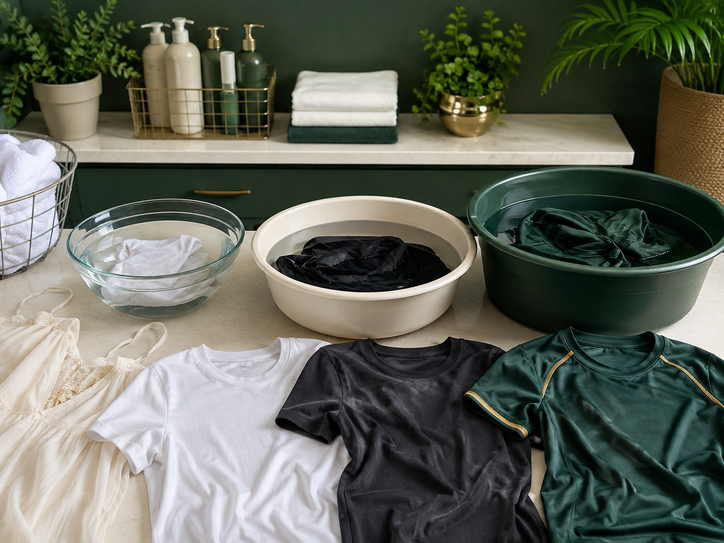
Suggested Soaking Times by Laundry Situation
These are practical starting points for washable garments. The care label and cleaning-product instructions should always take priority.
| Laundry situation | Typical soaking time | What it helps with | Main caution |
|---|---|---|---|
| Light sweat and everyday dirt | 15–30 minutes | Helps loosen normal perspiration and surface soil before washing. | Do not soak if the care label says not to. |
| Moderate underarm buildup | 20–30 minutes | Gives detergent or a suitable pre-treatment time to work. | Keep strong products away from printed areas. |
| Food, grease or visible stains | 30–60 minutes | Can loosen stain residue after targeted pre-treatment. | Check the stain before drying and repeat treatment if necessary. |
| Heavily soiled work uniforms | 30–60 minutes | Helps loosen dirt before a normal wash cycle. | Separate oily or industrial workwear from ordinary household laundry. |
| Dark or brightly coloured shirts | Keep soaking short | Reduces unnecessary exposure to water that may encourage dye movement. | New dark garments may bleed colour. |
| Printed or heat-transfer shirts | 15–30 minutes maximum unless instructed otherwise | Allows light pre-soaking without prolonged stress on decoration. | Avoid hot water and strong chemicals around the print. |
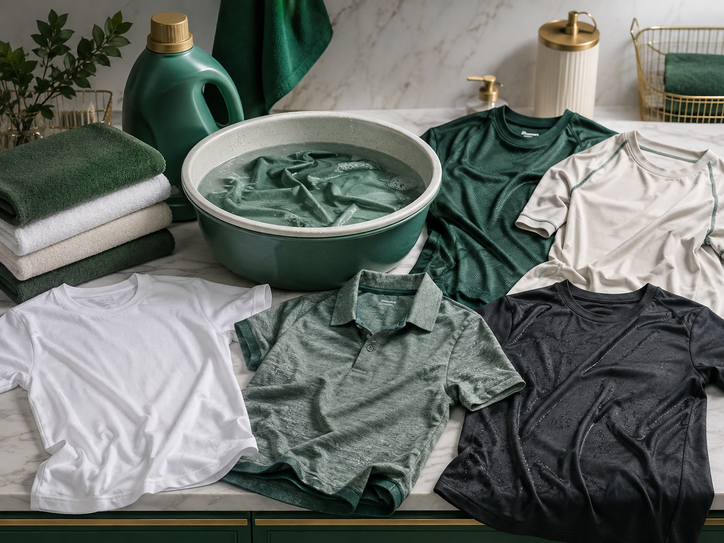
How Fabric Type Changes Soaking Time
Cotton, polyester, blends and stretch garments absorb water differently. Use shorter soaking periods when the fabric or decoration is more sensitive.
Usually tolerate short soaking well
Cotton absorbs water readily, so a 15–30 minute soak can help loosen sweat and general dirt. Avoid very long soaking if colour bleeding or shrinkage is a concern.
Short soaking is usually enough
Polyester microfiber does not need hours in water. Focus on prompt washing, the correct detergent amount and proper rinsing instead of long soaking.
Use a moderate approach
Blended uniforms often handle short pre-soaking well, but the exact time should match the care label and any stain-treatment product being used.
Protect collar shape
Avoid leaving polos submerged for long periods. Gentle soaking and reshaping after washing can help protect collars and structured areas.
Avoid prolonged soaking
Elastane-containing shirts can be more sensitive to heat and chemical exposure, so use short soaking times and suitable products.
Do not soak indefinitely in bleach
White fabric may need stain treatment, but bleach products should only be used according to the garment and product instructions. Longer soaking can weaken some fibres or damage decoration.
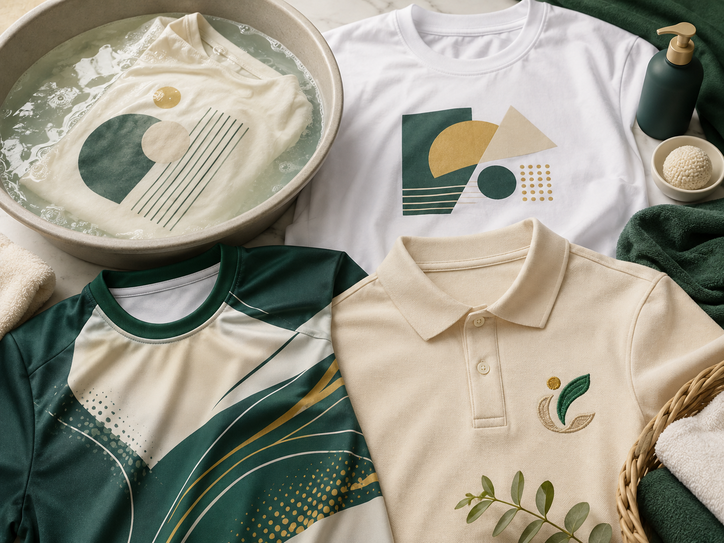
Should Printed Shirts Be Soaked?
Printed and embroidered garments can usually be soaked briefly when the care label allows it, but prolonged soaking, harsh chemicals and hot water can stress the decoration.
| Branding method | Soaking concern | Better care approach |
|---|---|---|
| DTF printing | Long soaking may stress edges and adhesive over time. | Keep soaking short, use cool-to-lukewarm water and wash inside out. |
| Silkscreen printing | Strong chemicals or long soaking can affect some inks and shirt dyes. | Use a mild treatment and avoid unnecessary soaking time. |
| Heat-transfer vinyl | Prolonged soaking and heat can affect adhesion. | Use brief soaking only when needed and follow the transfer-care instructions. |
| Embroidery | Dense stitched areas can hold more water and dry slowly. | Limit soaking and make sure embroidered areas dry fully before storage. |
| Sublimation | Polyester generally does not need long soaking. | Use short soaking for sweat or dirt, then wash and rinse normally. |
Protect the decoration
Turning the garment inside out can reduce rubbing and direct contact on large printed surfaces.
Avoid hot soaking
Hot water can affect prints, transfers, dyes and fabric shape. Use the temperature recommended on the care label.
Do not store while damp
After soaking and washing, make sure thick printed or embroidered areas are fully dry before folding the shirt.
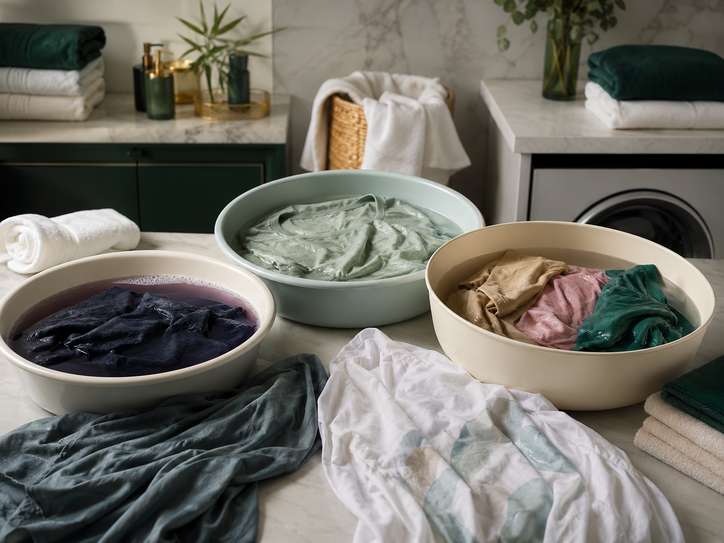
What Can Happen If You Soak Clothes Too Long?
A longer soak is not always more effective. Several fabric and colour problems can appear when garments stay wet for hours without a good reason.
Soaking Mistakes to Avoid
Leaving clothes overnight
Overnight soaking is usually unnecessary for everyday T-shirts and can increase colour and odour problems.
Using hot water for every stain
Heat can set some stains or damage prints, dyes and stretch fibres.
Adding too much detergent
More detergent does not automatically mean better soaking and can leave residue that is harder to rinse out.
Mixing colours in one basin
Dye transfer can happen during soaking just as it can in the washing machine.
Soaking printed shirts in strong chemicals
Strong stain removers can damage the decoration even when the base fabric survives.
Forgetting the garment
Set a timer so the shirt does not remain wet for hours longer than intended.
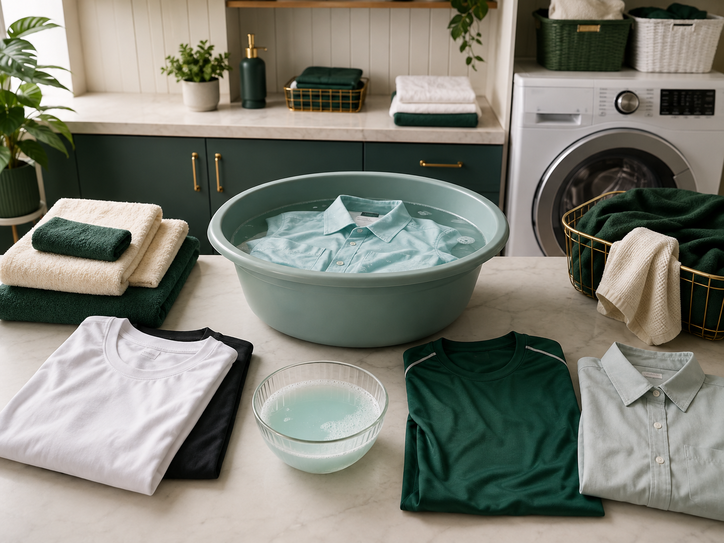
A Better Way to Soak T-Shirts and Uniforms
A controlled soaking process is easier on fabric than leaving clothes in a bucket for hours without checking them.
Read the care label
Check whether the garment can be soaked and what water temperature it allows.
Separate by colour
Keep whites, lights and dark colours apart to reduce dye transfer.
Use the correct product amount
Follow the detergent or stain-remover instructions instead of guessing.
Set a timer
Start with 15–30 minutes for ordinary dirt and only extend if the treatment instructions allow it.
Wash normally
After soaking, wash using the garment’s recommended cycle without overloading the machine.
Dry completely
Make sure shirts are fully dry before folding or storing them to prevent musty odours.
Common Soaking Situations
Sweaty jerseys after training
A short 15–20 minute soak may help loosen sweat before washing, but do not leave synthetic jerseys soaking overnight.
Food and grease stains
Pre-treat oily spots first, then soak for 30–60 minutes if the fabric and stain remover allow it.
New bright colours
Keep soaking brief because strongly dyed new shirts may release more colour during the first few washes.
Light perspiration and collar soil
A short 15–30 minute soak is usually enough before the normal wash cycle when the care label permits it.
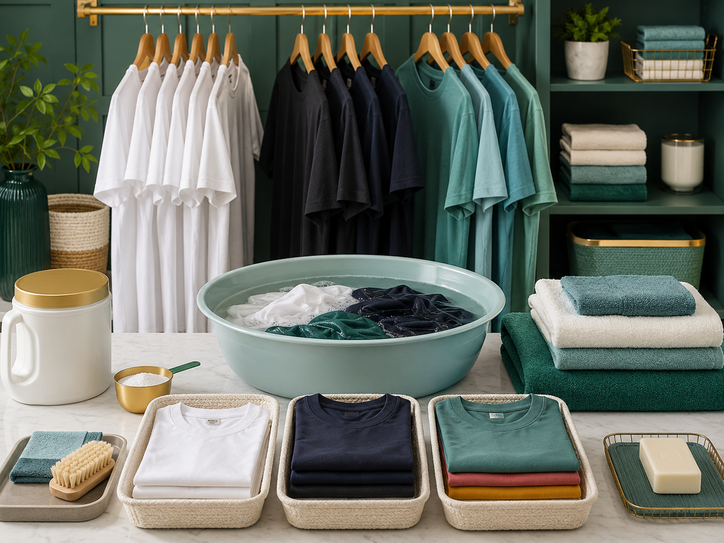
Before You Soak Clothes
Use this checklist to avoid colour transfer, print damage and unnecessary long soaking.
- Read the garment care label.
- Check fabric type and colour.
- Separate whites, lights and darks.
- Identify the stain before soaking.
- Pre-treat heavy grease or food stains first.
- Use the correct detergent or stain-remover amount.
- Start with a 15–30 minute soak.
- Extend to 30–60 minutes only when appropriate.
- Avoid hot water unless the care label allows it.
- Keep printed shirts out of strong chemical solutions.
- Set a timer so clothes are not forgotten.
- Dry garments completely before storage.
Clothes Soaking FAQ
Is 30 minutes long enough to soak clothes?
Can I soak clothes overnight?
How long should heavily stained clothes soak?
Should I soak clothes in hot or cold water?
Can soaking remove sweat smell?
Can printed T-shirts be soaked?
Can clothes be soaked in detergent for too long?
Should white clothes be soaked longer than coloured clothes?
Choose Shirts That Suit Your Team’s Daily Laundry Routine
Uniform Sabah can help you compare cotton, microfiber, polos, quick-dry shirts and other options for company, school, event and sports use.
More T-Shirt and Uniform Resources
Continue with related Uniform Sabah pages for garment selection, branding and custom uniform planning.
Our Other Company Websites
Explore related uniform, apparel and custom-printing services through our regional and international websites.