Should You Zip Zippers Before Washing?
In most cases, yes. Closing zippers before washing helps stop exposed zipper teeth and sliders from catching on nearby fabric, prints, embroidery or lightweight garments. It can also help the zipped item keep its shape during the wash.
Should zippers be open or closed in the washing machine?
Zippers are usually best washed closed, especially on jackets, hoodies, workwear and garments with metal or plastic teeth. Fasten the zipper gently all the way, turn the garment inside out when appropriate, and wash it with similar-weight items. The main exception is when the care label or garment design specifically says otherwise. Buttons are different: they are often better left unbuttoned so the button and buttonhole are not pulled during washing.
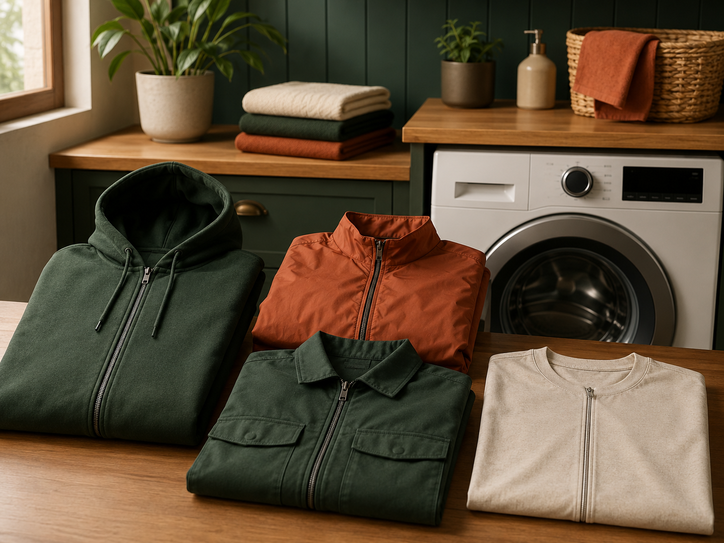
What Should Be Fastened Before Washing?
Zippers, buttons, hooks and hook-and-loop fasteners do not all need the same preparation.
| Fastener | Before washing | Why | Main caution |
|---|---|---|---|
| Zippers | Usually close them | Helps keep teeth from snagging other garments and reduces movement of the slider. | Do not force a damaged or misaligned zipper shut. |
| Buttons | Usually leave unbuttoned | Reduces tension on buttonholes and sewn-on buttons during agitation. | Very loose buttons should be repaired before washing. |
| Hooks and clasps | Fasten when practical | Helps prevent sharp edges from catching on nearby fabric. | Use a laundry bag for small or delicate items. |
| Hook-and-loop fasteners | Close them | Open hook surfaces can grab lint, threads and knit fabric. | Keep them away from delicate garments. |
| Drawstrings | Tie loosely if needed | Helps reduce tangling and prevents strings from disappearing into channels. | Do not tie so tightly that the fabric bunches. |

Which Garments Need Extra Zipper Care?
Zippers are common on jackets, hoodies, workwear, sportswear and bags. Heavier or sharper fasteners can create more abrasion than small lightweight zippers.
Close the main zipper
A long front zipper can swing around in the drum if left open. Zip it fully and wash the hoodie inside out when the care label allows.
Check heavy metal zippers
Metal teeth and large sliders can damage lighter shirts in the same load. Keep heavy workwear with similar-weight garments.
Protect lightweight knit fabric
Quarter-zips and lightweight sportswear should be zipped before washing so exposed teeth do not snag microfiber or mesh panels.
Watch embroidered areas
Closing the zipper reduces the chance that the slider catches on nearby embroidery, woven labels or decorative stitching.
Turn inside out where possible
A closed zipper plus inside-out washing can reduce direct contact between the hardware and DTF, silkscreen or transfer prints.
Keep away from heavy zippers
Even when zippers are closed, heavy jackets can still create friction. Wash delicate garments separately or use a suitable laundry bag.

How Zippers Can Affect Printed and Branded Clothing
The zipper itself does not damage a print just because it is present, but exposed hardware can rub against decorated surfaces during repeated washing.
| Branding method | Zipper-related risk | Better care habit |
|---|---|---|
| DTF printing | Exposed zipper teeth or sliders can scrape transfer surfaces. | Close zippers, turn garments inside out and avoid overloaded loads. |
| Silkscreen printing | Repeated metal contact can increase abrasion on the print. | Keep heavy zippered garments away from lightweight printed tees when practical. |
| Heat-transfer vinyl | Raised vinyl edges can be caught by open hardware. | Close zippers and reduce direct friction during washing and drying. |
| Embroidery | Zipper sliders can catch on loose or raised threads. | Zip the garment and inspect embroidery for loose threads before washing. |
| Sublimation | The print is integrated, but lightweight polyester can still snag on hardware. | Close zippers and wash with similar lightweight sportswear. |
Protect both zipper and print
Turning a zippered printed garment inside out helps keep hardware and decorated surfaces from rubbing directly against other clothing.
Separate heavy and light garments
A work jacket with a large metal zipper should not share a small load with thin printed event shirts.
Keep zippers closed but avoid excessive heat
The zipper can remain closed for drying, but follow the garment’s temperature instructions to protect fabric and branding.
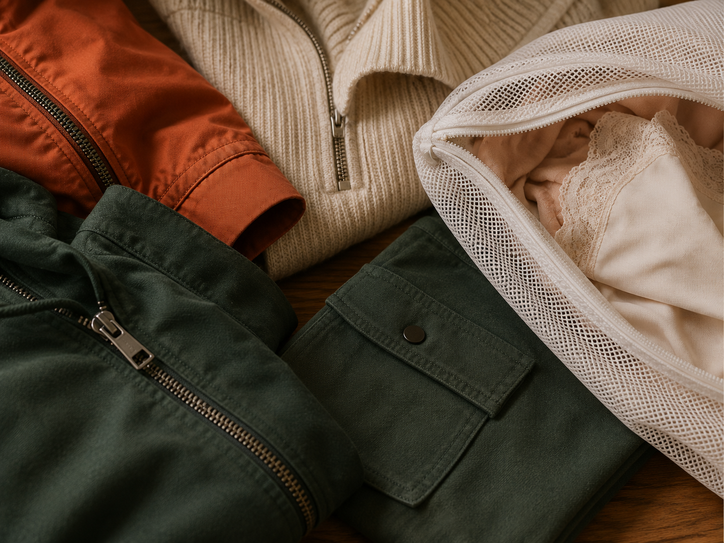
Why Open Zippers Can Damage Clothes
Zipper teeth and sliders are harder than most textile fibres. When the garment moves through a wash cycle, open hardware can repeatedly strike or scrape other items.
Zipper Washing Mistakes to Avoid
Leaving a long front zipper open
The exposed teeth can scrape or snag other clothing as the garment moves.
Forcing a damaged zipper shut
A misaligned slider or bent tooth should be repaired rather than forced before washing.
Mixing heavy zippered jackets with thin tees
Closing the zipper helps, but the weight difference can still create excessive friction.
Buttoning every shirt tightly
Buttons are different from zippers and are often better left open to reduce stress on buttonholes.
Leaving hook-and-loop fasteners open
Open hooks can collect lint and catch on knit fabrics, embroidery and mesh.
Ignoring the care label
The correct wash cycle, temperature and drying method still matter even when the zipper is prepared correctly.

How to Prepare Zippered Clothes for Washing
A quick preparation routine can protect both the zippered garment and the rest of the load.
Empty all pockets
Remove coins, keys, pens and other objects that can damage the washer or clothing.
Inspect the zipper
Check for bent teeth, sharp edges or a loose slider before closing it.
Zip it fully
Close the zipper gently from bottom to top without forcing resistance.
Turn inside out
Do this when the garment care label and design allow, especially for printed or dark garments.
Match similar garments
Wash heavy jackets with similar items and lightweight sports tops with lighter garments.
Use the correct cycle
Follow the care label for wash temperature, agitation level and drying method.
Common Zippered-Garment Situations
Metal front zipper + embroidery
Close the zipper, turn the jacket inside out and wash it with similar-weight garments to protect the embroidery.
Lightweight microfiber fabric
Zip the collar area before washing and keep the garment away from heavy jeans, towels and work jackets.
Long plastic zipper
Close the zipper fully and wash the hoodie inside out to reduce snagging and colour abrasion.
Printed shirt washed with zippered clothing
If possible, separate printed T-shirts from heavy zippered garments. If they share a load, make sure every zipper is closed.
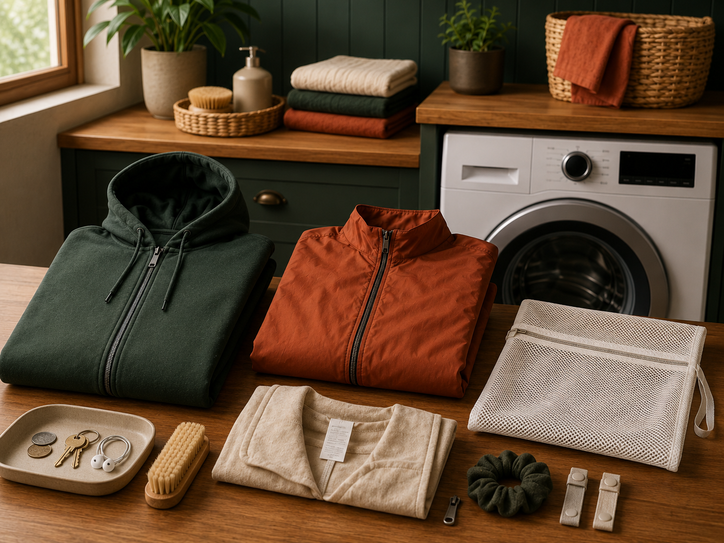
Before Washing Clothes With Zippers
Use this checklist to reduce snagging, abrasion and hardware damage.
- Empty all pockets.
- Inspect zipper teeth and sliders.
- Close zippers fully.
- Do not force a damaged zipper.
- Close hook-and-loop fasteners.
- Leave normal shirt buttons unbuttoned.
- Turn printed garments inside out.
- Separate heavy zippered jackets from thin T-shirts.
- Use a laundry bag for delicate items when appropriate.
- Follow the care-label wash temperature.
- Avoid overloading the washing machine.
- Check the zipper again before drying.
Zipper Washing FAQ
Should you close zippers before washing?
Should buttons be closed before washing?
Can open zippers damage T-shirts?
Should hoodies be zipped before washing?
Should jacket zippers be closed in the dryer?
What if the zipper is damaged?
Should Velcro-style fasteners be closed before washing?
Can zippered jackets be washed with T-shirts?
Choose Uniforms That Are Easy to Wear and Care For
Uniform Sabah can help you compare T-shirts, polos, jackets, quick-dry shirts and other apparel options for company, school, event and sports use.
More T-Shirt and Uniform Resources
Continue with related Uniform Sabah pages for garment selection, branding and custom uniform planning.
Our Other Company Websites
Explore related uniform, apparel and custom-printing services through our regional and international websites.