How Much Detergent Should You Use
Using more detergent does not always make clothes cleaner. Too much can leave residue, trap odour, stiffen fabric and make rinsing harder, while too little may not remove sweat, body oils and dirt effectively. The correct amount depends on the detergent concentration, load size, soil level, water hardness and washing-machine type.
How much laundry detergent should you use?
Follow the detergent label first, then adjust only when needed for the size and soil level of the load. A small, lightly worn load needs less detergent than a full load of sweaty uniforms or greasy workwear. High-efficiency machines usually require low-sudsing HE detergent and smaller amounts than traditional top-load machines. If clothes feel slippery, stiff, heavily scented or still soapy after rinsing, you may be using too much.
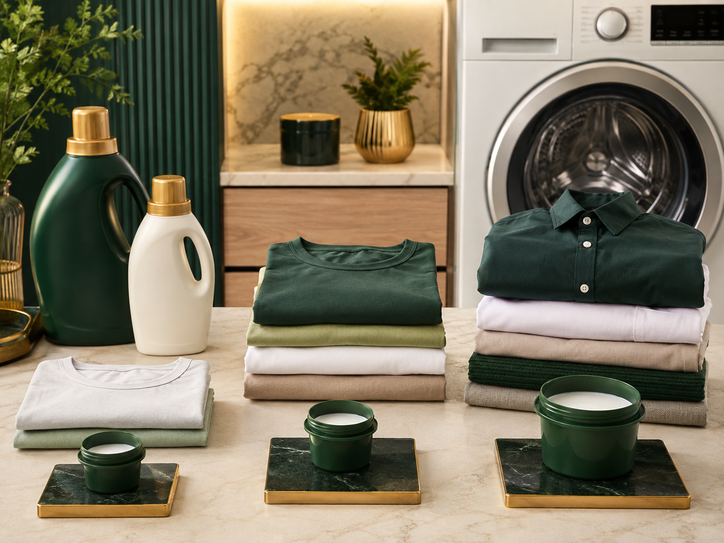
Detergent Amount by Load and Soil Level
Exact measurements vary by brand and concentration, so use the product label as the main reference. These examples show how the amount should change depending on the laundry situation.
| Laundry situation | Detergent approach | Why | Main caution |
|---|---|---|---|
| Small, lightly worn load | Use the lower end of the label recommendation. | Less fabric and soil means less detergent is usually needed. | Do not pour a full-load dose into a half-empty machine. |
| Normal everyday load | Use the standard dose for the machine and detergent type. | This is what most label instructions are designed around. | Do not add extra detergent just because the load smells sweaty. |
| Heavily soiled uniforms | Use the higher recommended dose or pre-treat stains. | More soil may need additional cleaning power. | Pre-treatment can work better than simply doubling the detergent. |
| High-efficiency machine | Use HE detergent and follow the HE dose guide. | HE machines use less water and are designed for low-sudsing detergent. | Too much foam can reduce rinsing performance. |
| Hard-water area | Follow the detergent brand’s hard-water guidance if provided. | Minerals in hard water can reduce detergent effectiveness. | Do not guess by adding large amounts without checking the product instructions. |
| Soft-water area | Often less detergent is needed. | Detergent works more easily in soft water and creates more suds. | Overdosing is more noticeable because residue can build up quickly. |
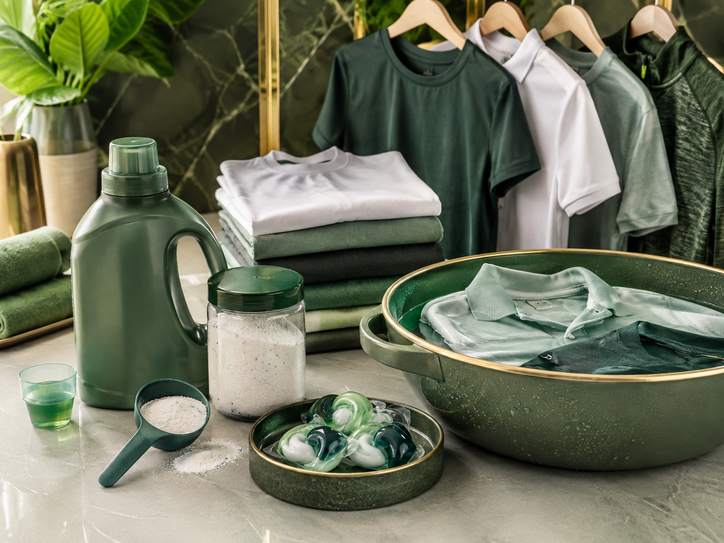
How Shirt Type Changes Detergent Needs
Different fabrics hold sweat, oils and detergent residue differently. The goal is to use enough detergent to remove soil without leaving product behind.
Absorbent and easy to overload with detergent
Cotton absorbs water and detergent well. Too much product can stay inside thicker fibres and make the shirt feel stiff or heavily scented after drying.
Use enough to remove body oils
Polyester can hold sweat oils even though it dries quickly. Use the correct dose and make sure the load has enough water movement for thorough rinsing.
Follow the standard everyday dose
Blended uniforms usually do well with the normal detergent amount for the machine, adjusted for soil level.
Watch collars and underarms
Instead of adding extra detergent to the whole load, pre-treat collar and underarm buildup when necessary.
Avoid detergent buildup
Too much product can trap odour in synthetic fibres. Prompt washing, a suitable cycle and complete rinsing matter as much as the dose.
Heavy soil needs targeted treatment
Grease, food and workshop dirt may need pre-treatment or a higher label-recommended dose rather than pouring in detergent without measuring.
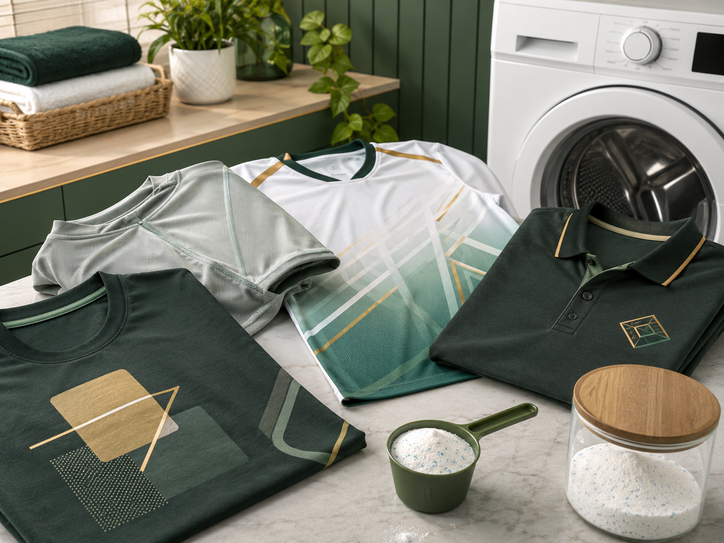
Does Too Much Detergent Affect Printed Shirts?
Detergent is necessary for cleaning, but residue and repeated harsh washing can affect the feel and appearance of decorated garments.
| Branding method | Detergent concern | Better care habit |
|---|---|---|
| DTF printing | Excess detergent can leave residue around the transfer and fabric. | Measure detergent, wash inside out and rinse thoroughly. |
| Silkscreen printing | Harsh or excessive detergent may accelerate fading over time. | Use the standard recommended dose and avoid unnecessary hot washing. |
| Heat-transfer vinyl | Heavy residue can make the surface feel dull or sticky. | Use moderate detergent and avoid overloading the machine. |
| Embroidery | Residue can remain in dense stitching if rinsing is poor. | Use the correct dose and make sure the garment is rinsed and dried completely. |
| Sublimation | Polyester can retain detergent and body oils if the wash balance is wrong. | Use a low-residue detergent amount suitable for sportswear and rinse well. |
Use the cap or dosing guide
Pouring directly from the bottle makes overdosing much easier, especially with concentrated liquids.
Reduce abrasion on prints
Correct detergent helps cleaning, while inside-out washing helps protect the decorated surface.
Residue is a warning sign
If a shirt feels soapy, stiff or slippery after washing, reduce the detergent and check the load size.
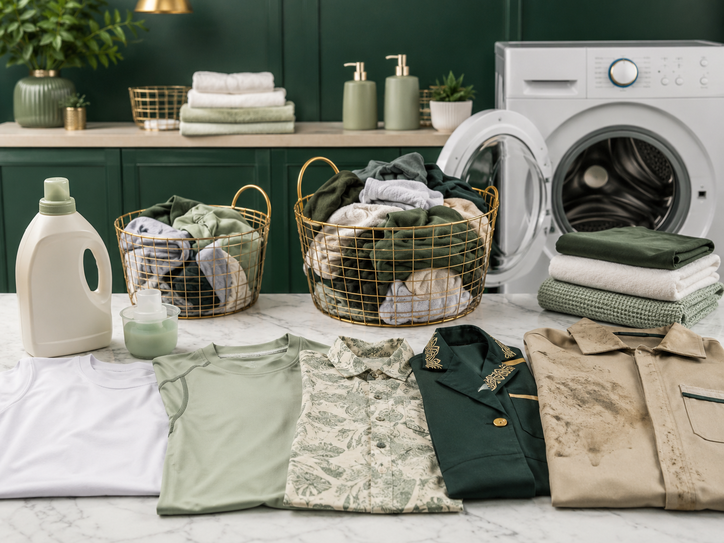
Signs You Are Using Too Much or Too Little Detergent
Laundry problems are not always caused by the detergent brand. The dose itself may be wrong for the load.
Detergent Mistakes to Avoid
Filling the cap for every load
A small load usually does not need the same dose as a full, heavily soiled machine.
Doubling detergent for strong odour
Odour may come from trapped sweat, poor drying or washer buildup rather than too little detergent.
Ignoring detergent concentration
2× or 3× concentrated liquids require less volume than standard detergent.
Using normal detergent in an HE machine
High-sudsing products can create too much foam and interfere with rinsing.
Overloading the washing machine
Even the correct detergent dose cannot rinse properly when clothes are packed too tightly.
Using extra detergent instead of pre-treatment
Grease, deodorant and food stains usually benefit more from targeted pre-treatment.

How to Choose the Right Detergent Amount
A simple six-step check helps you avoid both over-dosing and under-dosing.
Read the detergent label
Check the recommended dose for your machine, load size and soil level.
Check the machine type
Use HE detergent for high-efficiency machines when required.
Estimate the load size
Small, medium and full loads should not all receive the same amount.
Assess the soil level
Light daily wear needs less cleaning power than greasy or heavily sweaty workwear.
Pre-treat difficult stains
Target grease, food or underarm buildup instead of increasing the entire wash dose unnecessarily.
Check the result
If clothes feel soapy or stiff, reduce the dose. If soil remains, review the dose, cycle and stain treatment.
Common Detergent-Dosing Situations
Light daily wear
Use the standard or lower-end dose recommended for a normal load. More detergent is usually unnecessary for lightly worn polos and T-shirts.
Sweaty quick-dry jerseys
Use the correct sportswear-compatible detergent dose, wash promptly and avoid overloading so body oils can rinse away.
Food oil and sauce
Pre-treat greasy spots first, then use the higher label-recommended dose only if the full load is heavily soiled.
Small half-load
Reduce the detergent according to the label’s small-load guidance rather than using the same capful as a full load.

Before Adding Laundry Detergent
Use this checklist to get the dose closer to what the load actually needs.
- Read the detergent dosing label.
- Check whether the detergent is concentrated.
- Confirm whether your machine requires HE detergent.
- Estimate the actual load size.
- Assess whether the clothes are lightly or heavily soiled.
- Pre-treat difficult stains separately.
- Do not guess by pouring directly from the bottle.
- Use less for small or lightly worn loads.
- Do not double detergent for odour automatically.
- Avoid overloading the washing machine.
- Check for soapiness or residue after washing.
- Adjust the next load based on the result.
Laundry Detergent FAQ
Is more detergent better for dirty clothes?
How do I know if I am using too much detergent?
Can too much detergent make clothes smell bad?
Do small loads need less detergent?
Do HE washing machines use less detergent?
Should sports shirts use extra detergent?
What if clothes still look dirty after washing?
Can detergent damage printed shirts?
Choose Shirts That Fit Your Team’s Laundry Routine
Uniform Sabah can help you compare cotton, microfiber, polos, quick-dry shirts and other uniform options for company, school, event and sports use.
More T-Shirt and Uniform Resources
Continue with related Uniform Sabah pages for garment selection, branding and custom uniform planning.
Our Other Company Websites
Explore related uniform, apparel and custom-printing services through our regional and international websites.