How to Pack Shirts by Class and Student
Organise school shirts accurately with individual labels, class cartons, master packing lists and final quantity checks before distribution.
Direct answer
What Is the Best Packing System?
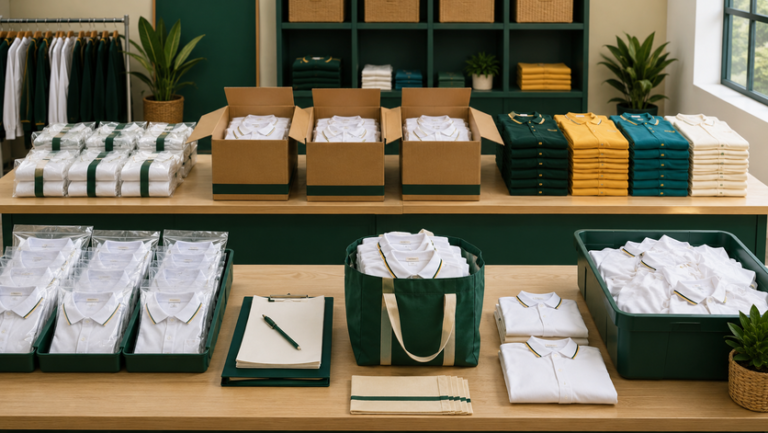
The most practical method is to pack each student's shirt in a labelled bag, arrange those bags in class order and place every class inside a clearly marked carton. A master list should show the student's name, class, shirt size, quantity and any personalisation details.
Label Every Student Pack
Include the student's full name, class, size and quantity on the outer bag.
Use Separate Class Cartons
Keep each class in its own carton or sealed bundle with a visible class label.
Prepare a Master Record
Track the total packed, missing, spare and personalised shirts before delivery.
Quick comparison
Compare School Shirt Packing Methods
Choose the packing method according to the number of students, class structure, level of personalisation and how the shirts will be distributed.
| Packing method | Best for | Main benefit | Main limitation |
|---|---|---|---|
| Individual student packs | Named, numbered or paid student orders | Fast and accurate handover | Requires more labels and packing time |
| Class packs by size | Standard event shirts without personalisation | Simple to prepare for small classes | Teachers must still match sizes to students |
| Class packs by register order | Large schools and formal distribution | Matches the teacher's attendance list | The packing list must be accurate and updated |
| House or team cartons | Sports day and school house events | Keeps colours and teams separate | Students still need individual identification within each team |
| Loose shirts by total size | Emergency backup stock only | Fastest packing method | High risk of confusion during distribution |
| Teacher collection bundles | Several classes handled by one teacher | Reduces the number of cartons | Each class must remain clearly separated inside the bundle |
Packing materials
Choose Practical Packing Materials
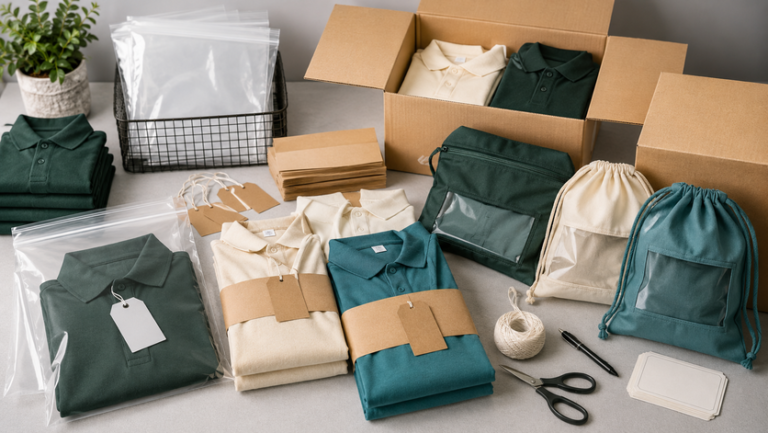
The packaging should protect the shirts, keep student information visible and remain easy for teachers to carry between the office, classroom and event venue.
Best for Individual Student Packs
The shirt colour, size label and printed design can be checked without opening the bag.
- Place the label on the outside.
- Use a bag large enough for neat folding.
- Keep the printed side protected inside.
Useful for Small Class Sets
A paper band can hold folded shirts together while showing the class and student details.
- Use durable paper that will not tear easily.
- Avoid covering printed names or numbers.
- Keep the shirt dry during storage.
Best for Transport and Storage
Class cartons protect individual packs and make delivery to teachers or different school blocks easier.
- Label at least two sides of the carton.
- Add the class quantity and teacher name.
- Place a packing list inside the top of the carton.
Suitable for Smaller Events
A large zip or drawstring bag can be reused by the teacher for collection, returns or size exchanges.
- Choose a strong handle or zip.
- Use a visible class identification tag.
- Do not overload the bag with too many shirts.
Printing and identification
Pack Standard and Personalised Shirts Differently
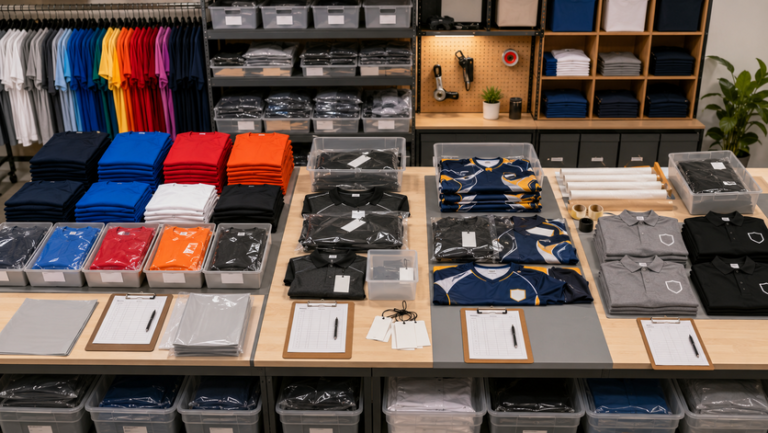
Shirts with the same event artwork are easier to replace or exchange. Named, numbered or role-specific shirts require stricter checks before sealing each pack.
Sort by Student and Size
When the design is identical, the main checks are the shirt model, colour, size and quantity.
- Keep common spare sizes in a separate carton.
- Mark every exchange on the master list.
- Do not mix spare stock with confirmed student packs.
Match Name, Class and Size
Read the printed name on the shirt and compare it with the outer label before sealing the pack.
- Check spelling against the approved list.
- Confirm students with similar names.
- Keep duplicate surnames separated by class.
Check Number Assignments
Sports and house shirts should link the student's name, number, size and team in one packing record.
- Check for duplicate numbers within the same team.
- Separate goalkeeper or special-role shirts.
- Confirm the number on both shirt and label.
Pack Outside Student Cartons
Teacher, coach and event crew shirts should have their own labelled carton or section to prevent accidental student distribution.
- Use a separate colour label.
- List adult cuttings and sizes clearly.
- Record extra crew stock separately.
Labels and class organisation
Create Labels That Teachers Can Read Quickly
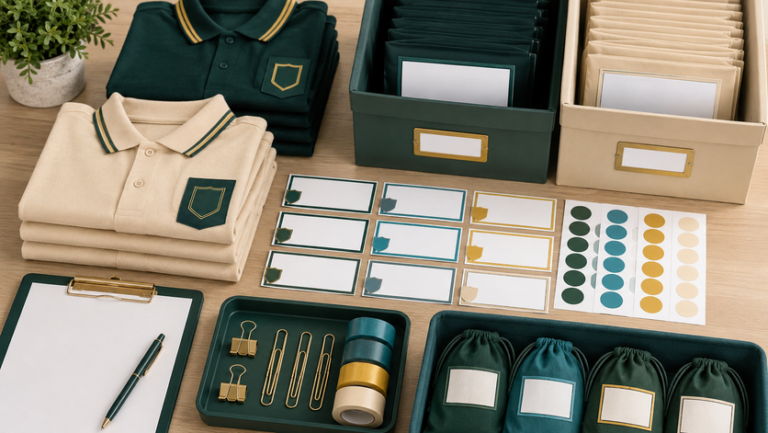
Every label should contain enough information to identify the pack without making the text too small. Use consistent wording and place details in the same order.
Similar Student Names
Add the class, student number or full surname when two students have similar names.
Unclear Class Codes
Use the school's official class format and avoid informal abbreviations that suppliers may misunderstand.
Multiple Shirts Per Student
State the exact number of pieces when a student receives more than one shirt.
Recommended Student Pack Label
- Student's full name
- Class or form
- Student number where applicable
- Shirt model or colour
- Size
- Quantity
- Printed name or jersey number
- Special notes such as long sleeve or female cutting
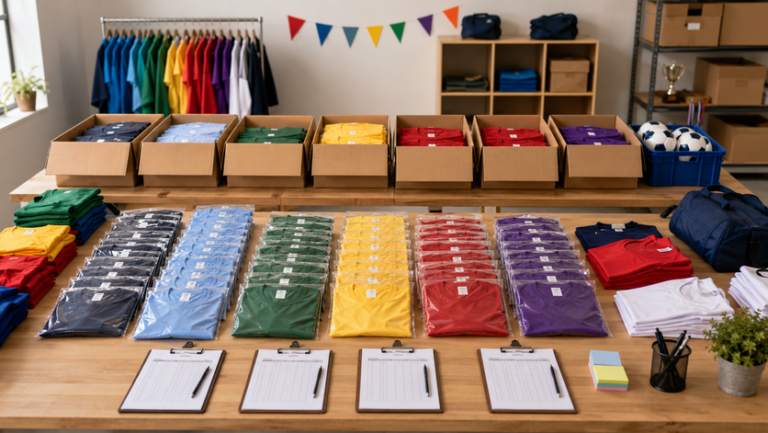
Recommended Class Carton Label
Packing process
How to Pack Shirts Step by Step
Prepare the Final Approved List
Use one master sheet containing every student's name, class, size, quantity and personalisation details.
Separate Shirts by Class
Create one sorting area for each class before individual packing begins.
Match Every Shirt to the Student
Check the garment size, colour, cutting, printed name, number and quantity against the master list.
Seal and Label the Individual Pack
Place the student label where it is visible and mark the record as packed.
Arrange Packs in Register Order
Follow the class register or alphabetical order so teachers can distribute shirts without resorting the carton.
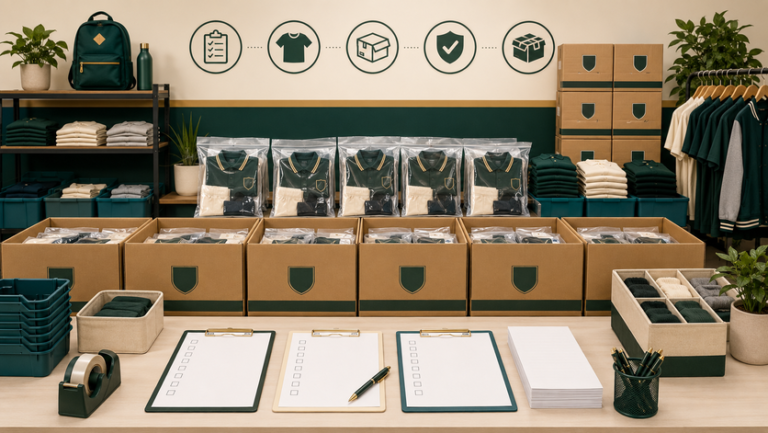
Complete a Final Class Count
Compare the number of student packs and total shirts with the class packing list before closing the carton.
School scenarios
Packing Examples for Different Orders
Pack by Class and Crew Role
Keep student helper shirts inside class cartons and place teacher, registration and technical crew shirts in separate role cartons.
Pack by House, Class and Student
Separate house colours first, then organise individual student packs by class within each house section.
Check Every Printed Name
Match personalised names and sizes before sealing each pack and arrange the class carton in register order.
Pack by Club and Committee
Use separate cartons for members, committee roles, teachers in charge and spare stock.
Final checklist
Class and Student Packing Checklist
- The final student list is approved.
- Every class uses the same name format.
- Student names, sizes and quantities are checked.
- Printed names and numbers match the master list.
- Every individual pack has a visible label.
- Packs are arranged in class register order.
- Teacher and crew shirts are packed separately.
- Spare shirts are kept outside confirmed student packs.
- Every class carton includes a packing list.
- The final carton quantity matches the school summary.
Common Packing Mistakes
- Packing all shirts by size instead of by student.
- Using nicknames that do not match the class register.
- Mixing two classes inside one unmarked carton.
- Failing to check personalised names before sealing.
- Placing spare shirts inside student packs.
- Closing cartons without a final quantity count.
Frequently asked questions
Questions About Packing School Shirts
Useful Uniform Sabah resources
Continue Planning Your School Shirt Order
Plan a Better School Shirt Distribution
Share the student quantity, class list, shirt model, size breakdown, personalisation details and packing requirements with Uniform Sabah. A clear class-by-class plan helps reduce distribution mistakes.
WhatsApp Uniform Sabah Visit Uniform SabahOur network
Our Other Company Websites
Explore related uniform, printing and apparel services through our regional and international websites.