Pros and Cons of DTF Heat-Press Printing
Understand where DTF performs well, where it has limitations and when another printing method may be more suitable for your uniform order.
Direct answer
Is DTF Heat-Press Printing a Good Choice?
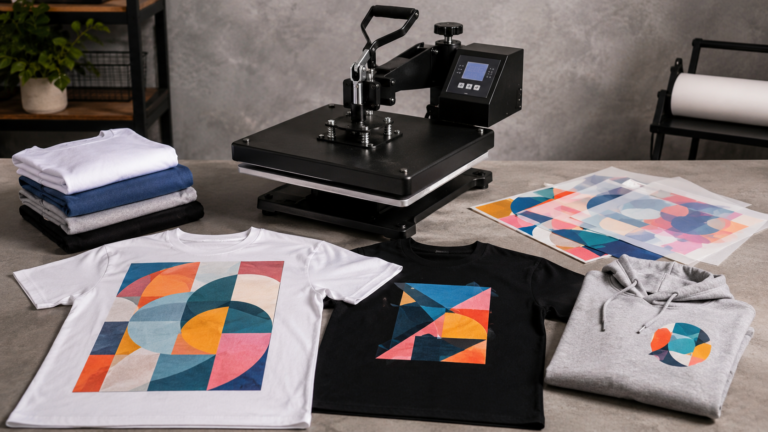
DTF is a flexible printing method for colourful logos, detailed artwork, names and smaller quantities. It can be applied to many compatible cotton, polyester and blended garments, making it useful for T-shirts, polos, event wear and personalised uniforms.
Its main limitations are the transfer layer, heat sensitivity and the need for careful washing. Large solid designs may also feel warmer or heavier than smaller prints, especially on lightweight quick-dry shirts.
Full-Colour Detail
DTF can reproduce gradients, fine lines and several colours without separating every colour into a different screen.
Flexible Quantities
It is practical for small orders, mixed sizes, individual names and multiple garment colours.
Surface Transfer Layer
The print sits on the garment surface and may be affected by high heat, heavy stretching or rough washing.
Quick comparison
DTF Advantages and Disadvantages
| Factor | DTF advantage | DTF limitation | Best practice |
|---|---|---|---|
| Artwork colours | Supports full-colour graphics, gradients and detailed logos | Very large colour areas may feel heavier | Keep the artwork efficient and avoid unnecessary solid coverage |
| Order quantity | Suitable for small and medium quantities | May not be the lowest-cost option for very large simple orders | Compare with silkscreen for higher repeated quantities |
| Garment colours | Can be applied to light and dark compatible garments | The transfer feel may vary by fabric and print size | Test the exact garment before a large order |
| Personalisation | Names, numbers and individual designs are easy to include | Every customised detail must be checked carefully | Approve a final spelling and number list before production |
| Durability | Can perform well with correct pressing and care | High heat, stretching and rough washing can shorten its life | Wash inside out and avoid direct ironing |
| Production speed | Useful for flexible custom production | Large orders still require pressing time for every garment | Plan realistic production and quality-check time |
Pros and cons in detail
Main Benefits of DTF Printing
Works With Detailed Artwork
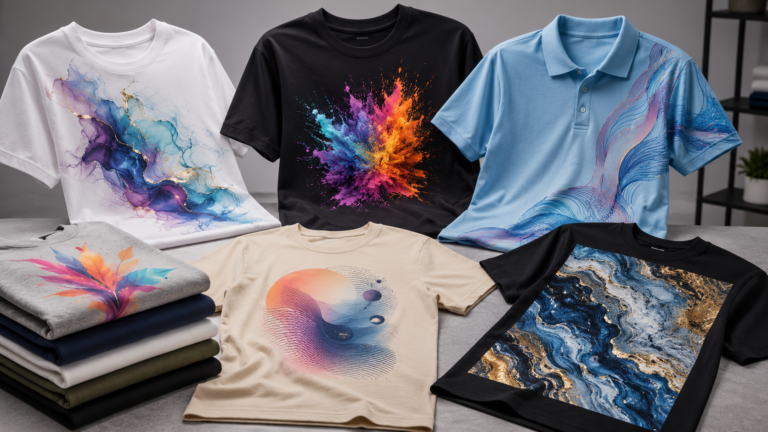
DTF can reproduce small text, gradients, shadows and multicolour logos more easily than methods that require separate colour screens.
Suitable for Small Orders
Small teams, events and personalised orders can use DTF without the same setup structure required for traditional bulk silkscreen printing.
Supports Names and Numbers
Individual staff names, player numbers, departments and role labels can be added without changing the entire garment design.
Useful on Many Garment Colours
DTF can be applied to suitable light and dark garments because the transfer can include a white base layer.
Main Limitations of DTF Printing
The Print Has a Noticeable Feel
DTF forms a transfer layer on top of the fabric. Large designs may feel warmer, less breathable or more noticeable against the body.
High Heat Can Cause Damage
Hot tumble drying, direct ironing and excessive wash temperatures can weaken the transfer or affect its surface.
Stretching Can Stress the Print
Oversized designs on tight or highly stretchable garments may crack or distort faster than compact artwork.
Not Always Best for Very Large Orders
When one simple design is repeated at high quantity, silkscreen may offer a more suitable production approach.
Method comparison
DTF Versus Other Printing Methods
Detail Versus Bulk Efficiency
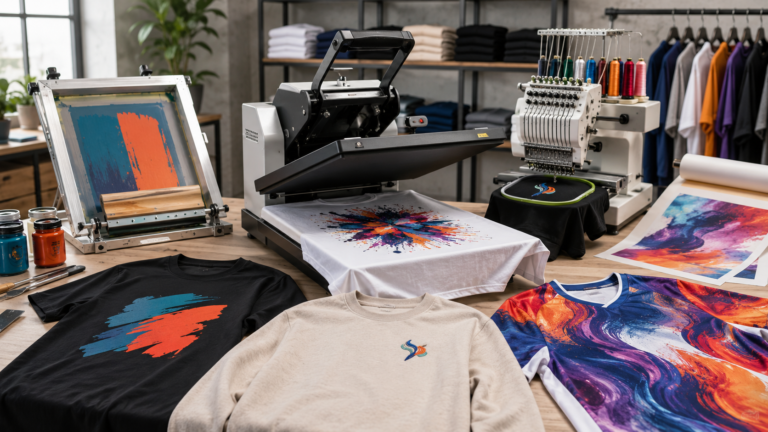
DTF is practical for colourful designs and smaller quantities. Silkscreen is often better for high quantities using the same simple design.
Colour Detail Versus Stitched Finish
DTF handles gradients and fine artwork, while embroidery offers a premium stitched look on suitable polos, jackets and caps.
Ready-Stock Flexibility Versus All-Over Design
DTF works on many compatible ready-stock garments. Sublimation is better for full-colour custom polyester jerseys with no raised surface layer.
Printed Detail Versus Simple Cut Shapes
DTF is more suitable for complex artwork. Vinyl is often used for simple names, numbers and solid shapes.
When DTF Is Usually a Strong Choice
- The design uses many colours or gradients.
- The order contains personalised names or numbers.
- The quantity is small or medium.
- Several garment colours are included in one order.
- Fine logo details need to remain clear.
- The garment fabric is compatible with the heat-press process.
When Another Method May Be Better
- One simple design is repeated in a very large quantity.
- The customer wants a premium stitched logo.
- The design needs to cover the entire jersey.
- The garment cannot tolerate the required heat and pressure.
- The wearer wants no raised print layer.
Fabric and design guide
How to Improve DTF Results
Oversized Solid Prints
Large solid areas can feel heavy, trap heat and face more stretching.
High-Friction Areas
Bag straps, seat belts and repeated equipment contact may wear the print.
Untested Garments
Some fabrics may react differently to heat, pressure or adhesive.
Recommended Artwork Practices
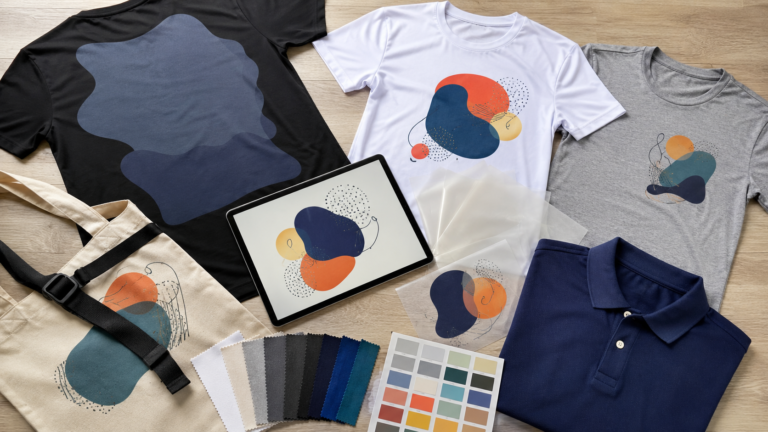
- Use a high-resolution transparent artwork file.
- Keep small text large enough to remain readable.
- Reduce unnecessary solid background blocks.
- Use high contrast between the shirt and logo.
- Check spelling, names and numbers before production.
- Approve the final print dimensions on the actual garment size.
Suitable Garment Directions
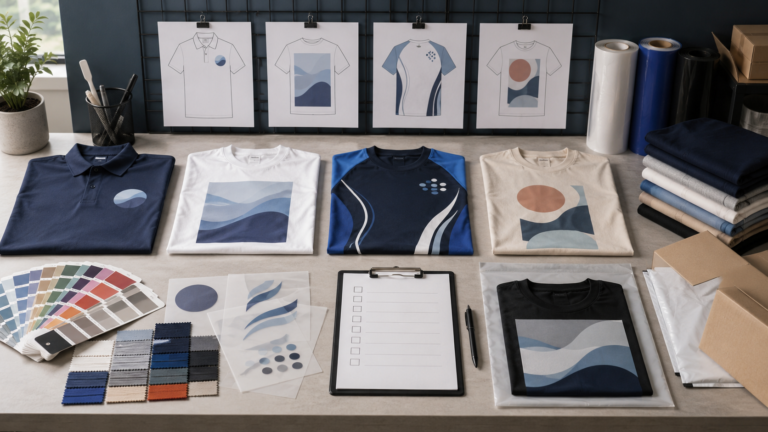
Ordering process
How to Order DTF-Printed Uniforms
Choose the Garment
Confirm the brand, model, fabric, colour, size chart and required quantity.
Prepare the Artwork
Provide a clear logo file and finalise all names, numbers and text.
Confirm Print Size and Placement
Decide the chest, sleeve, front or back position and approve the measurements.
Review the Digital Mockup
Check colours, spelling, logo proportions and placement before production.
Approve a Sample Where Needed
A sample helps confirm print feel, colour and compatibility for important orders.
Produce, Check and Deliver
Finished garments should be checked for placement, adhesion, spelling and quantity.
Buyer scenarios
Where DTF Printing Works Well
Detailed Company Logo
DTF can reproduce a colourful logo on a small batch of staff T-shirts or polos.
Names and Committee Roles
Individual names, positions and group artwork can be added with fewer setup limits.
Colourful Short-Run Shirts
Event artwork can be printed in smaller quantities across several shirt sizes.
Names and Numbers
DTF is useful for selected personalised details on compatible team apparel.
Detailed Graphic Designs
Small merchandise drops can use detailed designs without committing to large quantities.
One Logo Across Several Shirts
The same artwork can be applied to different compatible garment colours and sizes.
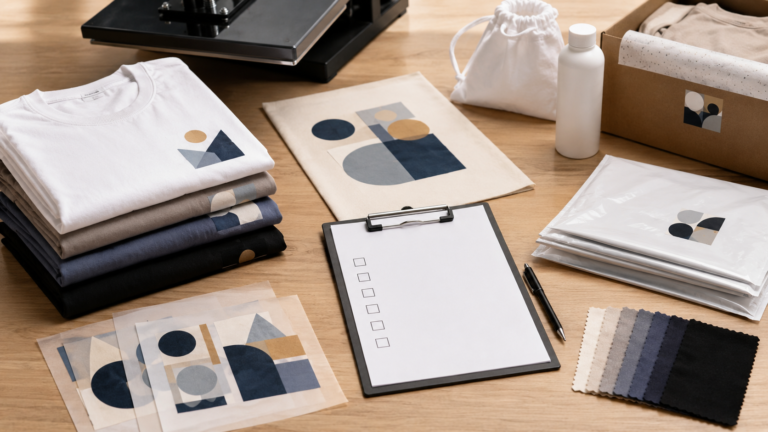
Buyer checklist
DTF Printing Checklist
- The exact garment fabric is confirmed.
- The artwork file is high resolution.
- All names, numbers and spelling are final.
- The print size suits the garment size.
- Large solid areas are kept to a practical minimum.
- The placement avoids high-friction zones where possible.
- A sample is considered for important bulk orders.
- Washing instructions are shared with wearers.
- Direct ironing and high-temperature drying are avoided.
- Future repeat orders use the same approved artwork.
Common DTF Mistakes
- Using a low-resolution logo file.
- Printing an oversized solid block on a lightweight shirt.
- Choosing the method before confirming the fabric.
- Ignoring how straps or equipment rub against the print.
- Washing the garment in very hot water.
- Ironing directly over the printed area.
Frequently asked questions
Questions About DTF Heat-Press Printing
Useful Uniform Sabah resources
Plan Your DTF Uniform Order
Choose the Right Printing Method
Share your garment type, quantity, artwork, colours, names and Sabah delivery location with Uniform Sabah for a suitable printing recommendation.
WhatsApp Uniform Sabah Explore Uniform SabahOur company network
Our Other Company Websites
Explore related uniform, apparel and custom-printing services through our regional and international websites.