Roadshow Table Covers Across Sabah: Packing, Washing and Setup Controls
A branded table cover that travels between venues must survive more than its first exhibition day. It will be folded, packed, unpacked, installed by different staff and sometimes cleaned between events. For roadshows serving multiple Sabah districts, a standard setup specification can reduce wrinkles, missing clips and inconsistent logo placement. This guide addresses the full travelling workflow rather than just print dimensions.
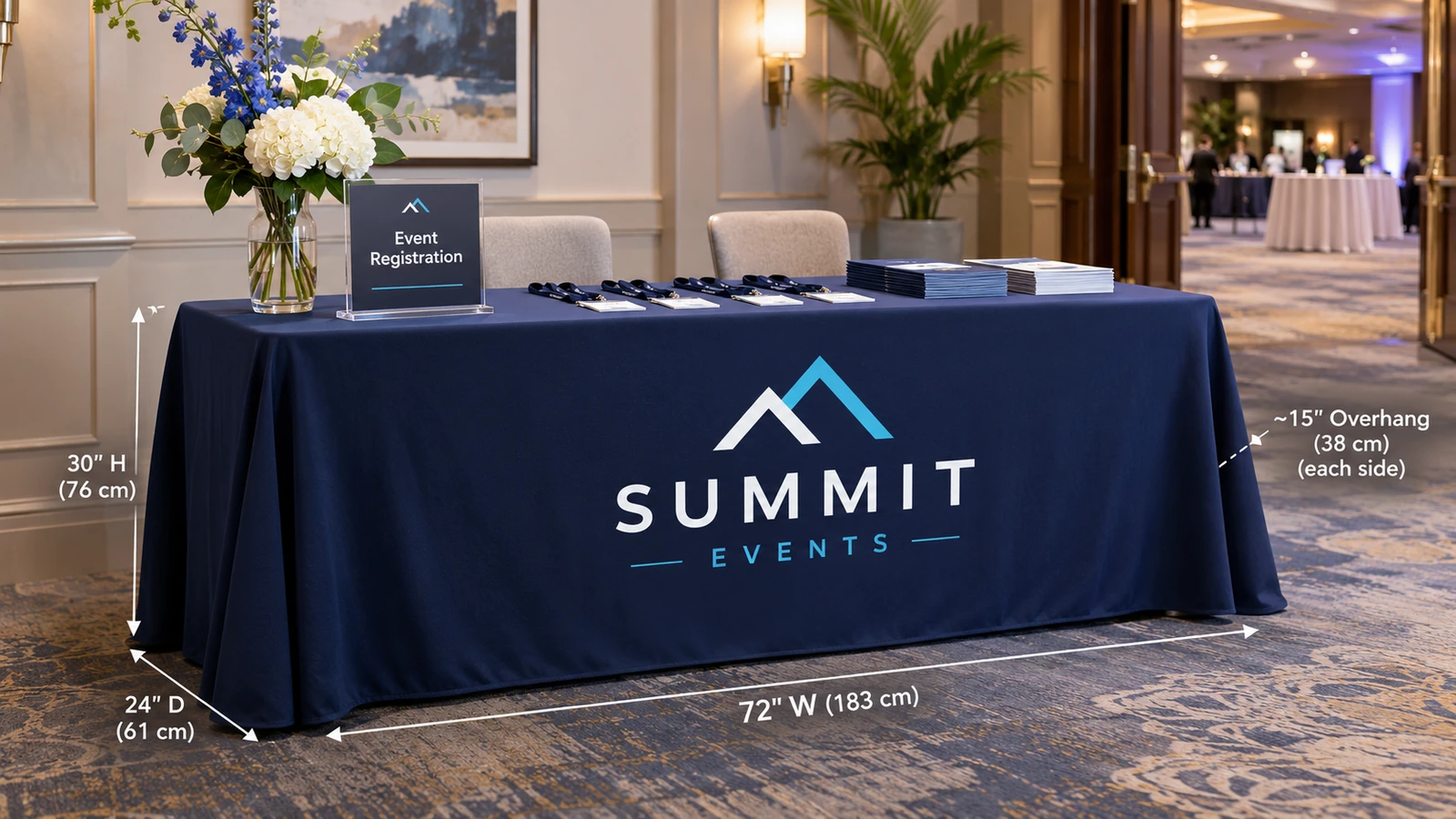
Create a standard table setup before printing
Measure the most common table sizes and identify whether event organisers supply their own furniture. A cloth suited to one folding table may not reach the floor on another. Decide whether a full cover or runner offers more flexibility across venues. Make the logo visible to attendees while keeping room for registration forms and devices.
For the purchase approval, use a physical table and pin a blank cloth to test drop lengths. This is worth recording before the design is signed off, because without a standard, the logo may sit too low or fold behind equipment.
Position the artwork for repeated draping
A logo placed on the front panel should remain centred when the cover is draped as instructed. Keep artwork clear of hems, fold lines and clips. If the fabric is stretchy, test how the branding behaves under moderate tension. A photographic mockup can help staff understand the intended appearance, but a real sample establishes the correct position.
A useful verification step is to photograph the final approved setup from the attendee-facing direction. The practical reason for that check is that a flat artwork centre line does not guarantee a visually centred logo on the table.
Choose fabric and decoration for travel
Select a washable, suitably opaque fabric that can be packed without excessive creasing for the expected events. Sublimation may be relevant on appropriate polyester, while other materials need a different method. Confirm the printing process and care restrictions with the supplier. Dark equipment boxes should not show clearly through the cloth from the front.
During the production review, test fold recovery, opacity and an approved gentle clean on the sample. Skipping this step can cause a surprisingly expensive problem: an attractive print can look thin or wrinkled after its first road trip.
Pack every accessory as one kit
Clips, stretch fasteners and cable organisers are easy to lose when multiple teams share a kit. Put the cover in a labelled breathable bag where suitable, include the installation photograph and keep accessories in a separate pouch. Record which team has the set and whether it returned clean and complete.
The team should also use a short checklist before dispatch and again after each roadshow. Treat this as part of the specification rather than an informal preference, since missing clips can force crews to tape a cloth and damage the finish.
Allow washing and drying between events
If drinks spill or the cloth contacts outdoor surfaces, cleaning needs to happen before the next assignment. Follow the fabric and decoration label and avoid heat conditions that could damage prints or change dimensions. Have a spare kit or a realistic cleaning interval if events occur close together.
Before a supplier prepares the final proof, trial a routine cleaning and full drying cycle on one approved sample. The risk is operational as much as visual: packing a damp cloth can create odour, creases or staining.
Coordinate delivery and venue timelines
Roadshows that move between Sabah districts require separate venue dates, addresses and receiving contacts. If new covers are supplied from Selangor, provide the first destination postcode and approval deadline early. Do not assume local pickup or immediate replacement; ask for order-specific freight and production estimates.
For a repeat order, build a handover schedule with the cloth’s current holder and next event. Keep the result with the approved sample, since one delayed parcel can affect several linked roadshow stops.
Practical example: making the decision
A small team manages travelling registration booths at three Sabah events over a fortnight. They initially pack the printed table cover loose in a box with cables and banners. At the first venue, staff have no clips and the front emblem hangs behind an equipment case. The organiser creates a standard kit: cover, labelled clip pouch, installation photo and a one-page inventory sheet. Before leaving, the cloth is folded according to its care instructions and checked for stains. The next venue's table dimensions are requested in advance so the front drop can be adjusted without covering the logo. For any replacement cover, the buyer sends the exact destination postcode and event date to the Selangor-based supplier. This hypothetical example highlights repeatable setup rather than simply impressive first-use photography.
Additional approval considerations
Event covers are working textiles, not disposable backdrops. Before buying a new one, decide whether staff need to eat or place drinks at the table, whether clips are permitted by venue rules and whether the same fabric will be exposed to rain. These conditions affect care, installation and the number of spares needed.
A useful handover photograph shows the entire table from the front and one view of the fastening from behind. Put both in the transport pouch with the actual dimensions. New volunteers can then reproduce the intended look without improvising from a flat artwork file or relying on a colleague who attended the previous event.
- Use a physical table and pin a blank cloth to test drop lengths.
- Photograph the final approved setup from the attendee-facing direction.
- Test fold recovery, opacity and an approved gentle clean on the sample.
- Use a short checklist before dispatch and again after each roadshow.
- Trial a routine cleaning and full drying cycle on one approved sample.
- Build a handover schedule with the cloth’s current holder and next event.
An additional control is to use a physical table and pin a blank cloth to test drop lengths. Combine that check with a final handover step: build a handover schedule with the cloth’s current holder and next event. Keep both results with the dated approval sample so a replacement order uses the same reference. Where the material, delivery address or production technique changes, ask for a fresh confirmation rather than assuming that an old quotation covers the new combination.
Frequently asked questions
Is one table cover enough for every venue?
Only when table dimensions and access needs are compatible; verify each setup.
Can a printed polyester cloth be washed?
Often, subject to its exact fabric and decoration instructions.
What should travel with the cover?
Fasteners, installation photo, inventory label and cleaning guidance.
Will Uniform Sabah deliver directly to a roadshow venue?
Provide the exact address and request confirmation for the shipment.
For a quotation based on the actual garment, print method, quantity and delivery location, review UniformSabah services and use the official enquiry page. Prices, methods, production schedules and minimum quantities must be confirmed for the specific job.