Should Parents Order One Size Bigger for Kids?
Learn when sizing up makes sense, when it creates an oversized fit and how to choose a children's shirt using actual garment measurements instead of age alone.
Direct answer
Should You Automatically Size Up?
Parents should not automatically order one size bigger. The better approach is to compare the selected supplier's size chart with a shirt that already fits the child comfortably.
Sizing up may be useful when the event is several months away, the child is between two sizes or a looser fit is preferred. However, moving up one full size can make the shirt too long, too wide or uncomfortable during active school events.
Between Two Sizes
Choose the larger size when the smaller option is already close to the child's limit.
Event Is Soon
Use the best current fit when the shirt is needed within a short period.
Choosing by Age Alone
Children of the same age can have very different heights, builds and fit preferences.
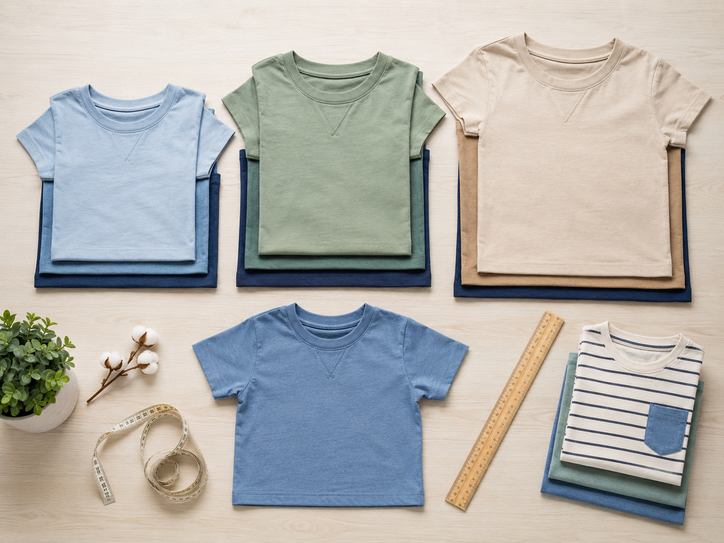
Quick comparison
When to Size Up and When Not To
Review the event date, child's current fit, fabric, activity level and expected wearing period before choosing the next size.
| Situation | Recommended approach | Reason | What to check |
|---|---|---|---|
| Child is between two sizes | Consider the larger size | Provides more comfort and room | Check that the length is not excessive. |
| Event is several months away | Allow a small growth margin | The child may grow before the event | Compare measurements again near the order deadline. |
| Event is next week | Choose the best current fit | There is little need for growth allowance | Confirm comfort during movement. |
| Shirt will be worn only once | Avoid excessive sizing up | An oversized shirt may look untidy | Prioritise present fit and event use. |
| Shirt will be reused for a year | Consider modest extra room | Longer usage may justify growth allowance | Do not let the shirt become too long now. |
| Child prefers a loose fit | Compare one size up carefully | Comfort preference matters | Check shoulder and sleeve placement. |
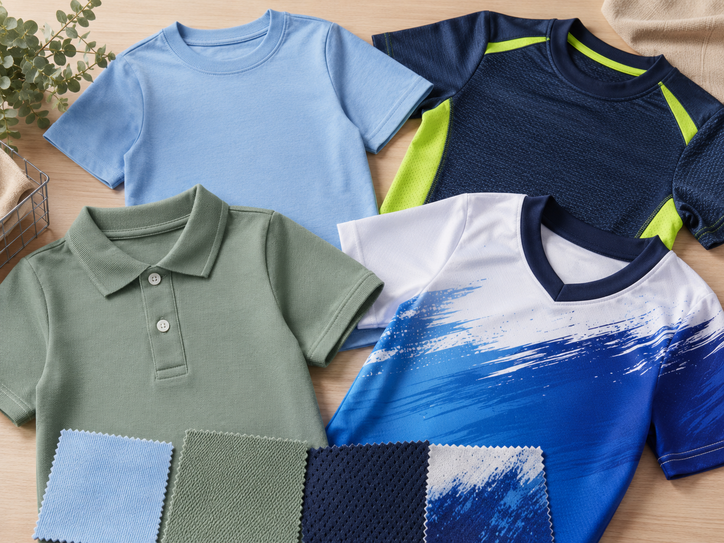
Shirt and sizing options
How Shirt Type Changes the Fit
Different fabrics and cuttings can feel different even when they use the same size label. Confirm the exact model before collecting children's sizes.
Soft and Casual
Cotton shirts are comfortable for school events and family gatherings, but parents should still check chest width and body length.
- Compare with a similar cotton shirt.
- Follow the garment care instructions.
- Choose a regular or loose fit deliberately.
Useful for Active Events
Performance shirts suit sports day, camps and outdoor activities, but some models may feel more fitted.
- Check the exact performance shirt cutting.
- Allow enough room for running and movement.
- Avoid sleeves that fall too far below the arm.
Check Shoulder and Collar Fit
Polo shirts have more structure, so a size that is too large may look noticeably oversized around the shoulders.
- Check shoulder seam position.
- Confirm collar comfort.
- Review the body length when sizing up.
Follow the Production Chart
Full custom jerseys may use a different cutting from ready-stock shirts and should follow the approved production measurements.
- Use the correct kids chart.
- Review fitted or regular cutting options.
- Confirm personalised details after size approval.
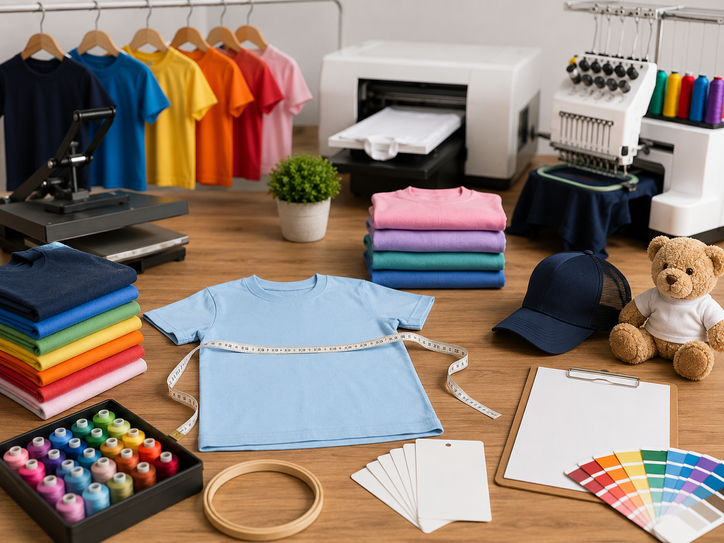
Printing and personalisation
Why Size Accuracy Matters Before Printing
Standard event shirts may be easier to exchange, while personalised shirts with names, numbers or class details are difficult to reassign.
More Flexible for Exchanges
When every shirt uses the same design, schools may be able to exchange unused sizes more easily if spare stock is available.
- Keep common spare sizes separate.
- Record every exchange.
- Do not personalise until necessary.
Confirm Size and Spelling Together
A named shirt cannot be easily reassigned, so parents should approve both details before production.
- Check the child's preferred name spelling.
- Confirm the final size.
- Review the class or team label.
Lock the Size Before Numbering
Sports jerseys should link the child's name, number and size in one approved list.
- Check duplicate numbers.
- Confirm the team category.
- Separate goalkeeper or special-role shirts.
Review the Fit First
Embroidered polo shirts are less flexible to change after production, especially when names are included.
- Arrange sample fitting where possible.
- Check the smaller garment logo scale.
- Confirm the final size before stitching.
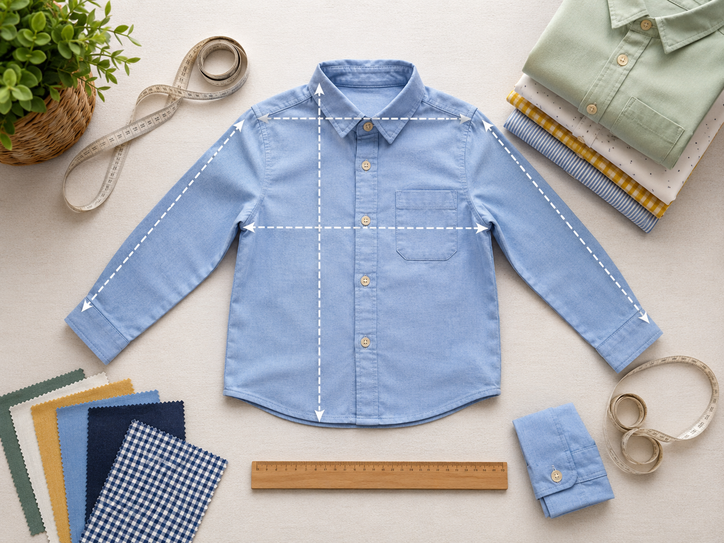
Measurement guide
How Parents Can Check the Fit
Lay a comfortable shirt flat without stretching it. Compare its measurements with the supplier's chart for the selected garment.
Too Much Body Length
A larger shirt may reach too far below the hips and interfere with active movement.
Dropped Shoulder Seams
A shoulder seam far below the natural shoulder can make the shirt look oversized.
Long or Wide Sleeves
Oversized sleeves may feel uncomfortable during sports, games and school activities.
Basic Flat Garment Measurements
- Chest width: measure from armpit to armpit.
- Body length: measure from the highest shoulder point to the hem.
- Shoulder width: measure from one shoulder seam to the other.
- Sleeve length: measure from the shoulder seam to the sleeve edge.
- Use a shirt the child currently wears comfortably.
- Compare with the exact selected product chart.
Questions Parents Should Ask
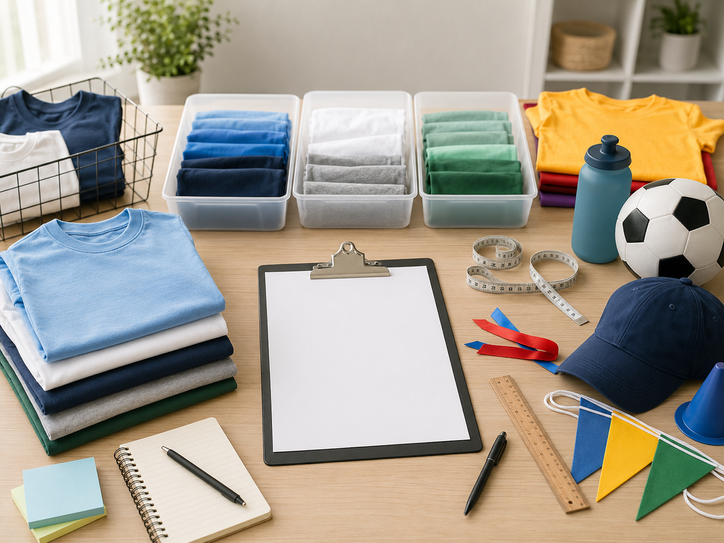
Sizing process
How to Decide Whether to Size Up
Confirm the Exact Shirt Model
Select the brand, fabric, cutting and kids size range before making any comparison.
Measure a Comfortable Shirt
Use the child's current shirt as the practical fit reference.
Compare Chest and Length
Check both measurements because the larger size may add more length than expected.
Consider the Event Date
Add a modest growth allowance only when the event is months away or the shirt will be reused.
Review the Activity Level
Make sure the shirt allows movement without becoming excessively loose.
Approve the Final Size
Confirm the selection before names, class details or jersey numbers are added.
Parent scenarios
Examples for Different Situations
Allow Movement, Not Excess Fabric
Choose a comfortable fit that supports running and games without very long sleeves or body length.
Current Fit Usually Works
For a one-day gathering or photo session, a neat present-day fit is often better than an oversized shirt.
Consider Longer-Term Use
A small amount of extra room may be useful when the shirt will be worn throughout the school year.
Choose the Larger Size Carefully
The next size may be more comfortable, but parents should still check the added length.
Parent checklist
Kids Shirt Size Checklist
- The exact brand and shirt model are confirmed.
- The correct kids size chart is being used.
- A comfortable existing shirt has been measured.
- Chest width and body length are compared.
- The event date is considered.
- The child's preferred fit is considered.
- The activity level is considered.
- The shirt is not being sized by age alone.
- Personalised details are checked after size approval.
- The final size is confirmed before production.
Common Parent Sizing Mistakes
- Automatically ordering one size larger.
- Using age as the only sizing reference.
- Checking width but ignoring body length.
- Using a chart from a different shirt model.
- Choosing an adult small instead of a proper kids size.
- Changing the size after personalisation begins.
Frequently asked questions
Questions About Ordering a Bigger Kids Size
Useful Uniform Sabah resources
Continue Planning Your Kids Shirt Order
Choose the Right Kids Shirt Size
Share the child's age range, shirt model, event date, preferred fit and required personalisation with Uniform Sabah. Use the exact size chart before placing the order.
WhatsApp Uniform Sabah Visit Uniform SabahOur network
Our Other Company Websites
Explore related uniform, printing and apparel services through our regional and international websites.