Staff Name Embroidery: Benefits and Drawbacks
Learn when embroidered staff names improve identification and professionalism, and when reusable name badges or role-based uniforms may be more practical.
Direct answer
Is Staff Name Embroidery Worth It?
Staff name embroidery is useful when employees regularly meet customers, receive visitors or need clear identification. It creates a permanent, polished finish and removes the need for a separate badge.
The main drawback is reduced flexibility. A shirt embroidered with one employee's name cannot be reassigned easily, and spelling mistakes may require a replacement garment.
Professional Identity
Customers can identify staff more easily, creating a friendlier service experience.
Permanent and Durable
The name stays attached without clips, pins or adhesive backing.
Limited Reusability
Personalised uniforms are difficult to transfer to another employee.
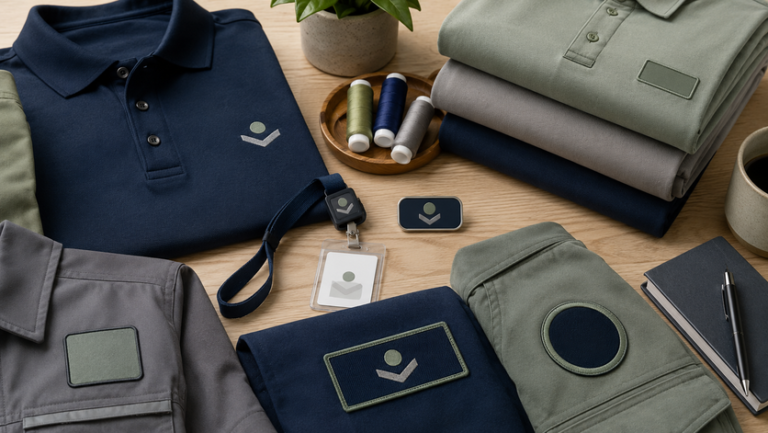
Quick comparison
Compare Staff Identification Options
Choose the method according to staff turnover, customer contact, garment sharing and the expected life of the uniform.
| Option | Best for | Main benefit | Main drawback |
|---|---|---|---|
| Embroidered staff name | Permanent staff and customer-facing teams | Professional, durable and always attached | Difficult to reuse for another employee |
| Reusable name badge | Temporary staff and changing teams | Easy to reassign | Can be lost, forgotten or damaged |
| Printed staff name | Event crews and casual uniforms | Flexible colours and design options | Surface printing may require more care |
| Role embroidery | Shared uniforms and departments | Reusable within the same role | Does not identify the individual |
| Staff number embroidery | Technical and operational teams | Useful for internal tracking | Less friendly for customer interaction |
| No individual name | Back-of-house teams | Easy reallocation and lower complexity | Employees are harder to identify |
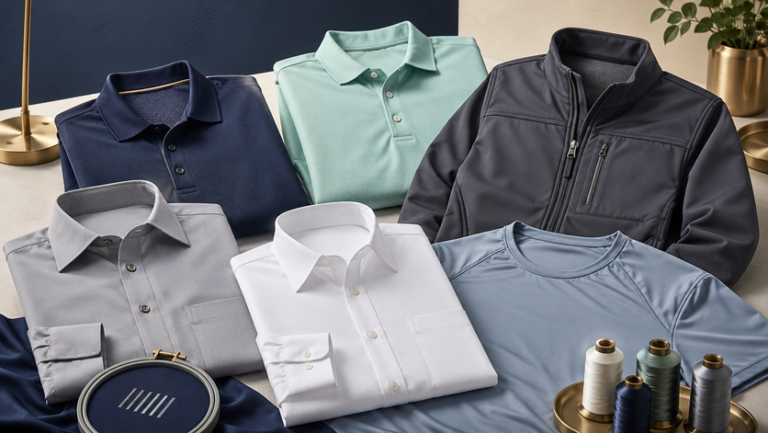
Uniform options
Which Uniforms Suit Name Embroidery?
Name embroidery performs best on garments with enough structure to support the stitching. Fabric weight, texture and daily working conditions should be reviewed first.
Strong All-Round Option
Polo shirts are commonly used for retail, administration, sales and service teams.
- Good space for a small chest name
- Suitable for logo and name pairing
- Useful for long-term staff uniforms
Professional for Office Teams
Woven shirts can support a clean result when stitch density and backing are controlled.
- Suitable for reception and management
- Keep the name compact
- Check pockets, plackets and seams
Useful for Technical Teams
Jackets and heavier workwear can carry names, departments or staff numbers clearly.
- Good for maintenance and site teams
- Supports stronger identification
- Suitable for repeated use
Lightweight Performance Shirts
Thin microfiber or stretch garments may pucker when the embroidery is too dense.
- Use a small, simple name.
- Review backing and stitch density.
- Consider printing for very light fabric.
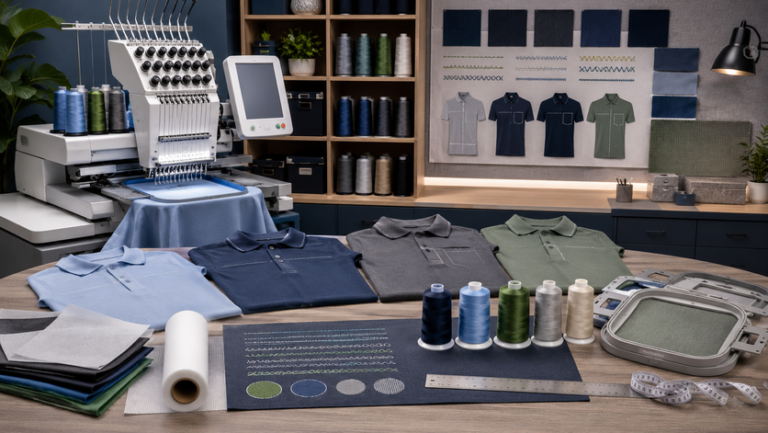
Embroidery preparation
How Staff Names Should Be Prepared
Names must be converted into embroidery stitch files. Font, letter height, thread colour, backing and garment material all affect the finished result.
Use Simple Lettering
Clean block or sans-serif fonts are normally easier to read than decorative scripts.
- Keep small letters thick enough.
- Avoid unnecessary outlines.
- Use consistent capitalisation.
Create Strong Contrast
The name should remain readable without competing with the company logo.
- Use one approved colour system.
- Check every shirt colour.
- Record the thread reference.
Keep Names Consistent
Common positions include the right chest, above a pocket or below the company logo.
- Measure from seams and plackets.
- Use consistent placement across sizes.
- Check whether pockets reduce visibility.
Control Stitch Density
The stitch file should suit the fabric so the name does not become stiff or distorted.
- Use suitable backing.
- Avoid unnecessary stitch density.
- Test unusual fabrics when needed.
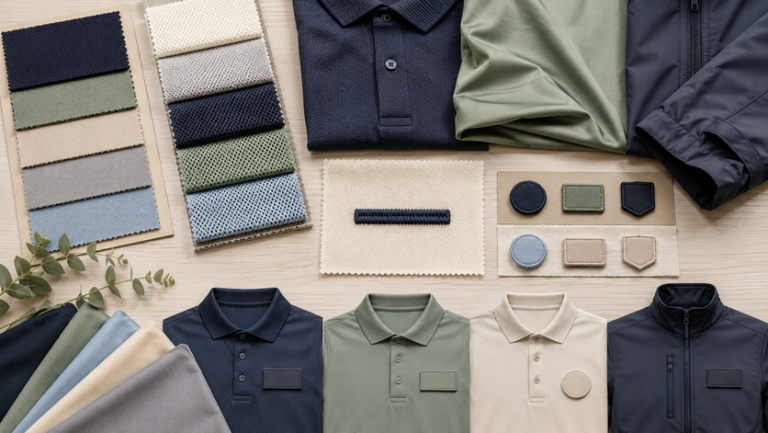
Material and design guide
Balance Readability and Reusability
A good embroidered name should be easy to read without making the garment stiff, uncomfortable or visually crowded.
Names That Are Too Small
Tiny letters may lose clarity on textured polo fabric.
Puckering and Distortion
Lightweight garments can wrinkle around dense stitching.
Frequent Staff Turnover
Personalised uniforms may become unusable when employees leave.
Recommended Name Format
- Use the employee's approved preferred name.
- Keep capitalisation consistent.
- Avoid titles unless required by policy.
- Use one font and thread colour.
- Set a maximum width for long names.
- Keep the approved list for reorders.
Alternatives for Shared Uniforms
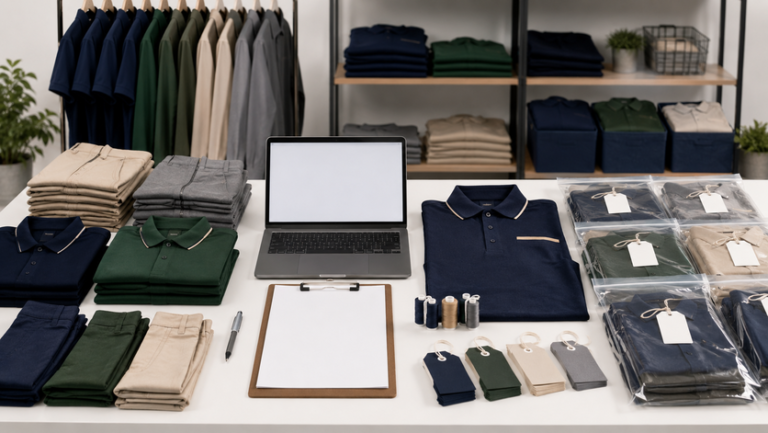
Ordering process
How to Order Staff Name Embroidery
Decide Who Needs a Name
Identify customer-facing staff, supervisors, technicians or permanent employees.
Choose the Uniform Model
Confirm the garment brand, fabric, colour, cutting and size range.
Prepare the Name List
Use one spreadsheet with the employee name, department, garment size and quantity.
Approve the Sample Format
Check the font, thread colour, width and placement on the selected garment.
Review Every Spelling
Ask HR, supervisors or employees to confirm names before production.
Pack by Employee
Label each finished uniform pack with the employee name, department, size and quantity.
Buyer scenarios
When Name Embroidery Makes Sense
Helpful for Customer Service
Customers can identify staff and remember who assisted them.
Professional and Permanent
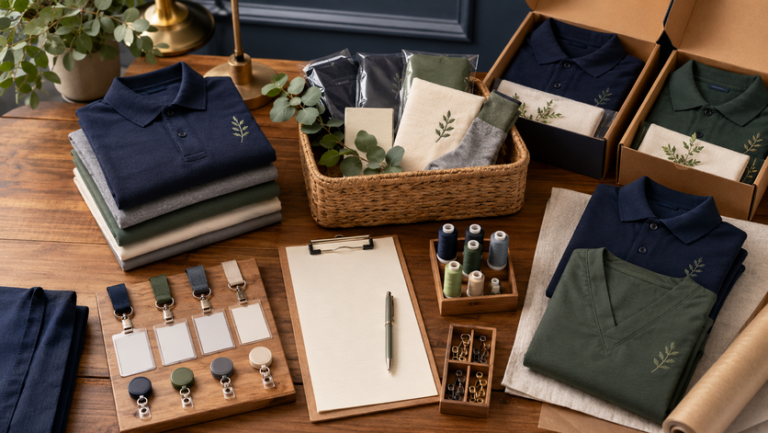
Small name embroidery works well on corporate polo shirts.
Useful With Staff Numbers
Maintenance teams may use names, staff numbers or departments.
Use Reusable Badges Instead
Temporary, seasonal and shared-uniform teams need more flexibility.
Buyer checklist
Staff Name Embroidery Checklist
- The team is stable enough for personalised uniforms.
- The selected fabric supports embroidery.
- The name does not clash with the company logo.
- The font is simple and readable.
- The thread colour contrasts with the garment.
- Every employee name is confirmed in writing.
- Capitalisation and spelling are consistent.
- Long names have an approved maximum width.
- The garment size and name are matched correctly.
- Finished uniforms will be packed by employee.
Common Embroidery Mistakes
- Using an outdated employee list.
- Allowing different name formats within one team.
- Choosing decorative fonts that are difficult to stitch.
- Making the embroidery too dense for lightweight fabric.
- Placing names too close to seams or pockets.
- Personalising uniforms that should remain reusable.
Frequently asked questions
Questions About Staff Name Embroidery
Useful Uniform Sabah resources
Continue Planning Your Staff Uniforms
Plan Staff Name Embroidery Carefully
Share your uniform type, fabric, staff quantity, approved name list, thread colour and preferred placement with Uniform Sabah.
WhatsApp Uniform Sabah Visit Uniform SabahOur network
Our Other Company Websites
Explore related uniform, printing and apparel services through our regional and international websites.