T-Shirt Printing Sabah: DTF vs Silkscreen vs Sublimation vs Embroidery
A practical buyer’s guide for Sabah businesses, schools, factories, restaurants, event organisers, sports teams, associations and printing agents choosing a suitable apparel customisation method.
The best printing method depends on the garment, artwork, quantity, personalisation, print positions and intended use. DTF, silkscreen, sublimation and embroidery are useful for different order structures and should not be treated as interchangeable.
A detailed multicolour logo may suit DTF. A repeated simpler design may be worth assessing for silkscreen. A fully designed polyester sports jersey may require sublimation. A compact corporate logo may be suitable for embroidery.
Uniform Sabah is powered by JC Print & Office Sdn Bhd. The website supports apparel and printing enquiries for Sabah, while production is coordinated from West Malaysia rather than through a claimed Sabah factory or showroom.
Buyers can first review the available printing and uniform services for Sabah.
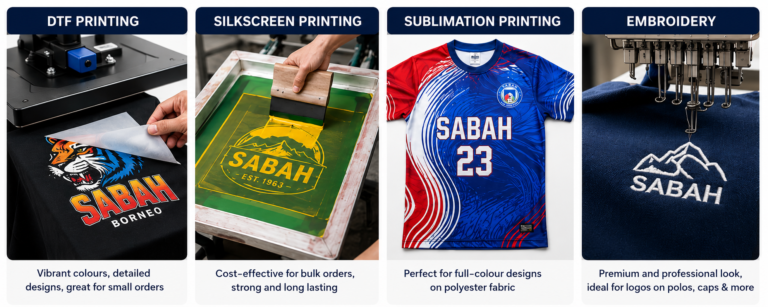
Quick Comparison of the Four Main Methods
| Method | Commonly Suitable For | Main Advantage | Important Trade-Off |
|---|---|---|---|
| DTF Heat Press | Detailed logos, several colours, names, numbers and smaller mixed orders | Supports complex digital artwork and personalisation | Large solid transfers can create a noticeable surface layer |
| Silkscreen | Repeated designs across larger quantities | Practical when the same prepared artwork is repeated many times | Every colour and print position affects setup |
| Sublimation | Compatible polyester jerseys and broad full-colour designs | Supports patterns, names and numbers across the garment design | Generally not intended for ordinary cotton shirts |
| Embroidery | Corporate polos, jackets, caps and compact logos | Creates a stitched and structured appearance | Tiny details, gradients and large filled areas may require adjustment |
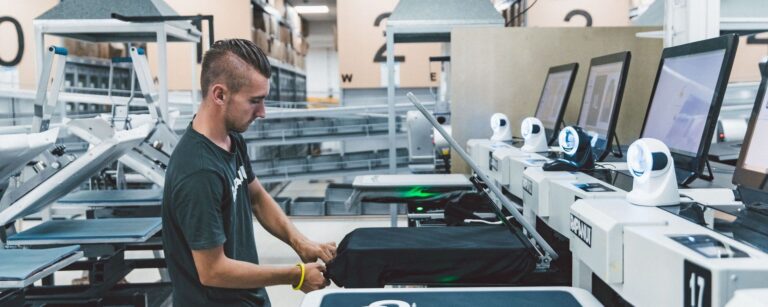
What Is DTF Printing?
DTF means direct-to-film. The artwork is prepared digitally, printed onto transfer film and applied to a compatible garment using heat and pressure.
Detailed Artwork
DTF may suit several colours, gradients, fine lines, small details and digital artwork that would be difficult to separate into simple solid colours.
Names and Numbers
Variable names, player numbers, department labels and small-batch artwork changes can be easier to organise digitally.
Several Garment Colours
DTF may be considered for mixed garment colours, subject to garment compatibility and print preparation.
Surface Coverage
A small chest logo feels different from a large solid back transfer. Review the print size and total coverage.
DTF May Be Worth Assessing For
- Company logos containing several colours
- Event T-shirts with detailed artwork
- School committee shirts
- Names and numbers
- Smaller departmental batches
- Several artwork variations
Information to Confirm
- Garment material and colour
- Print dimensions
- Front, back and sleeve positions
- Variable names or numbers
- Large solid artwork areas
- Whether the order may be repeated
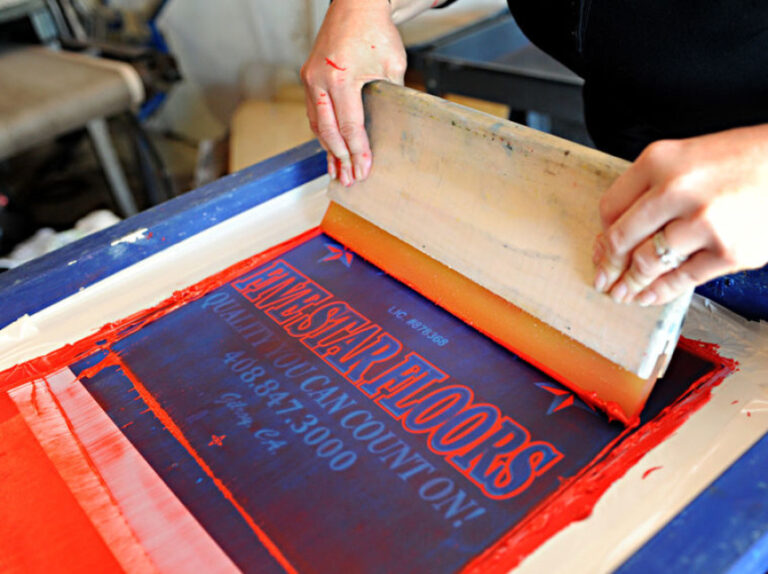
What Is Silkscreen Printing?
Silkscreen printing uses a prepared mesh screen to transfer ink onto the garment. Each artwork colour normally requires separate preparation, so the number of colours and print positions affects the setup.
Same Artwork Across Many Pieces
Silkscreen can be practical when the same design is used across a larger quantity.
Fewer Solid Colours
Designs with manageable colour separation are generally easier to assess for this method.
Company, School and Event Shirts
Factory shirts, school activities, campaigns, volunteer apparel and repeated promotional designs may be suitable scenarios.
Variations Affect Setup
Different names, several artwork versions and additional print positions can reduce the practical advantage of repeating one design.
Silkscreen May Be Worth Assessing When
- The same artwork is repeated
- The quantity is larger
- The design uses fewer solid colours
- Names are not different on every shirt
- The garment colour remains consistent
- The print positions remain the same
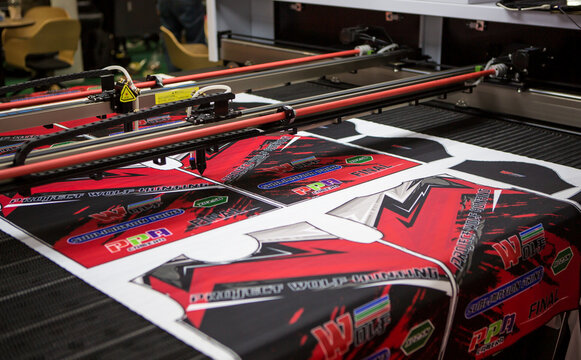
What Is Sublimation Printing?
Sublimation transfers colour into compatible polyester-based material. It is especially relevant for sports jerseys, running shirts, tournament apparel, school house jerseys and full-colour designs extending across several garment panels.
Sublimation May Be Suitable When
- The design uses broad background patterns
- Several sponsor logos are required
- Player names and numbers are integrated into the artwork
- The garment uses a compatible polyester arrangement
- The buyer wants a fully designed team jersey
What Is Embroidery?
Embroidery uses thread to stitch artwork into a garment. It is often considered for corporate polo shirts, jackets, caps, supervisor uniforms, hotel or restaurant polos and customer-facing teams.
Embroidery May Be Suitable When
- The logo is compact
- The lettering is clear
- The shapes are well defined
- The garment can support stitching
- A stitched finish suits the brand presentation
Artwork May Need Adjustment When It Contains
- Very small lettering
- Thin lines
- Colour gradients
- Photographic details
- Large filled areas
- Closely spaced elements
Which Method Should You Choose by Scenario?
Polos and Compact Branding
Assess embroidery for compact structured logos and DTF for detailed multicolour artwork.
Repeated or Department-Based Orders
Assess silkscreen for larger repeated designs and DTF for department variations, names or smaller batches.
Events, Committees and Sports
DTF may suit detailed event artwork, silkscreen may suit repeated activity shirts and sublimation may suit compatible jerseys.
Front and Supporting Teams
Embroidery may suit supervisor polos, while DTF or silkscreen may suit supporting staff shirts.
Crew Roles and Participant Designs
DTF may suit detailed artwork and variable roles. Silkscreen may suit a larger repeated participant design.
Ready-Made or Full Custom
DTF may suit selected logos on ready-made sports shirts. Sublimation may suit full custom jerseys.
Information Needed for an Accurate Quotation
- Garment type and colour
- Quantity and size breakdown
- Artwork file
- Number of artwork colours
- Print dimensions
- Front, back and sleeve positions
- Names or numbers
- Required receiving date
- Sabah delivery postcode
- Whether the order may be repeated

T-Shirt Printing Buyer Checklist
- The garment type is confirmed.
- The garment material suits the method.
- The garment colour is confirmed.
- The complete quantity is available.
- The size breakdown is complete.
- Every print position is listed.
- Logo dimensions are stated.
- Names and numbers are proofread.
- Artwork variations are clearly separated.
- Large print areas have been reviewed.
- One final artwork file is approved.
- The required receiving date is stated.
- The Sabah delivery details are complete.
- Repeat-order details will be retained.
Frequently Asked Questions
Which printing method is the most durable?
Durability depends on the garment, method, artwork, application, care and production arrangement. One universal answer is not accurate for every order.
Which method may suit a smaller order?
DTF may be worth assessing for smaller or mixed orders, especially when the artwork is detailed. The actual arrangement still requires confirmation.
Which method may suit a larger repeated order?
Silkscreen may be practical when the same simpler artwork is repeated across a larger quantity.
Can ordinary cotton shirts use sublimation?
Standard sublimation is generally associated with compatible polyester-based material rather than ordinary cotton shirts.
Can every logo be embroidered?
Not always in its original form. Small text, gradients and complex details may need simplification.
Can names and numbers be different on every shirt?
DTF and sublimation may support personalisation depending on the garment and production arrangement.
Does Uniform Sabah have a production factory in Sabah?
Uniform Sabah supports customers in Sabah, but production is coordinated from West Malaysia rather than through a claimed Sabah factory or showroom.
Request a T-Shirt Printing Quotation for Sabah
Prepare your garment preference, quantity, size breakdown, artwork, print positions, personalisation, required receiving date and Sabah delivery postcode.
Useful Uniform Sabah Resources
Disclosure: KitaPrint is part of the same printing business network and is not presented as an independent recommendation.
Our Regional Apparel and Printing Network
The websites below belong to the same company or regional printing network.
Disclosure: These are related company or regional network websites, not independent recommendations.