Sabah Apparel Printing Buyer’s Guide
Which Printing Method Is Right for You?
A practical decision guide for companies, factories, schools, cafés, event organisers, sports teams, printing agents and apparel buyers choosing how to customise T-shirts, uniforms, polos, aprons and jerseys.
Direct answer: The right printing method depends on six things: the garment material, artwork detail, number of colours, total quantity, personalisation requirements and how the apparel will be used. DTF is often assessed first for detailed multicolour artwork and mixed variations. Silk screen is often practical when the same simpler design is repeated across a larger run. Embroidery can support a compact premium logo on suitable garments. Sublimation is mainly considered for full-colour designs on suitable polyester teamwear. Heat-transfer personalisation can help with individual names, roles and numbers.
Do Not Choose the Method Before Reviewing the Order
Buyers sometimes choose a printing method because they have heard that it is the cheapest, most durable or most premium. That approach can create problems when the chosen method does not match the garment, artwork or quantity.
A detailed café logo may need a different process from a one-colour factory shirt. A full sports jersey design is different from a compact corporate polo logo. A large repeated event order is also different from an order containing individual names and several artwork versions.
Uniform Sabah is powered by JC Print & Office Sdn Bhd. Orders are coordinated through the company’s West Malaysia production setup, with apparel supply, customisation and delivery arrangements available for Sabah customers, subject to artwork, garment, quantity and delivery review.
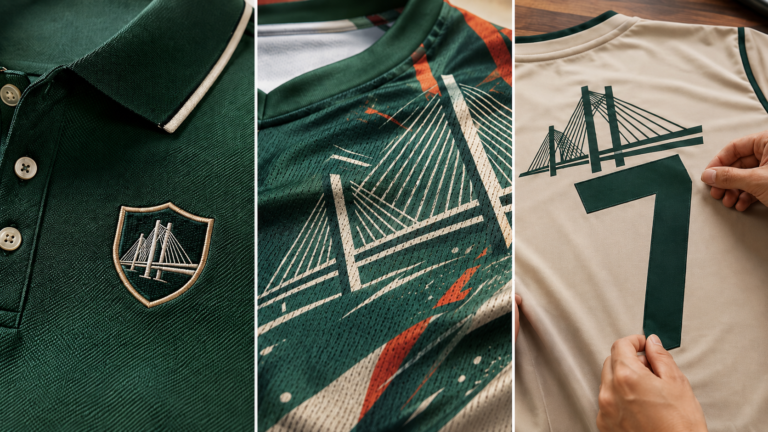
Quick Comparison
Printing Methods at a Glance
Use this table to identify which methods deserve further review. It should narrow the options, not replace an artwork and garment assessment.
| Method | Often Considered For | Artwork Strength | Main Point to Check |
|---|---|---|---|
| DTF printing | Detailed logos, several colours, smaller or mixed orders and variable artwork | Gradients, fine details, illustrations and multicolour graphics | Garment compatibility, print coverage, dimensions and surface feel |
| Silk screen printing | The same design repeated across a larger quantity | Solid colours and artwork that can be separated into printable layers | Number of colours, screens, positions and artwork variations |
| Embroidery | Corporate polos, selected aprons, jackets, caps and customer-facing uniforms | Compact logos with suitable lettering and shapes | Stitch size, fabric support, logo dimensions and very small details |
| Sublimation | Sports jerseys, house shirts and full-colour polyester teamwear | Patterns, colour coverage, names, numbers and integrated jersey graphics | Suitable polyester material and the garment production arrangement |
| Heat-transfer personalisation | Individual names, numbers, departments, roles and selected graphic elements | Variable text and piece-by-piece information | Spelling, dimensions, placement and garment compatibility |
| DTG printing | Selected creative T-shirts where direct garment printing is suitable | Detailed, photographic or artistic artwork | Garment material, colour, pretreatment and intended use |
Evaluate DTF First
Useful when the logo contains several colours, fine elements, gradients or different artwork versions.
Evaluate Silk Screen First
Useful when many garments carry the same artwork and the design can be prepared as separate colour layers.
Compare Embroidery
Useful for suitable polo shirts, jackets, caps and selected hospitality garments requiring a stitched appearance.
Evaluate Sublimation First
Useful for suitable polyester teamwear with patterns, sponsor marks, names and numbers built into the design.
Review Heat Transfer
Useful when each garment needs a different staff name, role, department, player number or outlet detail.
Discuss DTG Suitability
A specialist option for selected direct-printed apparel where the garment and artwork suit the process.
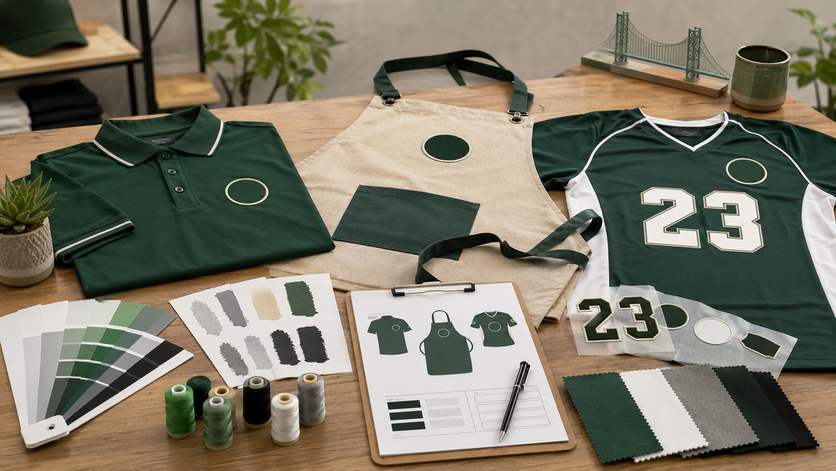
Decision Framework
Answer These Six Questions Before Choosing
The best recommendation normally becomes clearer once these questions are answered. They also help the supplier prepare a more accurate quotation and artwork review.
What Material and Product Are You Printing?
State whether the item is a cotton T-shirt, polyester sports jersey, blended polo, apron, jacket, workwear shirt or another product. The exact garment can affect method compatibility and application settings.
How Detailed Is the Design?
Count colours and identify gradients, shadows, photographs, fine lines, small text and transparent effects. A simple solid-colour logo and a detailed illustration do not require the same workflow.
How Many Pieces Use the Same Artwork?
Separate the total quantity from the repeated quantity. An order of 100 pieces may still contain five different designs, several garment colours or many personalised versions.
Does Every Garment Carry the Same Information?
List names, numbers, roles, departments, branches, teams and language variations. Personalisation can change the most practical method or lead to a combined-method order.
How Large Is Each Logo or Graphic?
A compact chest mark, large solid back design, sleeve logo and all-over jersey artwork have different coverage, texture and placement considerations.
Where and How Will the Apparel Be Worn?
Consider office presentation, customer-facing service, factory work, outdoor events, sports movement, washing frequency and whether future replacement orders are expected.
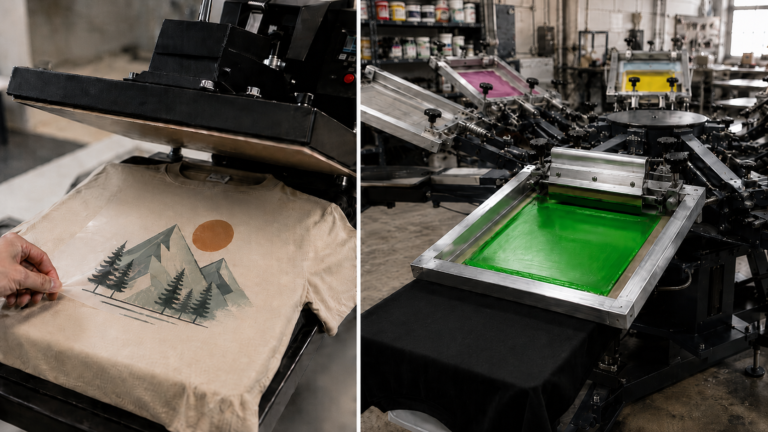
Surface Printing Methods
When to Compare DTF and Silk Screen Printing
DTF and silk screen are frequently compared because both can decorate T-shirts, uniforms and promotional apparel. The better choice usually depends on artwork complexity, repeated quantity and variation—not on one method being universally better.
Useful for Detail, Colour and Variation
DTF creates a prepared transfer that is applied to a compatible garment using heat and pressure. It is often reviewed when artwork contains several colours, gradients, fine details or individual variations.
- Detailed brand logos and illustrations
- Several colours within one artwork
- Staff names, numbers or branch variations
- Mixed garments or smaller department batches
- Event shirts requiring several design versions
Useful for Repeated Artwork
Silk screen printing pushes ink through prepared screens onto the garment. Each colour normally requires its own separation and registration stage.
- One repeated design across a larger run
- Simple logos with manageable solid colours
- Factory, event, school and campaign shirts
- Consistent placement across the same garment type
- Orders where frequent artwork changes are not required
| Order Situation | DTF May Be More Practical | Silk Screen May Be More Practical |
|---|---|---|
| Artwork detail | Gradients, fine lines, multicolour artwork and illustrations | Solid shapes and artwork suitable for colour separation |
| Artwork variations | Names, numbers, branches or several versions | The same artwork repeated consistently |
| Order structure | Smaller batches, mixed items or changing requirements | A larger repeated run using a stable specification |
| Planning record | Transfer dimensions, placement and artwork version | Ink references, colour separations, screen and placement details |
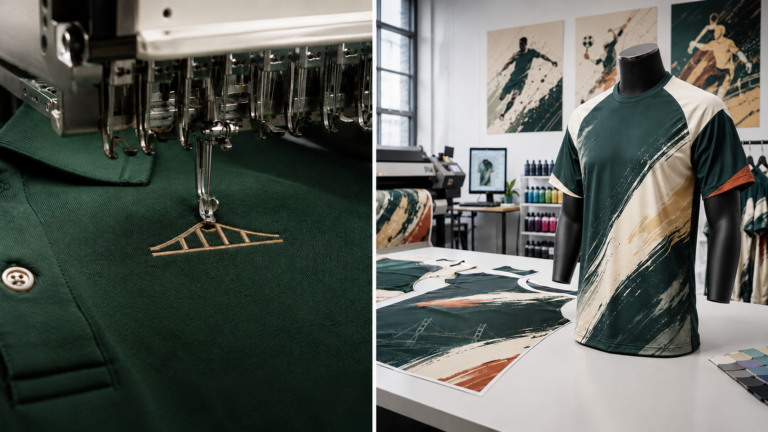
Alternative Methods
When Embroidery, Sublimation or Personalisation May Fit Better
For a Compact Stitched Appearance
Embroidery uses thread to create a raised logo on a suitable garment. It is often reviewed for corporate polos, jackets, caps and selected hospitality apparel.
- Compact chest logos
- Customer-facing polo shirts
- Selected aprons, caps and outerwear
- Management or supervisory uniforms
For Suitable Polyester Teamwear
Sublimation transfers colour into suitable polyester-based material. It is generally considered for jerseys and teamwear rather than ordinary cotton T-shirts.
- Full-colour sports jerseys
- School house and team apparel
- Names, numbers and sponsor marks
- Patterns across multiple garment panels
For Variable Names and Numbers
Heat-transfer materials may be used for selected text, numbers, staff roles and individual information. They can also be combined with another main logo method.
- Player and staff names
- Numbers and departments
- Outlet or branch identification
- Small batches of variable information
| Garment Example | Method to Assess First | Reason for Assessment |
|---|---|---|
| Corporate polo with compact chest logo | Embroidery or DTF | Compare the desired stitched appearance against logo detail and garment suitability. |
| Full-colour sports jersey | Sublimation | Useful when design coverage, names and numbers are integrated into suitable polyester teamwear. |
| Ready-made jersey requiring names and numbers | Heat-transfer personalisation or DTF | Useful when variable information is added to compatible ready-made garments. |
| Creative cotton T-shirt | DTF, DTG or silk screen | Compare artwork detail, garment colour, order size, desired feel and repeated quantity. |
| Apron with a compact front logo | Embroidery, DTF or silk screen | Review material, pocket placement, seams, logo dimensions and total quantity. |
Buyer Scenarios
Which Method Should Different Sabah Buyers Review?
The examples below are decision starting points. Final selection still depends on the garment, artwork, quantity, print positions and personalisation.
Repeated Workforce Shirts
Compare silk screen for a larger repeated logo order. Review DTF when the artwork is detailed or when departments require smaller separate batches.
Polos, Events and Department Apparel
Compare embroidery for compact polo logos, DTF for multicolour event artwork and heat transfer for individual names or roles.
Committees, Camps and Sports
Compare DTF for detailed committee artwork, silk screen for repeated event designs and sublimation for suitable sports jerseys.
Customer-Facing Branding
Compare DTF for colourful logos, embroidery for selected polos or aprons and silk screen for a larger repeated crew-shirt order.
Participants, Volunteers and Committees
Compare silk screen for a stable repeated design and DTF when the artwork contains several colours, details or different versions.
Jerseys, Names and Numbers
Compare sublimation for full-colour compatible jerseys and heat-transfer or DTF personalisation for selected ready-made sports garments.
Review the End Customer’s Specification
Do not choose a method from quantity alone. Confirm the end user, garment, artwork, personalisation and repeat-order needs first.
Control Artwork and Branch Variations
Keep one approved master logo and separate branch names, roles or outlet information into a clear variation list.
Ordering Process
Prepare the Information Needed for a Printing Recommendation
Identify the Exact Garment
Provide the product type, brand or code, material, garment colour and size range where available.
Send the Best Available Artwork
Provide vector artwork or a high-resolution file and identify the final version to be reviewed.
State Every Print Position and Dimension
List front chest, back, sleeve, apron, name, number and other positions separately.
Provide Quantity by Garment and Variation
Separate totals by product, colour, size, branch, department and artwork version.
Explain the Intended Use
State whether the garment is for office, factory, outdoor event, sports, hospitality, retail or resale.
Confirm Sabah Delivery Requirements
Provide the required receiving date, postcode, full address and contact person for arrangement review.
Buyer Checklist
Printing Method Selection Checklist
- The exact garment type and material are confirmed.
- The garment colour is recorded using the supplier reference.
- The total quantity and repeated quantity are separated.
- Every artwork colour and gradient has been reviewed.
- All individual names, numbers and roles are listed.
- Each print position and dimension is stated.
- Large print coverage has been reviewed for comfort.
- Embroidery detail is suitable for the intended size.
- Sublimation is being used only with a suitable apparel arrangement.
- One final artwork version is approved.
- The chosen method appears clearly in the quotation.
- Care instructions will be confirmed for the final garment.
- Repeat-order records will be retained.
- The required receiving date and Sabah address are complete.
Avoid These Mistakes
Common Method-Selection Errors
- Choosing from price alone before reviewing the artwork.
- Assuming one method suits every fabric and garment colour.
- Treating a detailed gradient logo as simple spot-colour artwork.
- Counting the total quantity without separating design variations.
- Using embroidery for text that becomes too small to stitch clearly.
- Ignoring the surface feel of a large printed area.
- Choosing sublimation for an unsuitable ordinary cotton garment.
- Sending several artwork files without identifying the final version.
- Approving personalised information without a complete proofread.
- Reordering from a photograph without the original specification.
Frequently Asked Questions
Right Printing Method FAQ
Is DTF better than silk screen printing?
Neither method is automatically better. DTF may be more practical for detailed, multicolour or variable artwork. Silk screen may be more practical when the same simpler design is repeated across a larger run.
Which method is suitable for a corporate polo shirt?
Compare embroidery for a compact stitched logo and DTF for detailed multicolour artwork. The polo fabric, logo dimensions and intended appearance should be reviewed first.
Which method should I use for individual names and numbers?
DTF or selected heat-transfer personalisation may suit ready-made garments. Sublimation may suit names and numbers integrated into compatible jersey artwork.
Is sublimation suitable for an ordinary cotton T-shirt?
Conventional sublimation is mainly relevant to suitable polyester-based materials. An ordinary cotton T-shirt normally requires another printing arrangement.
Can embroidery reproduce very small text?
Very small lettering and thin details may need to be enlarged, simplified or changed. Final stitch suitability depends on the logo, thread, fabric and embroidery dimensions.
Which method is best for a large event-shirt order?
Silk screen may suit a larger repeated design with manageable solid colours. DTF may suit more detailed artwork or several artwork versions. The full order structure should be reviewed.
Can one order use more than one printing method?
Yes. A polo may use embroidery for the main logo and heat-transfer text for individual names. A jersey may use a sublimated base design with selected additional decoration, subject to compatibility.
What should I send for a printing recommendation?
Send the garment type, material, colour, quantity, size breakdown, artwork, print positions, dimensions, personalisation list, intended use, receiving date and Sabah delivery postcode.
Order Here
Let the Order Details Decide the Printing Method
Send your garment, artwork, quantity, positions, dimensions, personalisation list and required receiving date. Uniform Sabah can review whether DTF, silk screen, embroidery, sublimation, heat transfer or another suitable arrangement should be assessed for your Sabah order.