Why Choose DTF for Small Uniform Orders
Understand when DTF is a practical choice for colourful logos, personalised names and smaller uniform quantities.
The practical answer
Why DTF Works Well for Smaller Orders
DTF heat-press printing is often suitable when a company, school, club or event team needs a smaller quantity of garments with detailed, multicolour artwork. It can also support individual names, departments and mixed designs without requiring one large repeated print run.
It is especially useful when the artwork contains gradients, fine lines or several colours that would be less practical to separate for a small silkscreen order. The garment and transfer size still need to be matched carefully for comfort.
Detailed Logos
Reproduce multiple colours and fine artwork on compatible garments.
Flexible Quantities
Useful when the order is too small for a bulk-focused printing setup.
Names and Departments
Add individual text without changing the entire uniform design.
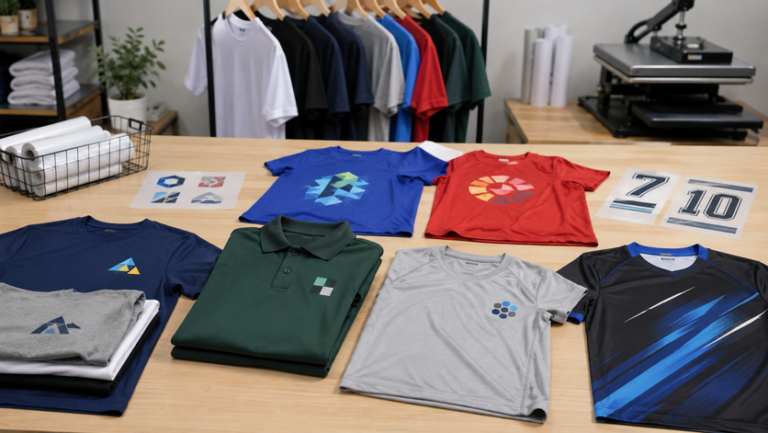
Is DTF the right match?
Situations Where DTF Makes Sense
| Order situation | Why DTF may help | What to check | Possible alternative |
|---|---|---|---|
| Small company team | Allows a detailed logo without a large repeated run | Print size, garment fabric and placement | Embroidery for compact premium logos |
| Event crew shirts | Supports colourful artwork and short-term campaign designs | Comfort, wash care and delivery planning | Silkscreen when quantity increases |
| Names or departments | Each garment can carry different text | Spelling, name list and text size | Embroidery for small stitched names |
| Mixed shirt colours | One artwork can be used across several compatible colours | Contrast and white underbase appearance | Silkscreen for one repeated colourway |
| Detailed multicolour logo | Gradients and fine details can be reproduced | Minimum readable detail and final artwork quality | Sublimation on full-custom polyester |
| Frequent outdoor work | Can be used for compact identity marks | Avoid large transfers that trap heat | Small embroidery or silkscreen mark |
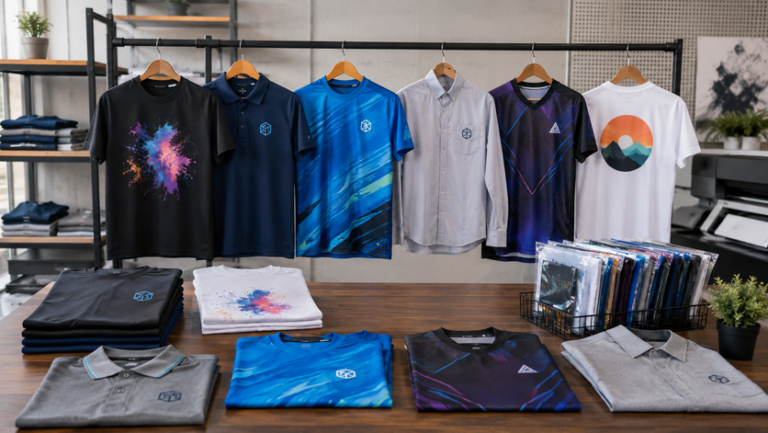
Garments worth considering
Which Uniforms Pair Well With DTF?
Round-Neck T-Shirts
Cotton and compatible blended tees are practical for event crews, promotions, clubs and casual staff uniforms.
- Good for front, back or sleeve logos
- Useful for colourful campaign artwork
- Check fabric smoothness and stretch
- Keep large solid designs comfortable
Polo Shirts
Compact DTF logos can suit selected polos when the fabric surface and heat settings are appropriate.
- Suitable for colourful chest logos
- Useful when embroidery detail is difficult
- Check textured pique or honeycomb surfaces
- Avoid placing transfers across plackets
Quick-Dry Shirts
DTF can work on compatible performance garments, but transfer size should remain practical for hot and active work.
- Use compact logos where possible
- Confirm fabric heat tolerance
- Avoid high-stretch areas
- Provide correct washing instructions
Corporate Shirts
Selected corporate garments may support a small transfer for a detailed brand mark, subject to fabric and seam construction.
- Keep the logo compact and balanced
- Check pocket and seam positions
- Test the visual finish on the actual colour
- Compare with embroidery before deciding
Jerseys and Training Tops
DTF is useful for small team orders with names, numbers or sponsor logos on compatible ready-stock sportswear.
- Useful for replacement players
- Supports short name lists
- Check stretch around numbers
- Use sublimation for all-over custom designs
Limited-Run Merchandise
DTF allows a business or organisation to test a design before committing to a much larger production quantity.
- Useful for trial launches
- Supports several artwork variations
- Easy to add event dates or editions
- Review the print feel before scaling up
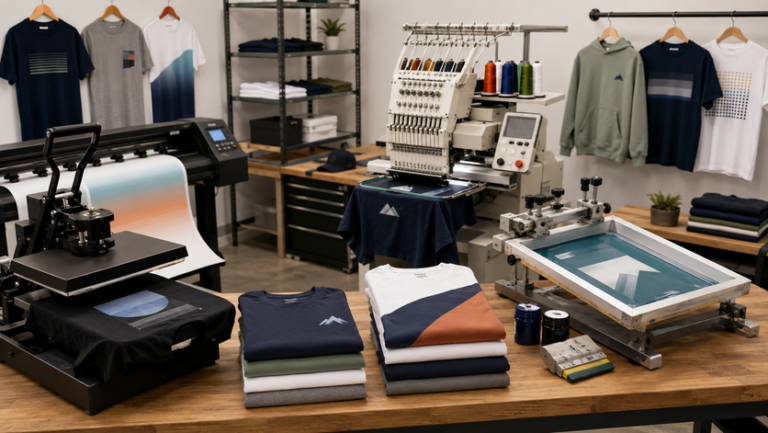
Compare before confirming
DTF Versus Other Decoration Methods
Flexibility or Bulk Efficiency?
DTF is usually easier for smaller multicolour orders, while silkscreen becomes more attractive for repeated simple artwork at suitable quantities.
Colour Detail or Premium Texture?
DTF handles colourful fine detail, while embroidery offers a stitched, professional look on garments that can support it.
Ready Stock or Full Custom?
DTF is practical for compatible ready-stock garments. Sublimation is stronger for all-over designs on suitable polyester fabrics.
Detailed Artwork or Simple Shapes?
DTF supports complex multicolour artwork, while vinyl can remain practical for simple names, numbers and basic shapes.
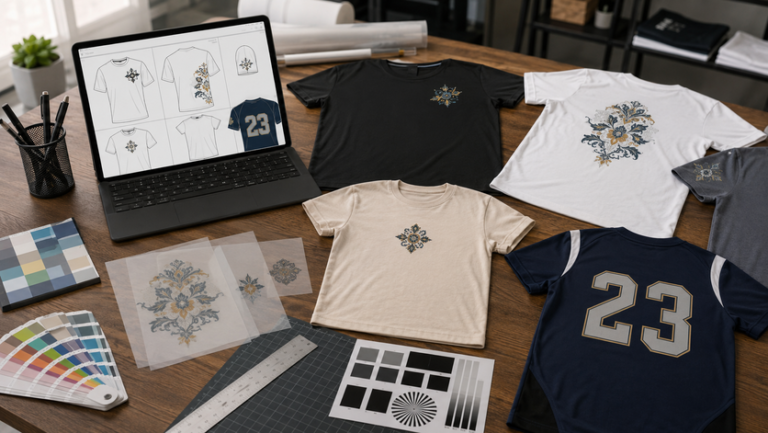
Make the transfer look better
Artwork and Placement Rules for DTF
Oversized Solid Artwork
Large transfer areas can feel warmer and face more stretching.
Low-Quality Logos
Pixelated artwork can produce rough edges and unclear small text.
High-Friction Areas
Bag straps, seams and repeated rubbing can shorten the transfer’s life.
Prepare the Artwork Properly
- Use a clean, high-resolution or vector logo.
- Check that small text remains readable at the final print size.
- Use strong contrast against the chosen garment colour.
- Remove unnecessary background shapes where appropriate.
- Confirm whether white elements should print or remain transparent.
- Approve all names, numbers and spelling before production.
Choose a Comfortable Placement
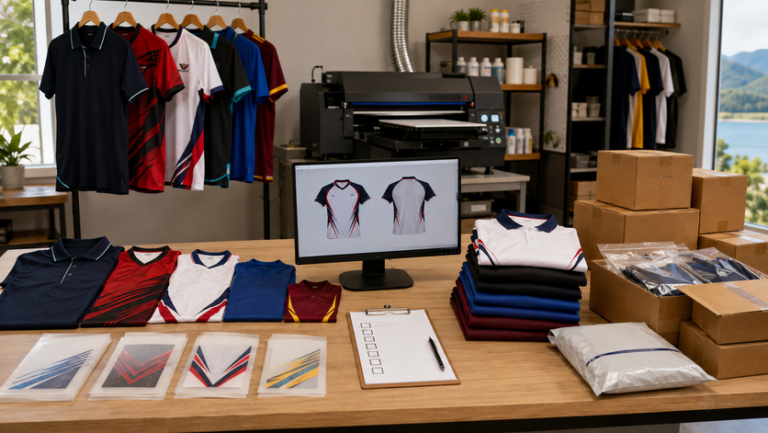
From artwork to finished shirts
A Simple DTF Ordering Workflow
Confirm the Garment and Quantity
Choose the shirt model, colour, sizes and total number of pieces.
Submit the Final Artwork
Provide the logo, colours, names, numbers and any version differences.
Choose Print Size and Placement
Confirm the final dimensions and exact position on the garment.
Review the Digital Mockup
Check spelling, proportions, garment colour and overall balance.
Approve Production Details
Lock the final list so no names, sizes or quantities change unexpectedly.
Check, Pack and Deliver
Finished garments are reviewed, packed and prepared for Sabah delivery.
Where small-run DTF helps most
Realistic Buyer Scenarios
First Staff Uniform Order
Start with a smaller team quantity before standardising a larger programme.
Committee Shirts
Add committee roles or names without changing the main artwork.
Replacement Players
Produce a few additional names and numbers after the main order.
Short Campaign Run
Use detailed event artwork without committing to a large leftover quantity.
Different Department Labels
Keep one logo while changing branch or department text.
Trial Design Release
Test customer response before scaling to a larger print method.
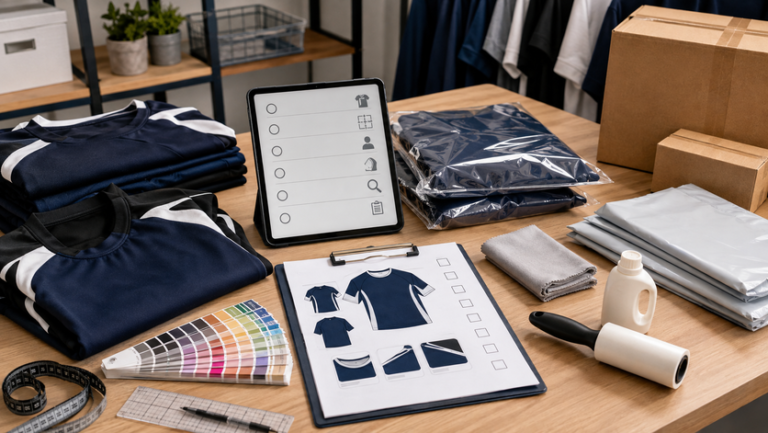
Before you approve production
DTF Small-Order Checklist
- The exact garment model and colour are confirmed.
- All sizes and quantities are final.
- The artwork is clear and high quality.
- Names, numbers and department labels are checked.
- Print dimensions and placement are approved.
- The garment is compatible with heat pressing.
- Large transfer areas are reviewed for comfort.
- The final digital mockup is approved.
- Wearers receive suitable washing instructions.
- Future replacement orders use the same approved file.
Mistakes That Increase Rework
- Submitting a blurry logo copied from social media.
- Changing names after production has started.
- Choosing a print size without checking the smallest garment.
- Using a large transfer on a hot-weather work shirt.
- Ignoring garment seams, pockets and stretch zones.
- Ironing directly over the finished transfer.
Questions buyers often ask
DTF Printing FAQs
Continue planning your order
Useful Uniform Sabah Resources
Plan a Flexible Small Uniform Order
Share your garment type, quantity, sizes, artwork, names and Sabah delivery location for a suitable DTF recommendation.
WhatsApp Uniform Sabah Explore Uniform SabahOur company network