Why Do Clothes Shrink After Washing?
Shrinkage happens when fibres and the fabric structure change after exposure to moisture, heat, agitation or drying. Natural fibres such as cotton are often more noticeable because spinning, knitting and finishing place tension into the material during manufacturing. When that tension is released during laundering, a shirt can become shorter, narrower or both.
Why does a T-shirt become smaller after washing?
A T-shirt can shrink because its fibres relax and the knitted structure tightens during washing and drying. Heat usually increases the risk, especially when the garment is exposed to hot water or a high-temperature dryer. Fabric type, knit construction, manufacturing finish and previous washing history all matter. The safest way to reduce avoidable shrinkage is to follow the care label, avoid unnecessary heat and choose the correct drying method.
What Causes Clothes to Shrink?
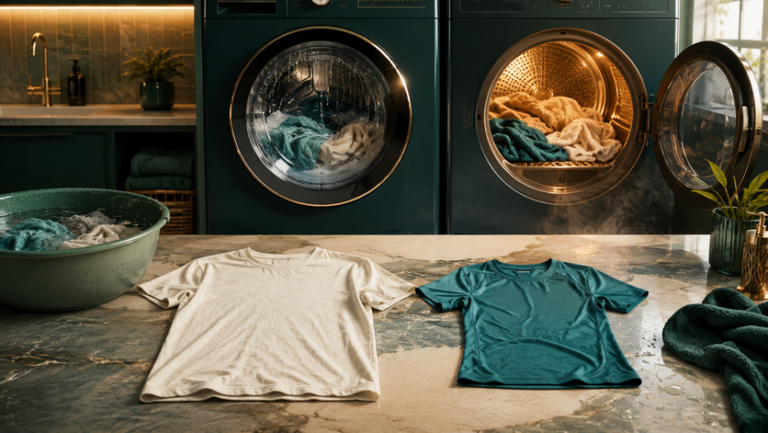
Shrinkage is rarely caused by one factor alone. Fibre type, fabric construction, moisture, temperature and drying conditions often work together.
| Factor | How it affects clothing | What buyers should know |
|---|---|---|
| Heat | Can accelerate fibre relaxation and dimensional change. | Hot washing and high-heat drying can increase the chance of noticeable shrinkage. |
| Moisture | Allows some fibres to swell, relax and move within the fabric structure. | Even without extreme heat, the first few washes may change the garment slightly. |
| Agitation | Mechanical movement can help the knitted structure settle into a tighter arrangement. | Very rough cycles are not always necessary for everyday T-shirts. |
| Dryer temperature | Heat and tumbling continue changing the garment after the wash cycle ends. | A shirt can fit correctly after washing but become smaller after high-heat drying. |
| Fibre type | Natural and synthetic fibres respond differently to heat, moisture and tension. | Cotton often shows more visible shrinkage than many polyester-based sports fabrics. |
| Fabric construction | Knits, woven fabrics, rib areas and blended constructions can change differently. | Two shirts with the same fibre content can still shrink differently. |
| Manufacturing finish | Pre-shrinking and finishing processes can reduce later dimensional change. | A “pre-shrunk” label does not necessarily mean zero future change. |
Which Shirt Types Are More Likely to Shrink?
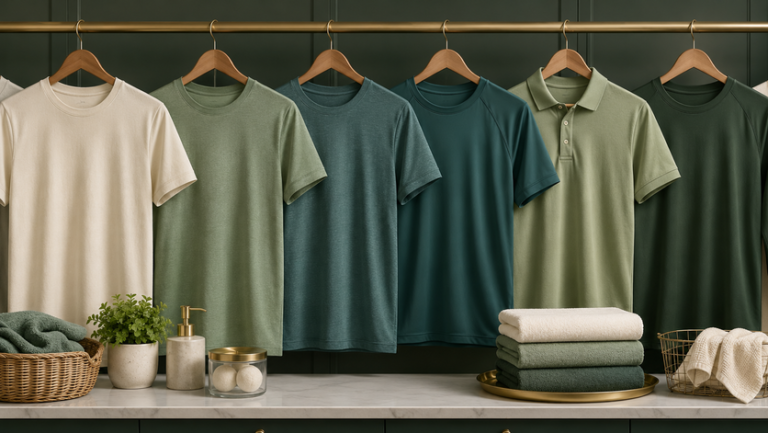
The amount of shrinkage can vary widely even within the same fibre category, but some materials are generally more sensitive to laundering conditions than others.
Comfortable, but more sensitive to heat
Cotton fibres can relax after washing, especially when combined with hot water or high-heat drying. Cotton T-shirts should be washed according to the care label if maintaining fit is important.
Softer yarn does not mean shrink-proof
Ring-spun cotton may feel smoother and softer than basic cotton, but it is still cotton and can experience dimensional change if washed or dried too aggressively.
Often more dimensionally stable
Polyester in the blend can help improve shape retention, although the final result depends on the blend ratio, knit structure and garment finishing.
Usually less prone to cotton-style shrinkage
Polyester microfiber shirts are generally more dimensionally stable, but excessive heat can still affect fabric, shape, trims or heat-applied decorations.
Check both the body and collar construction
A polo can combine different knit structures in the body, collar and cuffs. Each area may react slightly differently, so proper washing and reshaping are useful.
Heat can affect more than size
Garments containing elastic fibres may not simply “shrink”; excessive heat can also affect recovery, shape and fit over time.
How Shrinkage Can Affect Printed and Branded Shirts
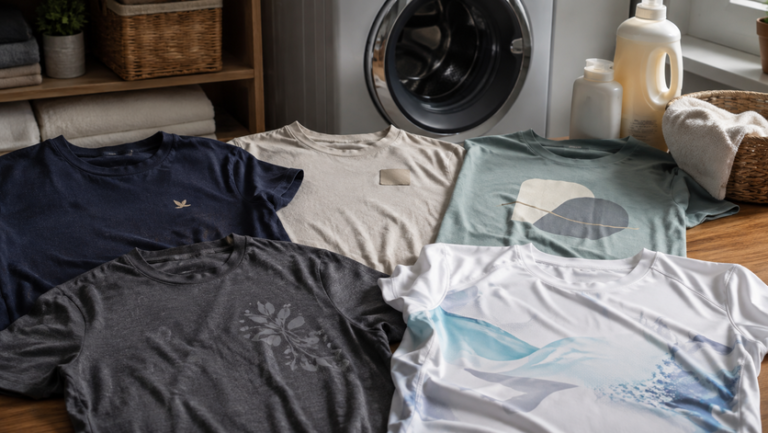
When a shirt changes size, the decoration may not change in exactly the same way. That difference can affect print appearance, placement and the way the finished uniform sits on the body.
| Branding method | Possible effect of garment shrinkage | Care consideration |
|---|---|---|
| DTF printing | The garment may tighten while the transfer behaves differently, affecting how the print sits. | Wash inside out and avoid unnecessary high heat unless the supplier allows it. |
| Silkscreen printing | A shrinking cotton base can change the surrounding fabric and visual proportions. | Follow the recommended wash temperature and drying method. |
| Heat-transfer vinyl | Repeated heat exposure can affect both the shirt and the applied material. | Avoid direct ironing over the transfer and excessive dryer heat. |
| Embroidery | If the fabric contracts around a dense stitched area, slight puckering may become more noticeable. | Use suitable garment construction and follow the care label. |
| Sublimation | Polyester garments are usually more stable, but overall fit can still change with unsuitable care. | Protect the fabric from unnecessary high heat even when the design is integrated into the fibre. |
Choose a stable garment base
For company uniforms and repeat orders, dimensional stability matters because the logo placement should remain visually consistent after normal washing.
Follow the finished-garment care method
The decorated shirt should be cared for according to both the fabric and the print method, not just the base material.
Keep the same model when possible
Changing shirt brands or fabric constructions can create noticeable differences in fit, shrinkage and logo placement across a team.
Fabric Details That Influence Shrinkage
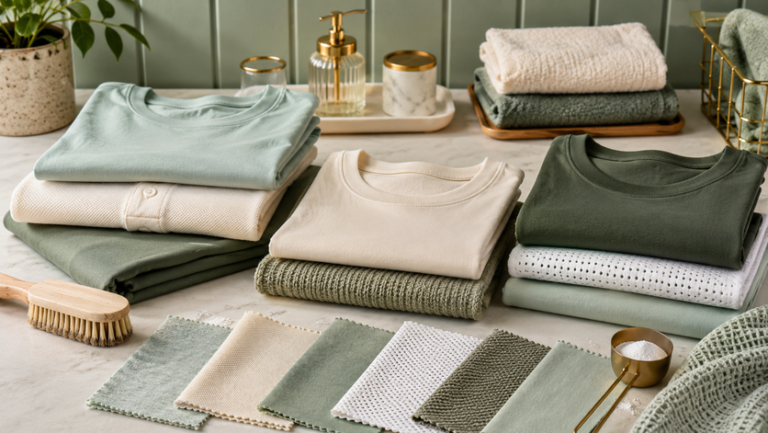
Fibre content is important, but it is not the only thing that determines whether a garment changes size. Construction, GSM, finishing, fit and even the way the shirt is dried can change the final result.
Five Myths About Clothing Shrinkage
“Only cheap shirts shrink”
Shrinkage is related to fibre, construction and care conditions. Price alone does not determine it.
“Pre-shrunk means zero shrinkage”
Pre-shrinking reduces expected change but does not make a garment completely immune to heat and laundering.
“Cold water prevents all shrinkage”
Lower temperatures can help, but moisture, agitation, drying and fabric construction also matter.
“Polyester never changes size”
Polyester is generally more stable, but excessive heat can still affect shape, trims and decoration.
“A larger size solves the problem”
Buying oversized garments is not a substitute for correct care because shrinkage can be uneven.
“The washing machine is always the cause”
Drying conditions can contribute just as much, especially when high heat is used repeatedly.
How to Reduce Avoidable Shrinkage
You cannot control every dimensional change in every fabric, but you can reduce unnecessary shrinkage by using a more careful washing and drying routine.
Read the care label
Check the recommended wash temperature, drying method and ironing instructions before laundering.
Use only the heat you need
Do not choose hot water or maximum dryer heat by default when a gentler setting is suitable.
Avoid rough overloading
Leave enough space for garments to move and rinse properly without excessive friction.
Dry according to the fabric
Use lower-temperature drying or air-drying when recommended by the manufacturer.
Reshape before fully dry
Some garments benefit from being gently reshaped after washing instead of being left twisted or bunched.
Keep care consistent
For uniforms, use the same washing method regularly so one shirt does not age very differently from another.
When Shrinkage Matters Most
Consistent fit across staff
When staff wear the same model every week, stable sizing helps the team maintain a more consistent appearance.
Repeated home washing
Parents may use different machines and dryers, so clear care instructions can help reduce large differences between shirts over time.
One-time sizing still matters
Even a shirt intended mainly for an event may be worn again, so buyers should avoid choosing a fit that is already too tight before washing.
Customer expectations are higher
Merchandise buyers expect the garment to keep its shape after normal care, making fabric selection and wash instructions especially important.
Before Washing a New T-Shirt
Use this quick checklist if you want to reduce avoidable size changes and protect the garment’s fit.
- Read the care label before the first wash.
- Check whether the shirt is cotton, polyester or a blend.
- Avoid assuming “pre-shrunk” means no future change.
- Use only the wash temperature recommended for the garment.
- Do not overload the washing machine.
- Turn printed shirts inside out.
- Avoid unnecessary high-heat drying.
- Reshape the shirt after washing when appropriate.
- Allow the garment to dry fully before storage.
- Keep the care routine consistent for company uniforms.
Clothing Shrinkage FAQ
Why does cotton shrink more noticeably?
Does cold water completely stop shrinkage?
Is the dryer more likely to shrink clothes than the washer?
Do polyester shirts shrink?
What does pre-shrunk cotton mean?
Can I stretch a shrunken T-shirt back to size?
Does higher GSM mean less shrinkage?
Should I buy one size larger because cotton may shrink?
Choose Shirts That Suit Your Team’s Daily Use
Uniform Sabah can help you compare cotton, blends, microfiber and other shirt options for company, school, event and sports requirements.
More Fabric and Uniform Resources
Continue with related Uniform Sabah pages for custom shirt planning, fabric selection and printing ideas.
Our Other Company Websites
Explore related uniform, apparel and custom-printing services through our regional and international websites.