Why Do Clothes Smell After Washing?
Clothes can still smell after washing when sweat, body oils, detergent residue or dampness are not fully removed. The problem may come from the garment, the washing machine, the detergent amount or the drying process. Sports shirts and work uniforms are especially likely to hold odour if they stay wet for too long or are washed in overloaded loads.
Why do freshly washed clothes sometimes smell bad?
The most common reasons are too much detergent, an overloaded washing machine, clothes sitting damp before or after washing, incomplete drying, sweat and oil remaining in synthetic fabrics, or residue inside the washing machine. The best fix is to identify the cause instead of simply adding more fragrance. Use the correct detergent amount, give garments enough room to rinse, wash sweaty shirts promptly and dry them fully before storage.
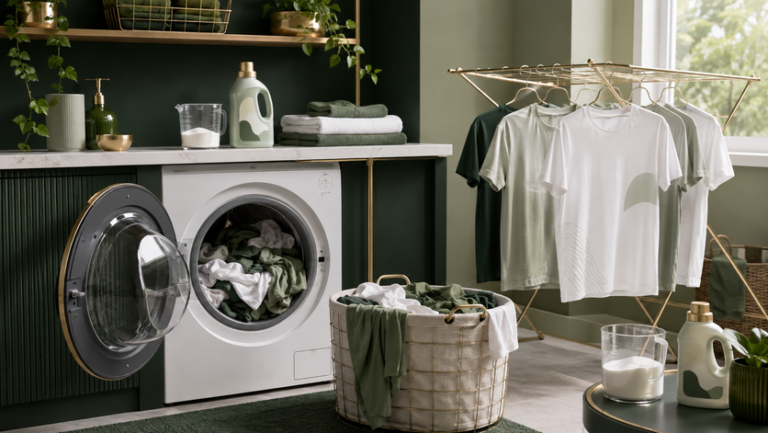
Common Causes of Smelly Clothes After Washing
If the shirt smells clean while wet but turns unpleasant after drying, or smells bad immediately after the wash, the table below can help narrow down the likely cause.
| Possible cause | What happens | What to do instead |
|---|---|---|
| Too much detergent | Soap residue may remain in the fibres and trap dirt, oils or odour. | Use the recommended amount for the load size rather than adding extra detergent. |
| Overloaded washing machine | Clothes may not move, wash or rinse properly. | Leave enough space for the load to circulate freely. |
| Wet clothes left in the machine | Damp fabric can develop a stale or musty smell. | Remove the load soon after the cycle ends and start drying promptly. |
| Sweaty shirts stored damp | Odour can become stronger before the wash even begins. | Air out sportswear and work shirts instead of sealing them wet in a bag or basket. |
| Incomplete drying | Moisture remains trapped before the clothes are folded or stored. | Make sure garments are fully dry before putting them away. |
| Dirty washing machine | Residue in the drum, gasket, filter or detergent area may transfer odour back to clothes. | Clean and maintain the washer according to the machine manufacturer’s instructions. |
| Synthetic fabric odour buildup | Body oils can cling strongly to polyester-based sports fabrics. | Wash activewear promptly and avoid using excess detergent as an odour mask. |
| Poor ventilation during drying | Clothes dry slowly and may stay damp for too long. | Improve airflow, spacing and drying conditions. |
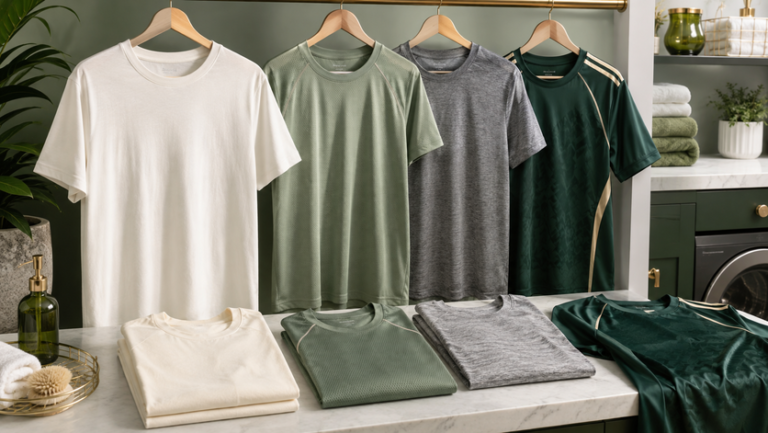
Which Shirts Hold Odour More Easily?
Fabric type changes how sweat, oils and moisture behave. Some shirts dry quickly but can still hold odour if body oils are not rinsed away effectively.
Absorbent and comfortable
Cotton absorbs moisture readily. If it stays damp for a long time before washing or drying, it can develop a stale smell even though the fabric itself is easy to wear.
Fast drying, but oils can linger
Polyester microfiber moves moisture well, but body oils can remain in the fabric if the shirt is overloaded, under-rinsed or washed with too much detergent.
Collars and underarm areas need attention
Sweat and skin oils can build up around the neck, collar and underarms. Pre-treating those areas may work better than increasing detergent for the whole load.
Oil, dust and sweat can combine
Uniforms used in kitchens, workshops or outdoor work may need separate treatment because the odour may come from grease, soil and sweat together.
Do not leave them in a closed bag
After training or competition, air out the jersey and wash it as soon as practical instead of leaving it wet in a sports bag for hours.
Smell and appearance are separate issues
A shirt can look visually clean but still retain odour. Whitening products do not automatically solve sweat or detergent residue.

How to Wash Branded Shirts Without Trapping Odour
Custom printing does not directly cause odour, but printed and decorated garments may need gentler washing conditions. The goal is to remove sweat and oils without damaging the branding.
| Branding method | Odour-related issue | Better care habit |
|---|---|---|
| DTF printing | Large print areas can reduce airflow across part of the shirt. | Turn the shirt inside out, use the recommended cycle and dry it fully before storage. |
| Silkscreen printing | Heavy ink coverage may make some areas feel less breathable. | Wash promptly after heavy sweating and avoid sealing the shirt damp in a bag. |
| Heat-transfer vinyl | High heat used to fight odour may damage the transfer. | Use suitable detergent and washing conditions instead of increasing heat unnecessarily. |
| Embroidery | Dense stitched areas can take longer to dry than plain fabric. | Allow enough drying time around thicker stitched areas before folding the shirt. |
| Sublimation | Polyester jerseys can hold body oils even though the print itself is integrated into the fabric. | Wash activewear soon after use and use the correct detergent amount. |
Protect the print surface
Turning decorated shirts inside out helps reduce direct rubbing while still allowing the garment to be cleaned normally.
Do not fold damp branding
Printed and embroidered areas should be fully dry before storage, especially when the design creates thicker sections.
Perfume does not remove residue
Strong fragrance may temporarily cover an odour, but the underlying sweat, oil or detergent residue still needs to be washed and rinsed away.
Why Some Fabrics Smell Faster Than Others
Fabric chemistry, knit structure, thickness and drying speed all influence how fresh a shirt feels after wear and washing.
Habits That Make Laundry Smell Worse
1. Adding more detergent
Too much detergent may leave residue rather than creating a cleaner result.
2. Leaving wet clothes overnight
Damp clothes can become stale quickly if they remain in the washing machine or basket.
3. Overloading the machine
A packed drum makes it harder for water and detergent to circulate and rinse properly.
4. Storing sweaty uniforms damp
Closed bags and laundry baskets trap moisture and can make odour harder to remove later.
5. Folding clothes before fully dry
Remaining moisture can create a musty smell inside cupboards and drawers.
6. Ignoring the washing machine
A washer with residue or trapped moisture can make clean loads smell stale again.
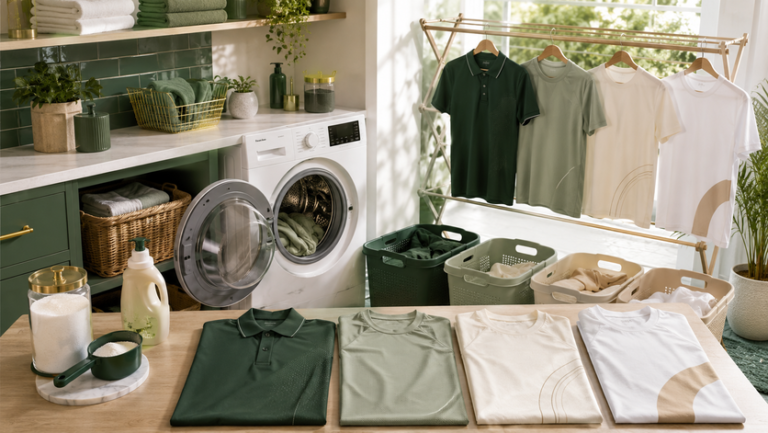
How to Stop Clothes Smelling After Washing
A consistent routine usually works better than adding more fragrance or stronger products to every load.
Air out sweaty clothes
Do not leave damp sports shirts or uniforms sealed in a bag before laundry day.
Check high-odour areas
Inspect underarms, collars and cuffs and pre-treat them when necessary.
Use the correct detergent amount
Follow the detergent instructions for the load size instead of adding extra product.
Do not overload the machine
Give the clothes enough room to wash, rinse and spin effectively.
Remove clothes promptly
Take the load out soon after the wash cycle ends instead of leaving it damp for hours.
Dry completely before storage
Good airflow and full drying help prevent musty smells from returning in the cupboard.
Common Situations for Uniform and T-Shirt Owners
Jerseys smell again after training
Air the jerseys out immediately, avoid leaving them in kit bags and wash them with enough space in the drum for proper rinsing.
Shirts smell clean but turn stale in storage
The likely issue is incomplete drying or a damp wardrobe environment. Make sure every shirt is fully dry before folding.
Sweat and soil combine
Heavily soiled uniforms may need pre-treatment and separate washing rather than simply more detergent.
Every load smells musty
If many different garments have the same smell, inspect and clean the washing machine according to the manufacturer’s maintenance instructions.
Quick Checklist for Better-Smelling Clothes
Use this routine to reduce stale, damp and sweat-related odours after washing.
- Air out sweaty clothes before washing.
- Read the garment care label.
- Pre-treat underarms, collars and heavy soil if needed.
- Use the correct detergent amount.
- Avoid overloading the washing machine.
- Use an appropriate wash cycle and temperature.
- Make sure the load rinses properly.
- Remove clothes soon after washing.
- Dry garments completely before folding.
- Keep cupboards and storage areas dry.
- Clean the washing machine regularly.
- Avoid using fragrance to hide an unresolved odour problem.
Clothes Smelling After Washing FAQ
Why do clothes smell musty after washing?
Can too much detergent make clothes smell?
Why do sports shirts smell again as soon as I wear them?
Should I rewash clothes that smell damp?
Why do clothes smell fine when wet but bad after drying?
Does fabric softener remove bad smells?
Can a dirty washing machine make clean clothes smell?
How can I stop uniforms smelling in storage?
Choose Shirts That Suit Your Team’s Daily Routine
Uniform Sabah can help you compare cotton, microfiber, polos, quick-dry shirts and other uniform options for company, school, event and sports use.
More T-Shirt and Uniform Resources
Continue with related Uniform Sabah pages for custom shirt planning, fabric selection and printing ideas.
Our Other Company Websites
Explore related uniform, apparel and custom-printing services through our regional and international websites.