How Should a Polo Shirt Fit?
A well-fitting polo shirt should sit neatly on the shoulders, feel comfortable across the chest, leave enough room to move, and finish at a practical length for wearing tucked or untucked. It should look clean and structured without being skin-tight or excessively loose.
What is the ideal polo shirt fit?
The shoulder seams should sit close to the natural edge of your shoulders, the chest should have enough ease for comfortable movement, and the sleeves should lightly follow the upper arm without squeezing it. The body should skim rather than cling, while the hem should generally reach around the mid-fly or lower-hip area depending on the cut. If you are buying polos for a team, compare the brand's actual size chart instead of assuming that S, M or L fits the same across every supplier.

How Each Part of a Polo Shirt Should Fit
A polo can look the correct size overall but still fit poorly at one key area. Check the shoulders, chest, sleeves, waist and length separately.
| Fit area | Good fit | Too tight | Too loose |
|---|---|---|---|
| Shoulders | Shoulder seam sits close to the natural shoulder edge. | Seam pulls inward and fabric strains across the upper back. | Seam drops far down the upper arm. |
| Chest | Comfortable room for breathing and arm movement without excess fabric. | Buttons pull, fabric stretches or horizontal lines appear. | Large folds appear around the chest and underarms. |
| Sleeves | Sleeves follow the upper arm lightly and allow free movement. | Cuff digs into the arm or rides upward. | Sleeves flare widely or look oversized. |
| Body | Fabric skims the torso with enough ease for sitting and reaching. | Fabric clings around the stomach or back. | Body hangs like a box with excessive side volume. |
| Length | Long enough to stay neat when moving, without covering too much of the thighs. | Hem rides above the waistband when arms are raised. | Hem extends too far below the hips and looks oversized. |
| Collar | Lies neatly around the neck without pressing or spreading excessively. | Feels restrictive when the top button is used. | Collar opening appears very wide or collapses awkwardly. |
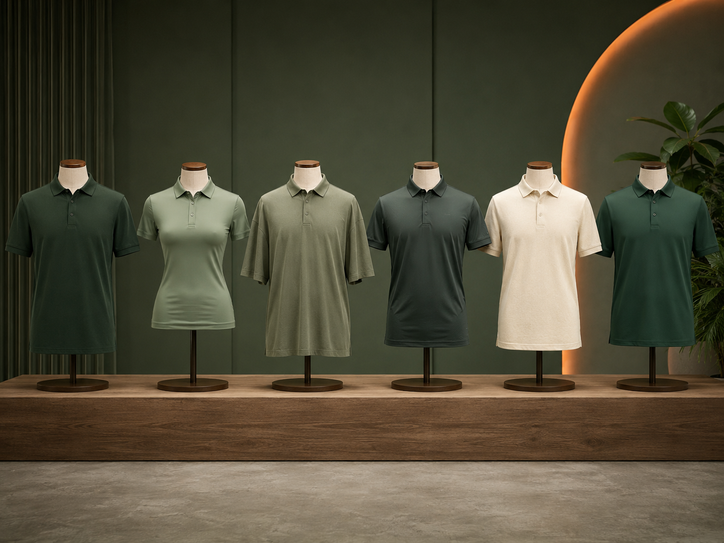
Regular, Slim and Relaxed Polo Fits
Polo shirts are produced in different cuts. The best option depends on the wearer's body shape, working environment and whether the shirt is used as a corporate uniform, event shirt or casual top.
Balanced for most uniform programmes
A regular-fit polo gives moderate room through the chest and waist without looking oversized. It is often the easiest fit to standardise across a mixed staff group.
Closer through the chest and waist
Slim-fit polos create a sharper silhouette but leave less ease. They work best when the wearer can move comfortably without button pulling or fabric strain.
More room for movement
A relaxed cut can suit active work, outdoor teams and wearers who prefer more space around the waist and arms.
Check waist shaping and sleeve cut
Women's polos may be more shaped through the waist and narrower across the shoulder. Always use the specific women's size chart rather than converting directly from a unisex size.
Simple for large group orders
Unisex polos are practical for teams because one size scale can cover many wearers, but individuals may need to size up or down depending on body shape.
Allow space for active movement
Microfiber and quick-dry polos used for outdoor or active work should not fit so tightly that reaching, lifting or bending feels restricted.
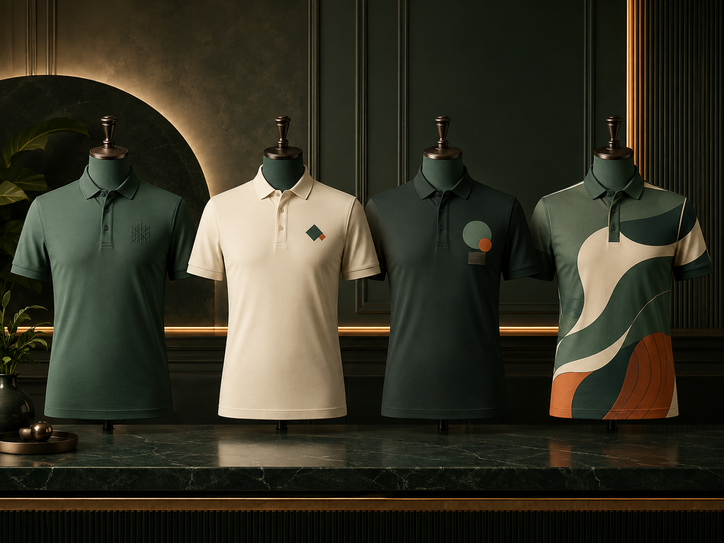
How Polo Fit Affects Logo Placement
Fit matters for branding because stretched, oversized or poorly positioned fabric can change how a logo looks when the polo is worn.
| Branding method | Fit consideration | Better approach |
|---|---|---|
| Embroidery | Dense chest embroidery can look distorted if the polo is too tight. | Allow enough chest ease so the logo sits flat and does not pull. |
| DTF printing | A large transfer may crease more on an oversized or very loose body. | Choose a fit that keeps the print area relatively flat during normal wear. |
| Silkscreen printing | Large front or back prints can stretch when the garment is too small. | Use a comfortable size with enough movement allowance. |
| Heat-transfer vinyl | Very tight fabric can repeatedly stretch around the transfer. | Avoid choosing a size that is visibly strained across the branded area. |
| Sublimation | Full-garment graphics move with the fabric, but poor fit can still distort the visual proportions. | Confirm the correct size before finalising the full-shirt artwork. |
Should sit flat
If the chest is too tight, embroidery or print can curve and pull instead of sitting cleanly.
Check shoulder width
A correct shoulder fit helps large back logos appear centred and proportional when the wearer moves.
Allow arm movement
Sleeves should not be so tight that the logo stretches or so loose that the branding rotates away from view.
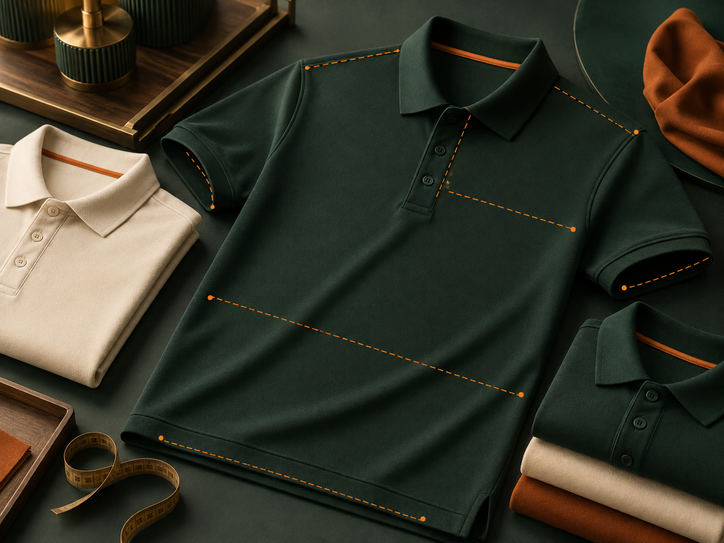
How Fabric Changes the Way a Polo Fits
Two polos with the same chest measurement can feel different because knit structure, fibre content, thickness and stretch affect how the garment drapes on the body.
Polo Shirt Fit Mistakes to Avoid
Choosing only by S, M or L
Size labels vary between brands. Compare the actual chest, shoulder and length measurements.
Sizing down for a sharper look
A polo that pulls across the buttons and chest usually looks less professional, not more tailored.
Sizing up too far for comfort
Excess shoulder drop and fabric around the waist can make a uniform look untidy.
Ignoring sleeve fit
A correct chest size can still look wrong if the sleeves flare widely or grip the upper arm.
Forgetting shrinkage allowance
Some cotton polos may change slightly after washing, so follow the care label and supplier guidance.
Ordering bulk sizes without samples
For large teams, fitting samples can reduce incorrect size choices before the full order is produced.

How to Check Whether a Polo Fits Correctly
Use a simple fitting process before ordering or approving a uniform size.
Check the shoulder seam
It should sit close to the natural end of the shoulder rather than far down the arm.
Check the chest
Button the polo and make sure the placket lies flat without pulling or gaping.
Check arm movement
Raise your arms and reach forward to confirm the sleeves and upper back do not restrict movement.
Check the waist
The body should skim the torso without clinging or hanging excessively loose.
Check the length
Make sure the hem stays neat when sitting, reaching and bending during normal work.
Compare with the size chart
Record the preferred size and measurements before placing a bulk uniform order.
Common Polo Shirt Fit Situations
Professional but comfortable
A regular fit usually works well because it looks neat while allowing staff to sit, reach and move throughout the day.
More movement allowance
Choose enough room through the shoulders, chest and sleeves for lifting, carrying and active work.
Sharper silhouette
A slightly closer fit can look polished, but avoid pulling at the placket or logo area.
Use fitting samples
Let staff try sample sizes or compare a familiar shirt against the supplier's size chart before confirming quantities.
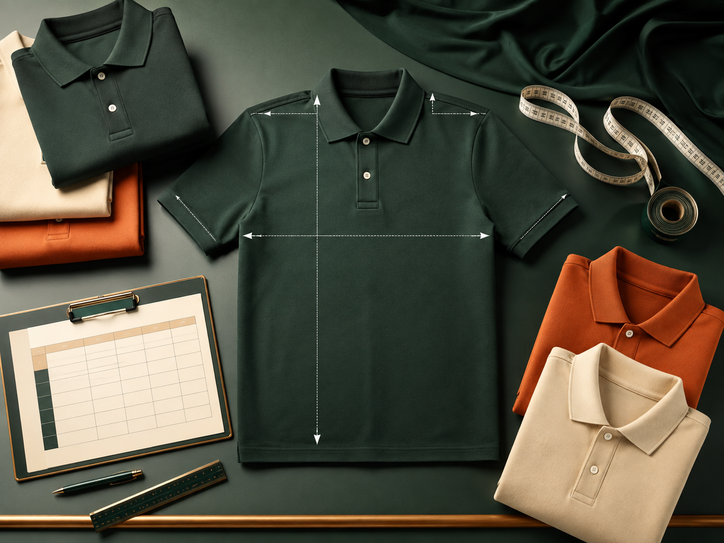
Polo Shirt Fit Checklist
Use this checklist before deciding whether a polo size is right.
- Shoulder seams sit near the natural shoulder edge.
- Chest buttons lie flat without pulling.
- You can raise your arms comfortably.
- Sleeve cuffs do not squeeze the upper arm.
- Sleeves do not flare excessively.
- The body skims rather than clings.
- There is no excessive fabric around the waist.
- The hem stays neat when sitting and reaching.
- The collar lies flat and feels comfortable.
- The logo area is not stretched or distorted.
- You checked the actual brand size chart.
- You considered fitting samples for a bulk order.
Polo Shirt Fit FAQ
Should a polo shirt be tight or loose?
Where should the shoulder seam sit?
How tight should polo sleeves be?
How long should a polo shirt be?
Should I size up for a work polo?
Should a company uniform polo be fitted?
Do different polo brands fit differently?
How should I size a bulk polo shirt order?
Choose the Right Polo Fit Before You Order
Uniform Sabah can help you compare polo cuts, fabrics, sizing and branding options for companies, schools, events, clubs and teams.
More Polo and Uniform Resources
Continue with related Uniform Sabah pages for garment selection, branding and custom uniform planning.
Our Other Company Websites
Explore related uniform, apparel and custom-printing services through our regional and international websites.